
The truth behind bunions is not what you’d expect

Here’s a worrying statistic: the NHS Foundation Trust has stated that between 75 to 80 percent of the adult population has some sort of foot problem.
Some of the most common issues include Athlete’s Foot, ingrown toenails, plantar fasciitis, and Achilles Tendinitis, as well as blisters, claw toes, and flat feet.
Another matter that thousands of us face is the possibility of growing bunions.
But what are bunions, how are they formed, and is there really a way for you to mitigate the risk of developing them?
Advert
Here’s everything you need to know.
What is a bunion?
A bunion, also known as a hallux valgus, is described by the Cleveland Clinic as a painful, bony bump that forms on the joint where your big toe meets your foot.
The growth forms when something puts extra pressure on your big toe, pushing it out of its natural alignment towards your other toes.
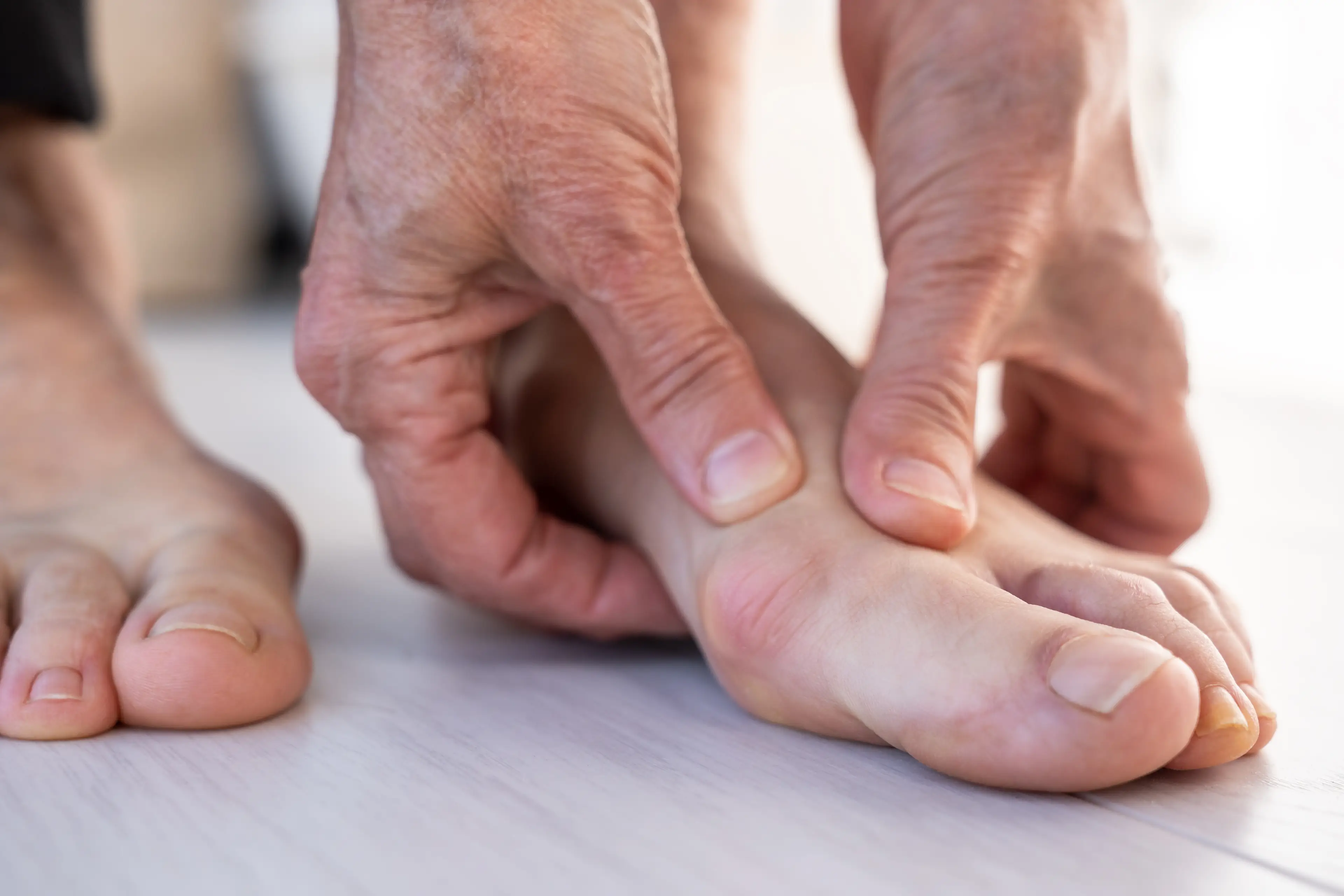
There are different types of bunions, including: the ones babies are born with (congenital), juvenile or adolescent bunions, which affect those under the age of 18, and the tailor’s bunion.
The latter form at the base of your pinky toe, and is usually the result of wearing shoes that don’t fit you correctly.
The agency wrote that one in three Americans have bunions, while in Britain it’s estimated that around 14 to 15 million are affected.
According to National Geographic, they are the most common human foot maladies and commonly occur in women and people over the age of 65.
Bunion symptoms
If you’ve noticed a hard lump forming on the side of your foot, then this is the beginning of a bunion growing.
Other symptoms include pain along the side or bottom of your feet, pain, swelling, or soreness of your big toe, and corns, calluses and red skin caused by your big toe and second toe overlapping.
Why do people get bunions?
Family history may play a huge part in the formation of bunions, as per a 2007 study.
However, there may be more than genetics at play, Timothy Miller, a podiatrist and foot and ankle surgeon with a practice in Orlando, Florida told National Geographic.
“The second most common cause is foot type,” he claimed.

The foot expert said that people with low arches are more likely to suffer from bunions due. to ‘laxity in the ligaments and muscles surrounding the big toe’.
Miller also reasoned that most shoes aren’t ‘supportive’ of the hard floors and concrete we have to walk on.
He said that unsupportive footwear leads feet to adapt, ‘sacrificing’ themselves in a bid to protect the hips and back. This ‘sacrifice’ then makes feet more prone to bunions and other foot deformities.
Scientists have also said that bunions are simply caused by the structure of the human foot.
A previous study suggested that humans display a ‘significant reorganisation’ of the big toe, compared to their primate cousins.
“While primates use their big toe to grasp, human toes all make contact with the ground, and with increasing stress the human big toe can override the muscles, tendons, and ligaments that surround it, drifting out of place and leading to a bunion,” National Geographic said.
How to treat a bunion
Nuffield Health has detailed some ways that you can live with your bunions, including wearing supportive footwear, and avoiding shoes which are narrow or pointed.
Physiotherapy is recommended to strengthen muscles in your foot, which can make bunions less painful.
Other options available are: comfortable insoles, bunion splints, and even surgery.
An operation to remove bunions is called a bunionectomy. Some involve the removal and realignment of the bones in your foot, while others see soft tissue being released or tightened.
 Ella Scott