
Health warning over red flag sign on foot that could mean you have contagious condition

The NHS has issued a warning on it's website, alerting people of a red flag on your feet that could indicate a contagious condition.
Now, we all know that at this time of year illness is rife and you'd be lucky to escape winter without being struck down by a cold or flu at least once.
Not to mention the new 'super-flu' strain that's been circulating, as well as adenovirus cases, which are continuing to soar around the world.
But it's also important to keep a watchful eye out for other conditions that could be wreaking havoc on your body, one of which will show up on your feet.
Advert
We're talking about athlete's foot, which is a common fungal infection that affects the feet - while you can usually treat it with creams, sprays or powders from a pharmacy, it can keep coming back.
As we say, the National Health Service is urging people to get checked out if they have certain symptoms as they could be spreading the highly-contagious illness without knowing.
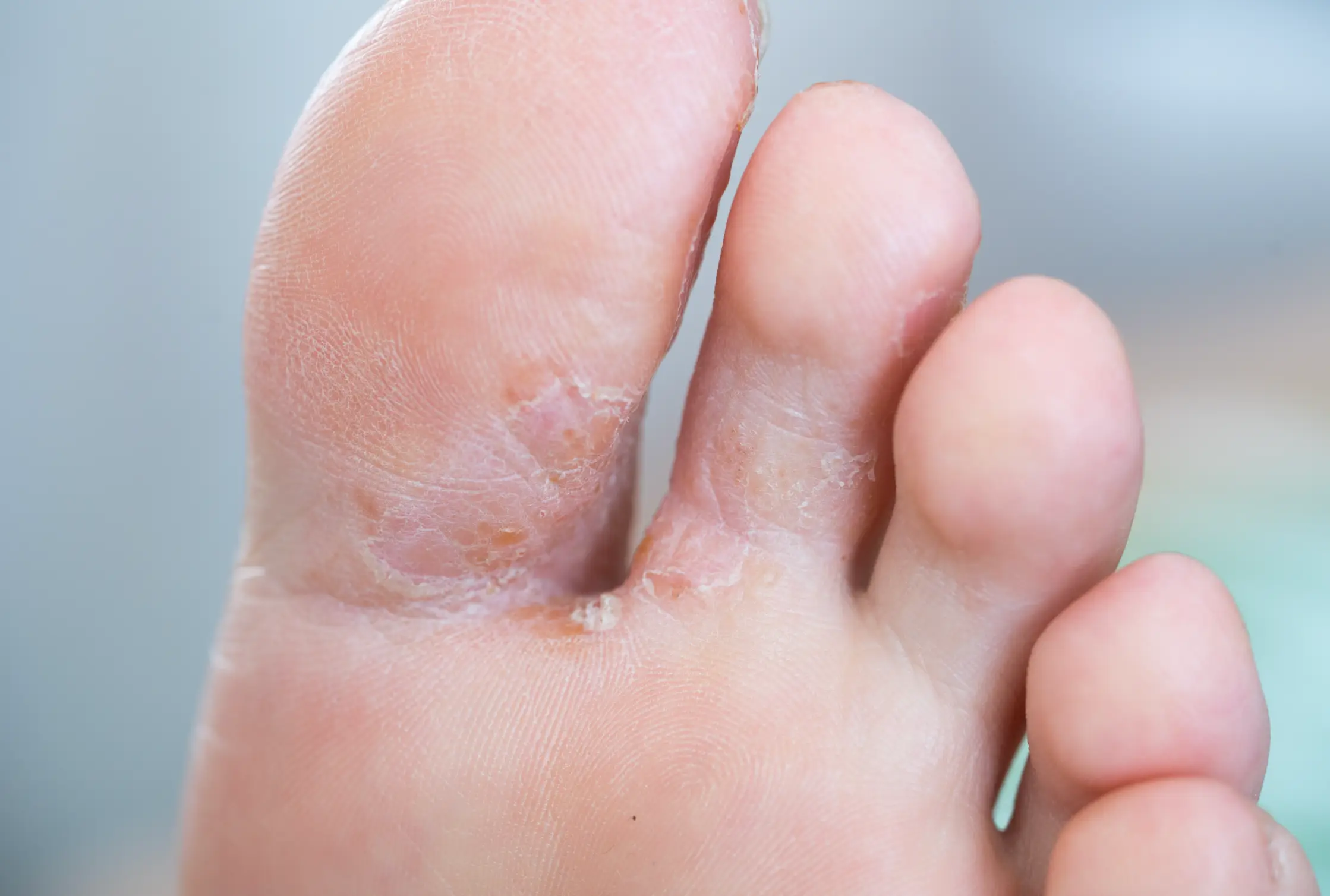
Importantly, if athlete's foot is left untreated, it can worsen and spread to your toenails causing thickening and discolouration, as well as other body parts like the hands or groin.
The key symptom to look out for is itchy white patches between your toes.
As per the NHS, it can also cause sore and flaky patches on your feet and your skin may look red, but this may be less noticeable on brown or Black skin.
Athlete's foot can also affect your soles or sides of your feet and sometimes causes fluid-filled blisters.
It's contagious and you can catch it from other people with the infection, such as walking barefoot in places where someone else has athlete's foot - especially changing rooms and showers or touching the affected skin of someone with athlete's foot.
You're more likely to get it if you have wet or sweaty feet, or if the skin on your feet is damaged.
As mentioned, athlete's foot is unlikely to go away on it's own so your first course of action should be to buy anti-fungal medicines from a pharmacy, which usually take a few weeks to work.
But this isn't always the case and athlete's foot can keep returning, which is when you need to make a trip to the GP.

Official advice outlines that you should see a doctor if:
- Treatments from a pharmacy do not work
- You're in a lot of pain
- Your foot or leg is hot, painful and red (the redness may be less noticeable on brown or black skin) – this could be a more serious infection
- The infection spreads to other parts of your body such as your hands
- You have diabetes – foot problems can be more serious if you have diabetes
- You have a weakened immune system – for example, you have had an organ transplant or are having chemotherapy
A GP will then take action, which can come in the form of sending a small scraping of skin from your feet to a laboratory to check you have athlete's foot, prescribing a steroid cream to use alongside antifungal cream, or prescribing antifungal tablets which you might need to take for several weeks.
They might also refer you to a dermatologist for more tests and treatment if needed.
 Madison Burgess