
Doctor issues important message to any women with 'hairy toes'

It's 100% natural to have body hair, despite what beauty adverts may want you to believe.
Whether that's on your legs, armpits or your face, we're all different when it comes to body hair.
And a number of women have hairy toes - something which Dr Aziz Elgindi, Medical Doctor at Harley Street Hair Transplant Clinic, says could tell you a whole lot about your health.
"Most people treat toe hair as a cosmetic nuisance, but hair growth relies on blood supply, so a bit of fuzz on your toes can be a quietly reassuring sign that circulation is reaching the very end of the body," he explained to Tyla.
Advert
"The flip side is that if hair that used to be there suddenly thins out, you notice new bare patches, or one foot looks different to the other, that can be a clue your blood flow isn’t as strong as it was - especially if your feet are often cold, numb, tingly or changing colour."
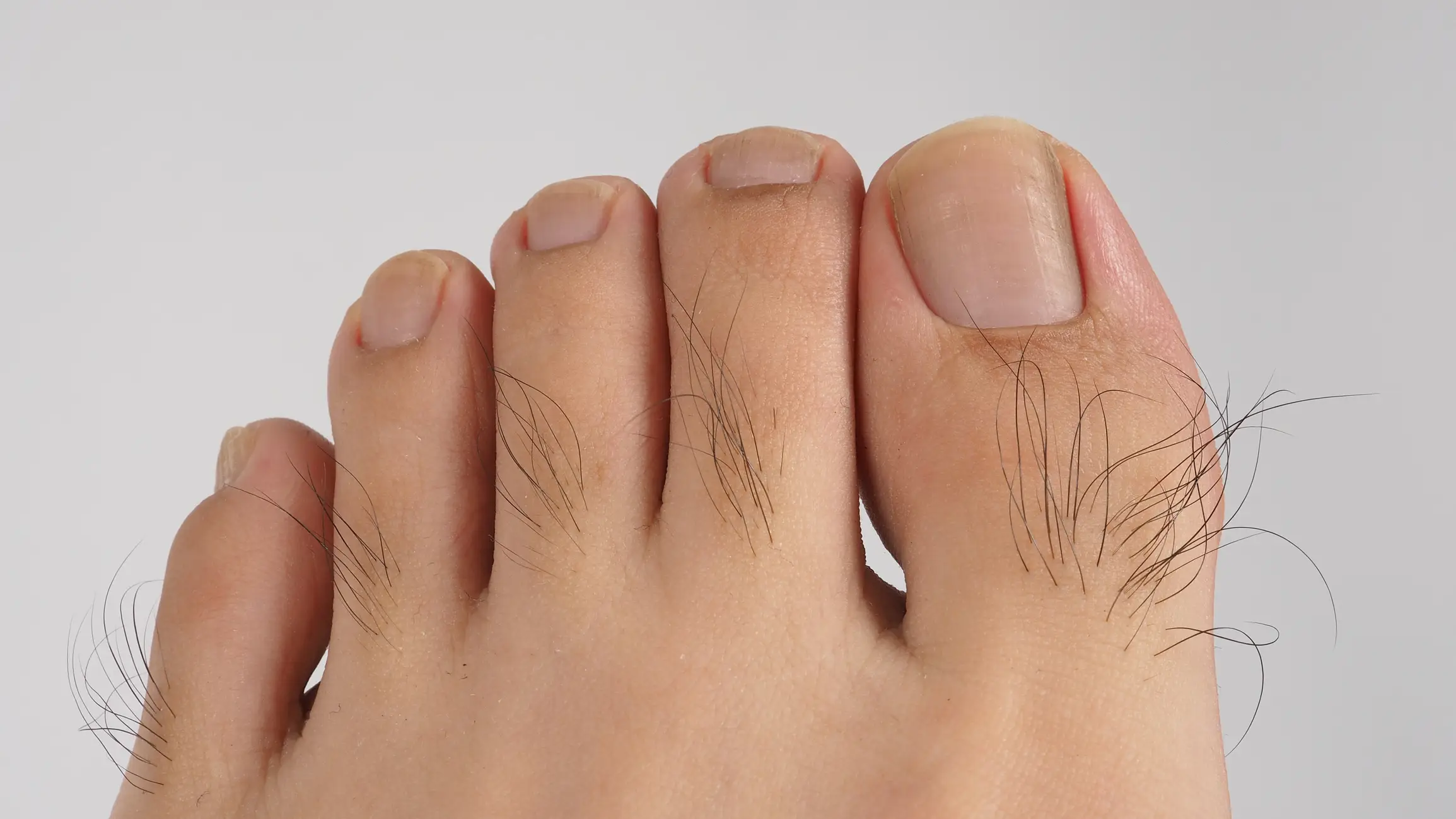
What's the actual link between hair growth and blood circulation?
Dr Aziz explains that hair growth depends on a 'steady delivery of oxygen and nutrients through the bloodstream'.
"Hair follicles sit in the skin and rely on tiny blood vessels to stay active and produce visible hair," he continued. "In the feet and toes, circulation has to travel further from the heart, so the area can be more sensitive to changes in blood flow.
"When circulation is functioning well, follicles continue to receive what they need to maintain growth. Toe hair can sometimes reflect that process, but it is not a standalone indicator of health."
Many healthy people have little or no toe hair, so Dr Aziz notes that it is only meaningful when considered alongside other changes in the feet or legs.

When circulation drops off, what tends to happen to hair on the feet and lower legs?
The doctor says that when blood flow is reduced over time, hair follicles can become less active because they are not receiving the same level of oxygen and nutrients.
This can lead to thinner hair, slower growth, or in some cases, patchy loss on the lower legs, ankles or toes.
"The key point is change rather than baseline appearance, since natural variation is very wide in this area," he noted. "A gradual reduction in hair density, especially if it is asymmetric between legs, can sometimes sit alongside other circulation-related symptoms. This is why it is best interpreted in context."
Which everyday lifestyle habits genuinely support healthy circulation to the feet and legs?
Dr Aziz says that movement is one of the strongest drivers of healthy circulation because muscle activity helps push blood back toward the heart.
He recommends regular walking, standing up frequently during long sitting periods and gentle lower-leg movement to support blood flow to the feet.
"Long stretches of inactivity tend to slow circulation, so breaking that pattern is often more impactful than intense exercise alone," he continued, adding that smoking is one of the most significant negative factors for vascular health.
The doctor added: "Practical habits like ankle movement while seated, short walks after meals and avoiding overly tight footwear can make incremental but meaningful differences over time."
When should changes in toe or leg hair actually prompt a medical check?
Dr Aziz reiterates that any medical review is more appropriate when hair changes are sudden, clearly noticeable or uneven between limbs, for example, rapid thinning, new bald patches on the lower legs or toes, or a distinct difference between one side and the other that was not previously present.
"The concern level increases significantly if these changes occur alongside symptoms such as persistent coldness, numbness, pain in the calves during walking, skin colour changes or wounds that heal slowly," he added.
While hair changes alone are rarely enough to indicate a problem, when combined with functional symptoms of the legs or feet, they can contribute to a clearer clinical picture that should be assessed properly, the expert concluded.
Topics: Advice, Health, Life, Women's Health, Hair
 Rhiannon Ingle