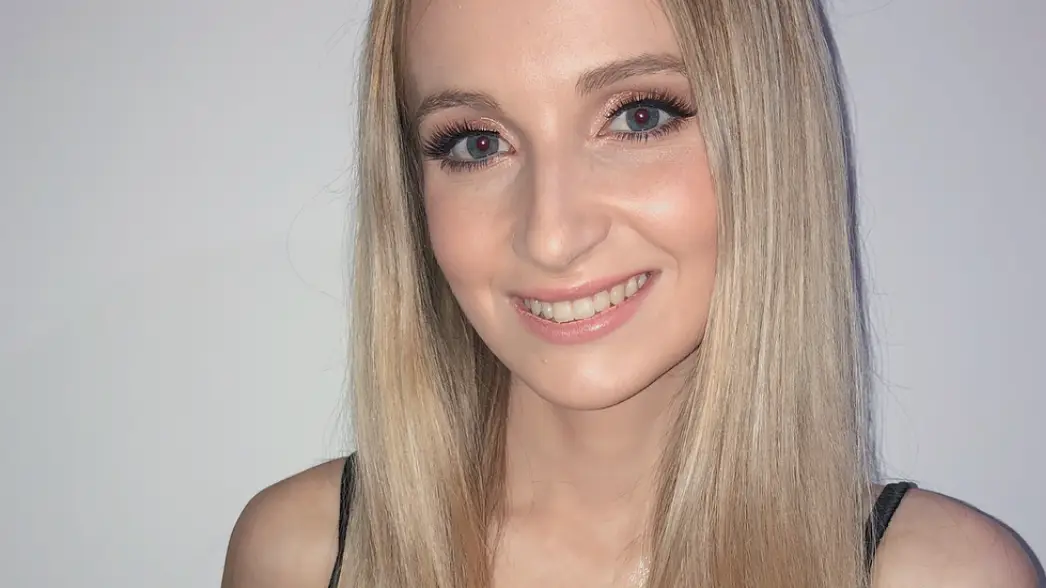
Voluntary assisted dying explained after 25-year-old woman with rare disease chooses to end her life

Warning: This article contains discussion of assisted dying which some readers may find distressing.
Questions have been raised on what constitutes voluntary assisted dying in light of a harrowing case whereby a 25-year-old battling a 'debilitating' disease seeks to end her own life.
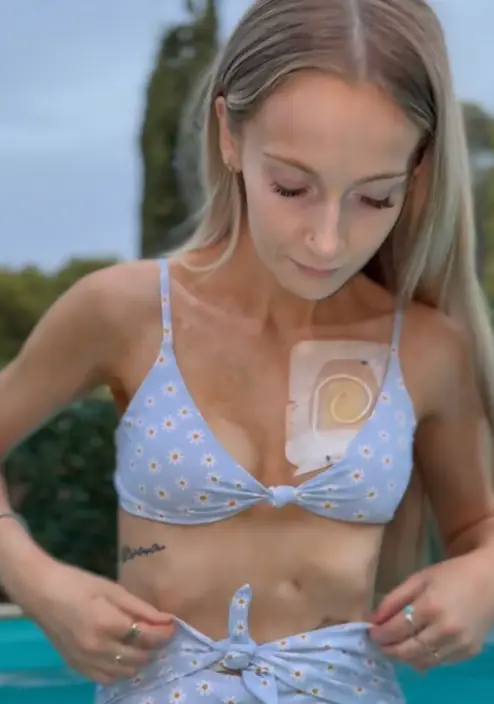
Adelaide, South Australia-based Annaliese Holland has spent a vast proportion of her life in hospital, battling a health condition that even the most experienced medical consultants couldn't put their finger on.
As she grew up, her daily symptoms - which included chronic pain, constant nausea and vomiting - worsened to the point that she has been forced to rely on total parenteral nutrition (TPN) for the last 10 years.
Advert
Speaking to news.com.au recently, Holland explained her condition: "My bowel acts as if it’s blocked, but there’s nothing actually blocking it.
"It’s just the nerves don’t work so, as gross as this is, my stools would back up so much that I would throw it up or drain out my tummy."
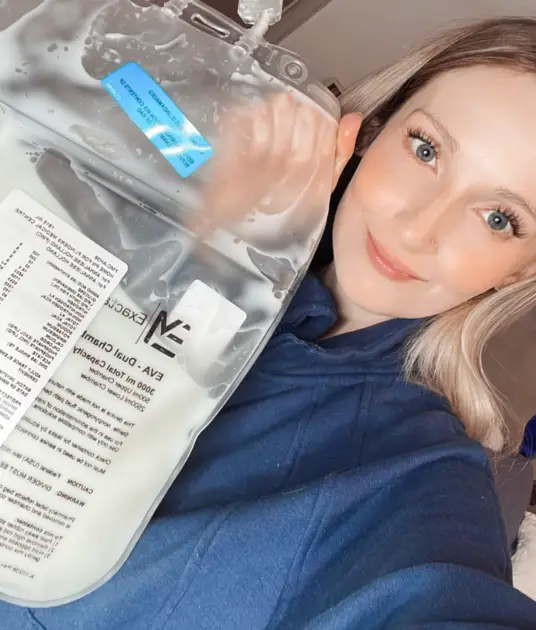
She continued: "I had feeding tubes placed in me, and I was still vomiting, and then we discovered that my stomach wasn’t emptying, so I was put on TPN. Because of the line straight into your bloodstream, if you get an infection, it turns to sepsis really quickly, which is very, very, dangerous."
When she was 18, she finally received a diagnosis - Autoimmune Autonomic Ganglionopathy, a neurological disorder whereby the nerves responsible for heart rate, blood pressure, digestion and urination become damaged.
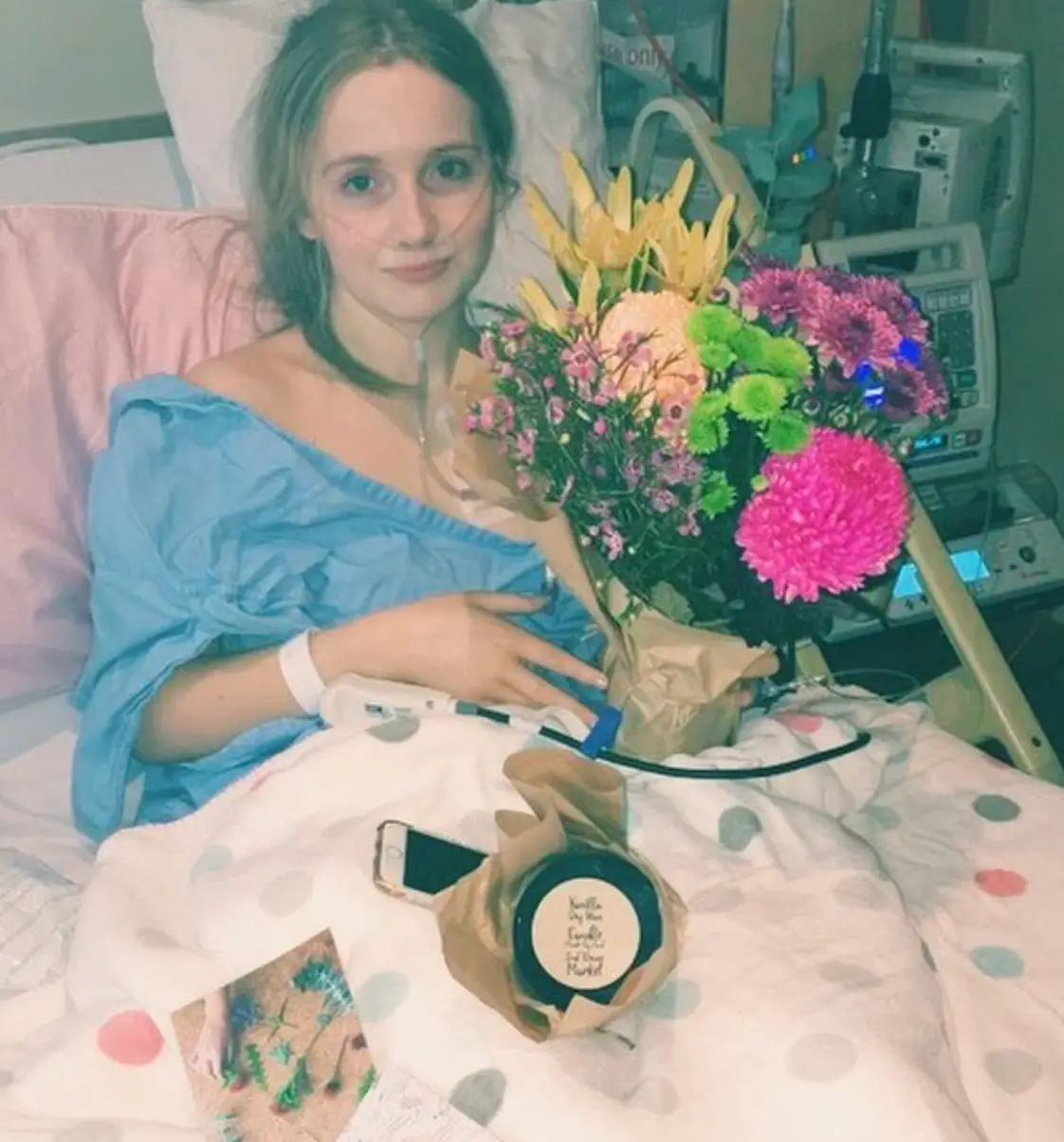
At 22, Holland was informed her condition was terminal. And in the last three years alone, she has battled multi-organ failure and has survived sepsis 25 times, as well as fractured her spine in four places, split her sternum, and almost crushed her heart and lungs.
In a bid to escape further pain, the 25-year-old has since informed her family that she wants to 'die on my own terms' with medical aid in dying.
"It wasn’t me, and I was so exhausted," she recalled of the moment she made the decision.
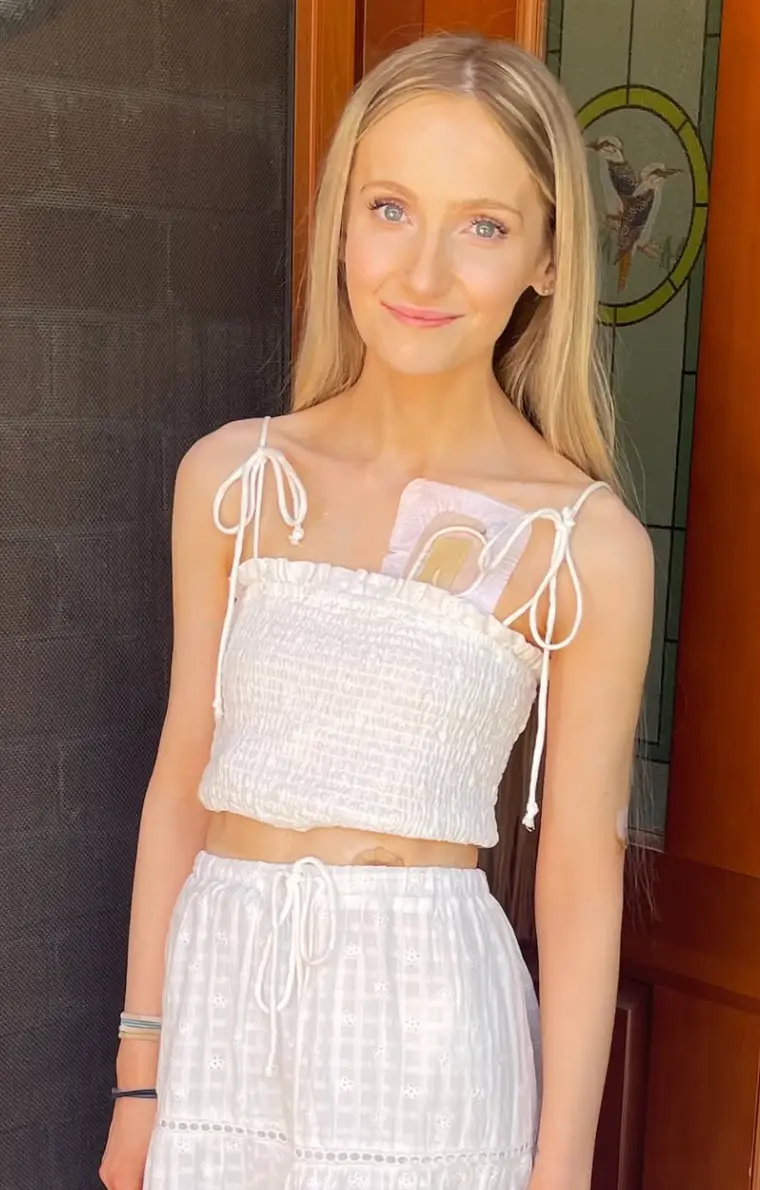
"Life for me now is getting up each day, doing what I need to do medically, taking the painkillers, trying to get through the day, just to go to bed and do it all again.
"I have the most incredible team of doctors and nurses who have watched what I have been through and I told them I don’t want this anymore."
What is voluntary assisted dying?
Voluntary assisted dying - also known as 'euthanasia' - allows patients in Australia battling terminal conditions to choose medical assistance to end their life.
According to Health Direct, there are two main types of this practice: it can be self-administered - taking the medication that a doctor has prescribed to cause death, or practitioner-administered - when a doctor gives these drugs to you.
It's legal in Queensland, New South Wales, South Australia, Victoria, Western Australia, and Tasmania, and it will soon be available in the Australian Capital Territory, as other countries around the world discuss the practice's legal discrepancies. It is not legal in the Northern Territory of Australia.
There are strict rules around this procedure Down Under, however.
A person must be 18+, an Australian citizen or permanent resident, have lived for at least 12 months in the state/territory where they're requesting euthanasia, be able to make decisions free from the pressure of others, and have a condition/disease/illness either 'likely to cause death' or 'unbearable suffering'.
Medical conditions that qualify for VAD must be expected to 'cause death within 6 months. Or 12 months in the case of progressive neurological conditions', however, different states have varying rules, like in Queensland, it is within 12 months.
Meanwhile, mental health conditions or a disability don't qualify someone for VAD.
After meeting with a team of psychologists and completing the assessment process, Holland was recently approved for voluntary assisted dying.
"I think it’s so weird to be happy, but I was so happy when I found out I was approved, I was crying," she told news.com.au. "It’s hard because for me, I am in pain and then I am at peace, but then I put the pain onto my family.
"You have this battle in your head of not wanting to hurt them, so I will put some thought into how it will happen."
She added: "For me, I don’t want to have to wake up every day with anxiety about the pain that I know is ahead for me. The pain of starving to death when they can’t feed me anymore, or the horror of sepsis.
"Knowing I can go when the time is right is just a huge relief. I feel so lucky that I do have this choice."
What does Holland's family think?
Unsurprisingly, Holland's loved ones are heartbroken by the prospect of her ending her own life - such was especially the case of her mother, Amanda, who has long been hopeful for a miracle.
Her father, Patrick, also believes his daughter can overcome the condition, having fought off several secondary illnesses so far.
He said: "Every time she goes to the hospital, she fights for her own life. The amount of times Annie has been in the hospital and on her deathbed… to have to sit there and watch her go through it … but she is amazing."
Holland added that, whilst her dad initially believed she was 'giving up' by seeking voluntary assisted dying, he made peace with the idea during a recent hospital resuscitation.
She claimed to have pleaded with him at the time: "Dad, please let me go. I will not hate you if you let me go."
Going on, she recalled: "I said, 'If this happens again, I don’t want anything. And please know that in my heart, you letting me go and saying no to treatment…I’m happy with and that’s what I want.
"He turned to me and goes, 'I don’t know how you do it, and I totally understand that you’ve had enough'."
If you’ve been affected by any of these issues and want to speak to someone in confidence, please don’t suffer alone. Call Samaritans for free on their anonymous 24-hour phone line on 116 123 or contact Harmless by visiting their website https://harmless.org.uk.
 Rhianna Benson