
Medical experts warn of foods you should avoid if you're thinking of trying sitophilia

'Sitophilia' is being hailed by an increasing number of couples as the new 'holy grail' when it comes to spicing up their sex lives - but doctors say first-timers should tread carefully.
For anyone unfamiliar with the kinky new term, it describes the desire to fulfil sexual fantasies that centre on or involve eating and drinking. Some people call it 'food play', and others, 'sploshing'.
It might see individuals lather themselves in non-bodily fluids and have their partner slowly and intensely lick it off, or, in more 'hard-core' cases, phallic produce being inserted into bodily crevices for both the giver and receiver's pleasure.
According to sex therapist Courtney Boyer, sitophilia has sky-rocketed in popularity amongst couples recently - especially Brits, 35 per cent of whom have admitted to giving it a whirl - due to both its 'accessibility' and its 'playfulness'.
Advert
"You don’t need special equipment, and it can feel less intimidating than impact play or restraint,” she told Metro recently. "It’s got great 'dip your toe in' energy."

As we say, however, medics have issued a stern warning to any couples considering trying their hand at sitophilia, emphasising the risks that come with certain cuisines.
Board-certified ob/gyn, Dr Jamil Abdur-Rahman, told SELF: "Normally, we tell people if they’re using food during foreplay, they can place it on any part of the body minus mucous membranes like the vagina and rectum."
Contact between certain food types - seven, specifically - and mucous membranes, he added, can actually prove pretty dangerous.
1) Sweet sauces:
Food play first-timers might deem the incorporation of sweet sauces like honey, whipped cream, or even melted chocolate a good entryway into raunchier sex.
According to obstetrics and gynaecology professor, Dr Hilda Hutcherson, however, whilst lathering onto breasts and other upper-body parts is predominantly safe for women, she believes incorporating such treats into a woman’s downstairs region could provide a hotbed for the spreading of germs.
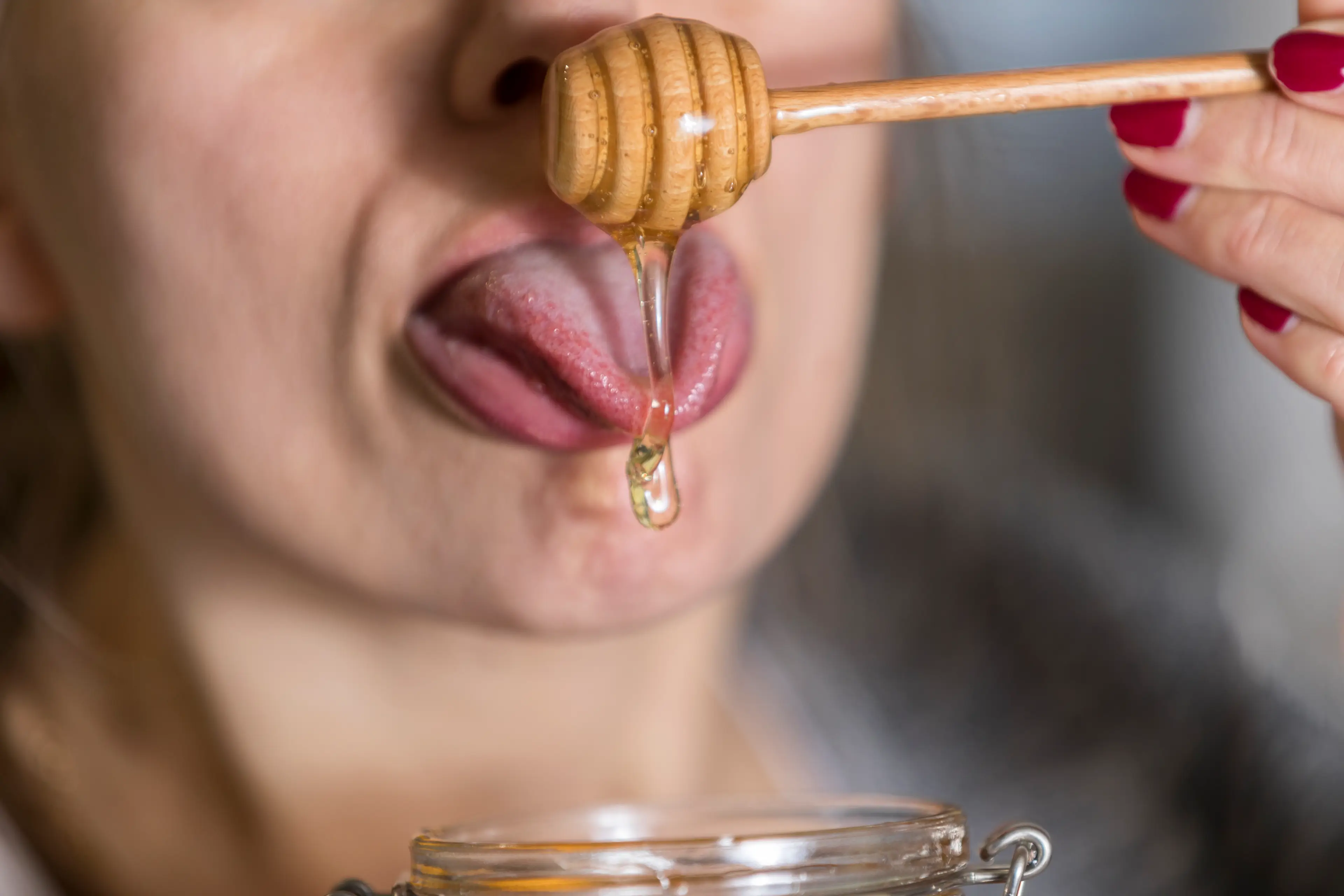
Anything you insert into your vagina, she explained, should exit totally intact - something that can’t be assured in sauce cases.
Abdur-Rahman agrees, explaining: "These things can change the pH of the vagina. Sugar can serve as a food source for bacteria and yeast."
He added that, by ignoring these warnings, a woman would be putting herself at risk of yeast infections and bacterial vaginosis.
2) Fruit and veg:
It might sound odd given how often doctors harp on at us to up our daily fruit and veg intake, but apparently, when it comes to antics between the sheets, they should be avoided - especially smaller produce.
This, again, hinges on the importance that anything inserted into the body must come out the exact same way. They might be associated with seduction, but it could be harder to retrieve smaller foods, like strawberries and grapes, from intimate areas.
Abdur-Rahman warns: "The sphincters around the anus and vagina can involuntarily contract."
Hutcherson says she’s observed these exact cases countless times, joking: "I don’t know what it is about grapes, but I’ve seen lots of them."

There’s also the risk of fruit and vegetables still carrying traces of bacteria and pesticides, even if thoroughly washed, which, again, could affect a woman’s internal pH level.
3) Spicy foods:
Possibly an obvious one, but Hutcherson says you’d be surprised by how many people think incorporating hot foods into their sex lives in an attempt to heat things up is a wise idea.
"You’ll find out pretty quickly that’s not a good idea," she joked.
Abdur-Rahman adds that sweet spices can prove just as detrimental as savoury ones.
"People think cinnamon or nutmeg might be something to try, but they can irritate mucous membranes," he emphasises. "They’re desiccants, so they tend to dry tissue out very quickly."
4) Foods you're allergic to:
You don’t just have to eat allergens to experience a potentially life-threatening reaction to them.
Touching or inserting foods you're allergic to into the body could also prove seriously risky behaviour. In fact, even breathing in particles surrounding these cuisines could inflict irreparable harm.
5) Oil, or oily foods:
There are several reasons why incorporating oil-based treats into your sex life could prove a poor idea - the first being that this sticky liquid has the ability to break down latex.
So, if you’re hoping to engage in safe sex using a condom not long after engaging in sitophilia, you might find you’re not that protected after all.
Secondly, oily liquids have the ability to carry, trap and spread harmful bacteria, leading to vaginal infections.
Even coconut oil - reportedly a popular choice for couples partial to food play - comes with a number of risks.
"It’s a thinner oil, and some people can use it without having any complications," Hutcherson explains. "But my own opinion is that you should avoid oils because they’re more difficult to remove—they sit there, and it’s a set-up for infection."

6) Alcohol:
Anyone considering sitophilia, but too nervous to kick things off, might be recommended a couple of drinks beforehand. You know, just to loosen up a little beforehand.
That said, however, experts do not believe booze should be incorporated into any sex acts themselves.
Having your partner lick champagne off your bare nipples might sound sexy, but Abdur-Rahman says the infection you’ll endure afterwards is definitely not.
"Alcohol is very irritating, so you run the risk of chemical vulvovaginitis," he warns, adding that the same risk applies to the back passage, too.
7) Piping hot or ice-cold foods:
Another reportedly popular choice for food play is ice cubes, with many part-takers admitting to running them up and down their partner’s body with their tongue, or using them to make their mouths cold before giving oral sex to stimulate nerves down there.
The issue is, however, as emphasised by Abdur-Rahmen, is that mucous membranes are super sensitive to temperature, which could see hot or cold foods inflicting pain on both the giver and the recipient.
Topics: Sex and Relationships, Food and Drink, Real Life, True Life, Advice, Health
 Rhianna Benson