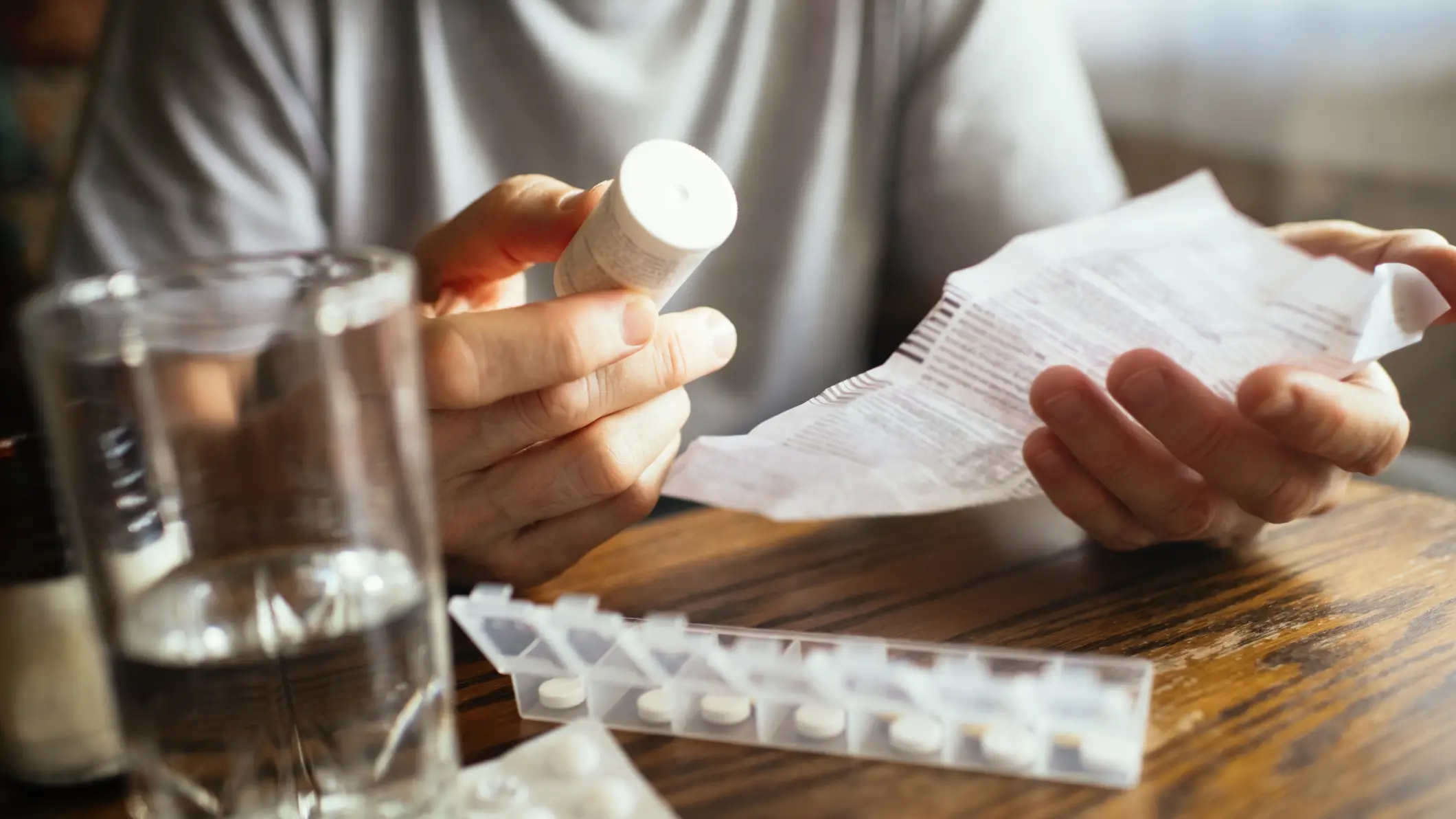
Cardiologist has warning for anyone taking aspirin daily

A cardiologist has issued a warning to anyone who takes aspirin daily.
As many as two million people in the UK take the prescription and over-the-counter medicine as a preventative for heart disease every single day, as per MailOnline.
Now, low-dose aspirin, which works as a blood thinner, helps to prevent heart attacks and strokes in people who are at high risk of them but the medication can cause side effects, although not everyone gets them.
The NHS notes that mild indigestion and bleeding more easily than normal are 'common side effects' of taking the drug but warned that, while it happens rarely, some people have serious side effects after taking aspirin.
Advert
These can include coughing up blood or have blood in your pee, poo or vomit, the whites of your eyes turning yellow or your skin turns yellow (this may be less obvious on darker skin tones), or your pee gets darker as these can be signs of liver problems.

Other serious side effects include the joints in your hands and feet becoming painful which can be a sign of high levels of uric acid in the blood, your hands or feet swelling up which can be a sign of water retention, stomach ulcers and even a serious allergic reaction (anaphylaxis) to aspirin.
Professor Malcolm Finlay, consultant cardiologist at Barts Heart Centre in Central London, shared a warning to anyone who takes aspirin daily but does not have existing cardiac or circulatory problems.
"For patients who’ve suffered a heart attack or stroke in the past, then there’s still a good argument for taking daily aspirin. But, for everyone else, there’s very little benefit," he outlined.

The expert added that the side effects of aspirin are serious, highlighting: "These side effects are no joke. You could have a bleed in the stomach, which can be a horrid few days of pain. Or, if the bleed happens in the brain, that could be life-threatening.
"Aspirin and anti-acid drugs like omeprazole should not be taken long term. There’s a reason why the NHS doesn’t recommend using aspirin in this way any more. We have much better cardiovascular treatments that don’t have these negative effects," he concluded.

The Mail reports that in the early 2000s, when aspirin use was at its height, the drug may have been linked to around 7,000 deaths a year in the UK. It has also raised concerns about an increased risk of bleeding in the brain.
Guidance changed in 2021, advising people to take daily aspirin only on a doctor’s recommendation. By 2023, GPs were told not to routinely prescribe it to patients with no history of heart attack.
 Rhiannon Ingle