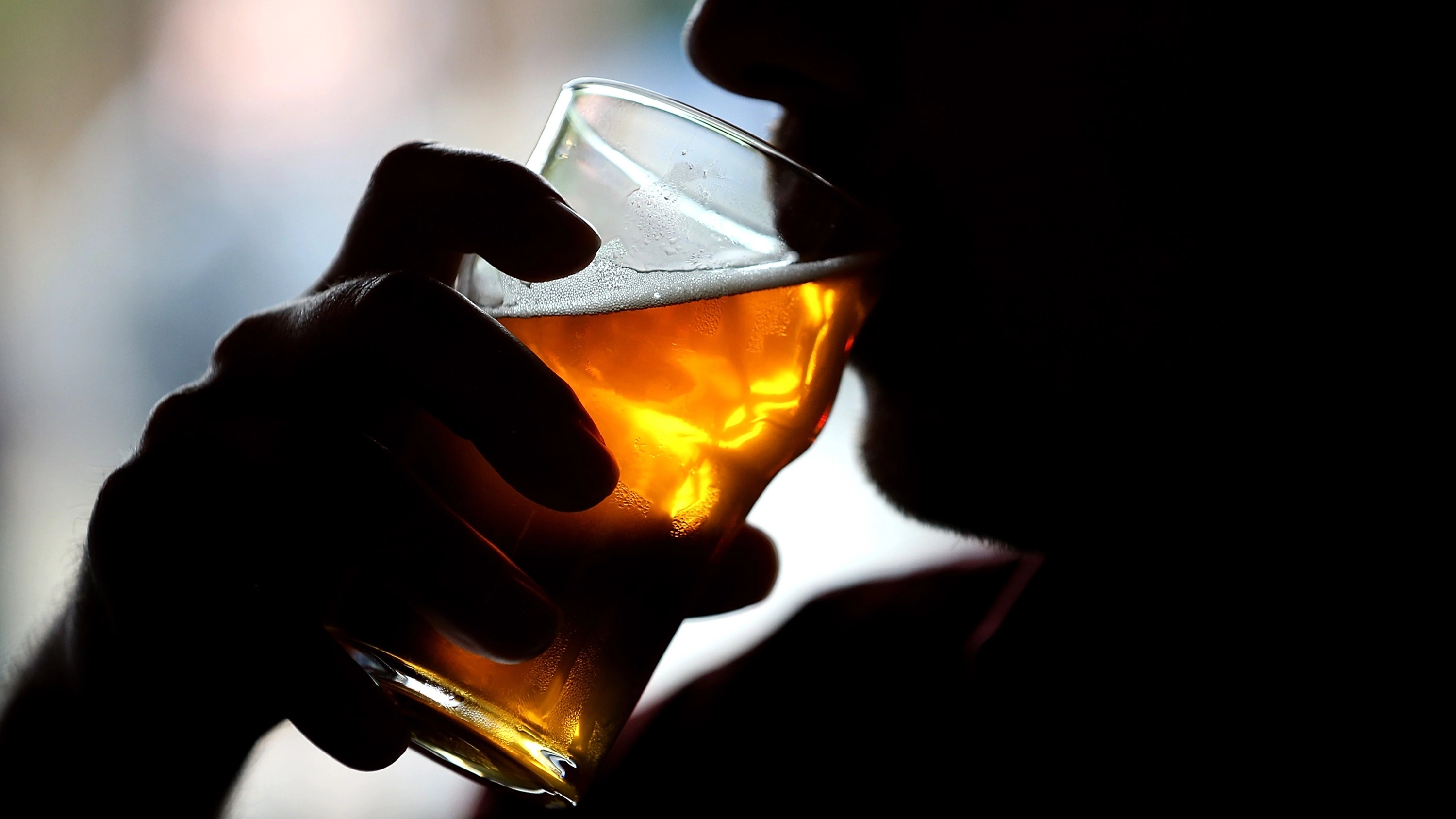
Doctor shares five warning signs you’re in the alcoholic danger zone

For whatever reason, it feels like many of us go a bit crazy on the booze during the festive season.
Whether it's during end-of-year work parties, holiday market tipple time or Christmas Eve get-togethers before the big day itself - which, of course, is jam-packed with mulled wine, bubbly and copious amounts of Bailey's - it's clear a lot of us probably go a tad overboard when it comes to drinking right about now.
But you may want to take a second look at your drinking habits, as a doctor has now shared five warning signs you’re in the alcoholic danger zone.
Now, many of us (at least the unlucky ones) know that while alcohol can be fun in the moment, having too much of it can lead to day-long hangovers, poor sleep and don't even get me started on the hangxiety.
Advert
But it's important to know the signs when the tendency to drink more and more takes you to a darker mental place.

Dr Richard Piper, the chief executive of Alcohol Change UK, told The Telegraph: "Alcohol is a chemical that can bring about big changes in the complex functions of the human brain. When we drink alcohol, it triggers the release of other chemicals in the body that make us feel more content, less inhibited and not as sensitive to physical and emotional pain.
"It’s no surprise that once we start drinking, we often become reliant on its immediate effects when looking to de-stress or feel 'better'."
According to Dr Piper, more than 10 million of us are drinking alcohol in a way that negatively impacts our health and well-being - a pretty shocking statistic if you ask us.
Dr Niall Campbell, a psychiatrist and addiction consultant at The Priory, Roehampton, who focuses on four areas when dealing with alcohol-dependent patients - physical, mental, relationship and professional health - added: "We look at the whole spectrum and ask specific questions.
"I ask: 'Are the hangovers getting worse, are you falling over often, are you being secretive, do you feel ashamed, did you embarrass yourself at the office party, were you disciplined for that, are you calling in sick regularly, are you having more of a relationship with the bottle than with people?'
"These are the sort of questions we can all ask ourselves."
So, what are five ways you can tell you're edging further into the danger zone?

Habitual drinking
According to Dr Campbell, developing a bad relationship with alcohol doesn't always have to be through trauma.
"It can be habitual," he says. "You get into a pattern of drinking the same way every day: a glass of wine while cooking dinner, finishing off the bottle with the meal, a nightcap before bed. It can soon build."
Using alcohol as an emotional crutch
Dr Campbell noted that he regularly sees people using alcohol as a coping mechanism, but he warns, 'it definitely won’t help you manage well in a crisis'.
Andrew Harvey, a BACP-accredited counsellor and psychotherapist with specialism in alcohol and substance abuse, asks his clients: "When did you start using alcohol rather than enjoying alcohol?"
Unfortunately, however, it's not always as see as a self-assessment as many people will experience self-denial due to shame and embarrassment.
"I’ve never met anyone who set out to have a problem with drink, but once it’s there, the avoidance, deception and self-loathing can manifest," Harvey says.
He added: "Sometimes clients struggle to follow through with promises they make. For example, they might say they will restrict their drinking to weekends only, but then find themselves pouring a drink on Tuesday. Having this pointed out by others in a supportive, non-confrontational way can be helpful."
Harvey acknowledged that for such individuals, alcohol is perceived as a 'medicine' for their pain.
"It’s the medicine for a lot of people’s pain. It numbs them for a while, but its relief is short-lived. Alcohol will mask bad feelings, but it doesn’t solve them," he warns.

Having more time on your hands
Surprisingly, Harvey says that in his experience as a therapist, he's seen unhealthy drinking habits 'accelerate' after retirement.
"Every night is Friday night; you don’t need to get up for work the next day. Plus, retirement can mean that people lose their status, confidence, focus; they’ve got time on their hands, they’re bored," he continues.
"Lifestyle change is hard for most of us. Giving up a routine that’s been in place for decades can really shake people up."
It's also important to note the common misconception surrounding problematic drinking, namely that it means you drink every day when it can also present in going without the booze for weeks on end, only to end up in a dangerous bingeing session.
"Dependence takes on many forms," adds Harvey. "It doesn’t always present itself as hardcore daily excess."
Looking for situations where drinking is acceptable
And, with the festive season, it's clear there are countless opportunities to drink, leading many to seek out these specific environments to engage in unhealthy or unsafe drinking.
"People with an unhealthy relationship with alcohol tend to veer towards situations where drinking is acceptable," says Harvey.
Sir Ian Gilmore, a liver specialist and chair of the campaign group Alcohol Health Alliance UK, warned: "The burden on the NHS isn’t the so-called alcoholics, it’s people in the middle of the drinking spectrum, because there are so many of them.
"It’s a myth that a glass of red wine a day does you good. In rough terms, if you stick to the recommendations of drinking no more than 14 units a week, your chances of dying of an alcohol-related disease are less than one in a hundred."
Sir Gilmore added: "Unfortunately, at this time of the year, it’s more normal to get completely inebriated, put yourself in danger and then shrug it off as a bit of festive fun. The trouble is, when the parties are all over, there can be significant physical and mental repercussions on your health."

Drinking alone
And lastly, is frequently getting drunk alone.
Now, this doesn’t necessarily mean you have a problem with alcohol but doing so alone could pave the way for unhealthy behaviours free from the judgment of others.
Dr Campbell notes that, since COVID, people are drinking more throughout the day due to work-from-home set-ups, which is another potential route into the alcoholic danger zone.
"There is no one around to witness this behaviour, which means a regular afternoon drink can build into a problem," he concludes.
Please drink responsibly. If you want to discuss any issues relating to alcohol in confidence, contact Drinkline on 0300 123 1110, 9am–8pm weekdays and 11am–4pm weekends for advice and support.
Topics: Health, Life, Advice, Explained, Food and Drink, Alcohol
 Rhiannon Ingle