Doctor issues warning to anyone who uses period tracking apps as contraception

A doctor has issued a very important warning to anyone who uses period tracking apps as contraception.
Now, for many of us, period trackers are just as much a part of our monthly cycle as are tampons, sanitary pads and copious amounts of painkillers.
And while they can be great tools used to predict when we'll be due on or help us learn a little more about the four phases of our cycle, they should be used for their original purpose, which is, as we know, tracking our period.
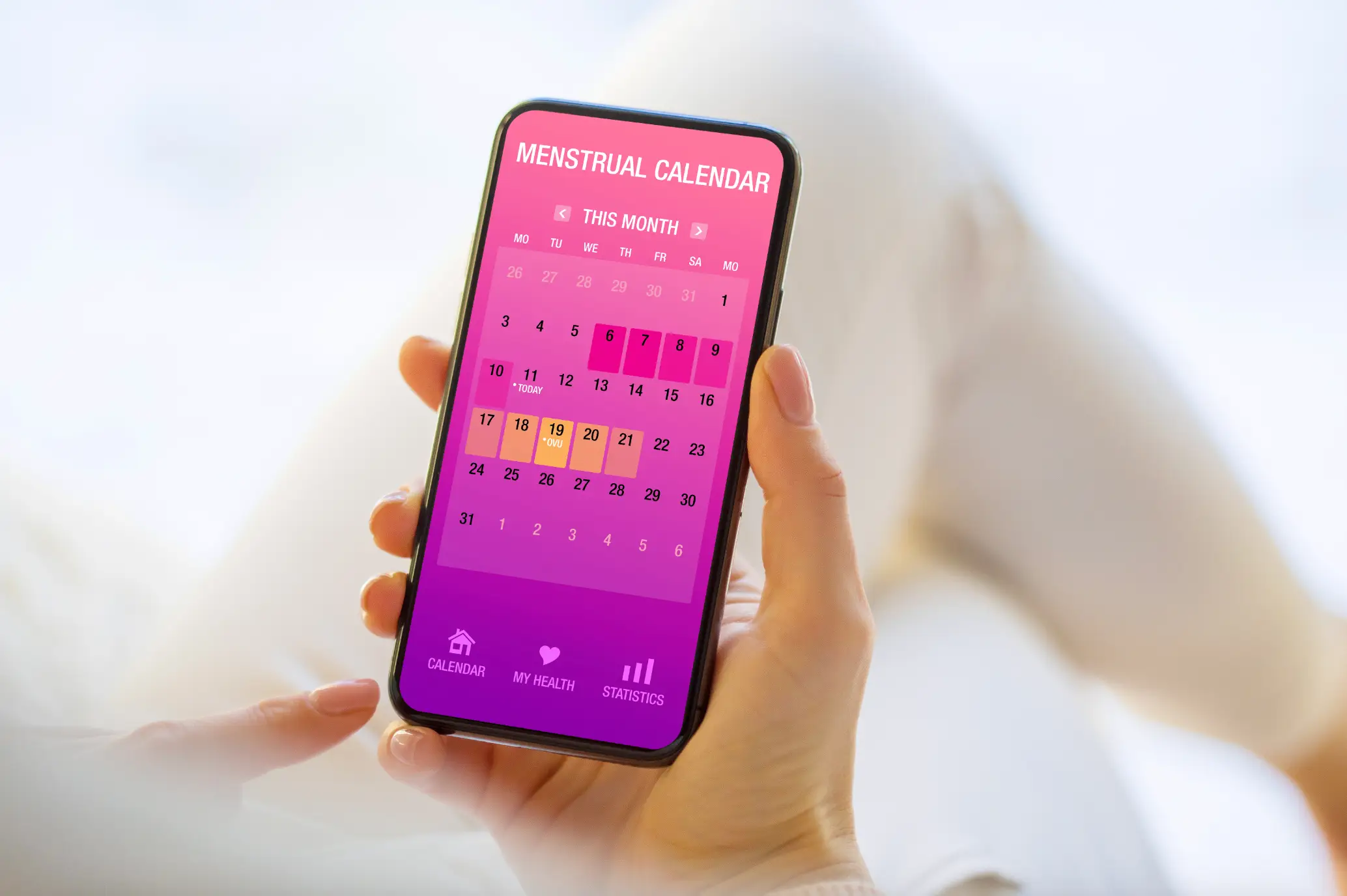
Whilst period trackers display fertile windows, new research from Natural Cycles, analysing over 540,000 cycles, shows that those fertile windows may give users the false impression that they can also use these apps to prevent pregnancy.
Advert
Reliance on standard period tracking apps for birth control comes with an estimated 22 percent risk of unintended pregnancy for standard cycles, and up to 65 percent for irregular cycles.
Dr Eleonora Benhar Noccioli, VP of Science and Data at Natural Cycles, has now spoken to Tyla about why you shouldn't be using your period tracking apps as a form of contraception due to the risk of unwanted pregnancies.
She explained: "While conversations about female pleasure were once considered taboo, today there is also a growing and important dialogue around contraception and informed choice. "Increasingly, women are reconsidering hormonal contraception and exploring non-hormonal alternatives.
"This shift can sometimes be driven by a desire for greater body literacy, concerns about potential side effects, and improved access to digital health technologies."
According to Dr Noccioli, the popularity of period tracking apps has led some to view them as a contraceptive option.
"These apps typically display a predicted fertile window, which can create the impression that days outside this window carry little or no risk of pregnancy," the expert outlined.
"However, many calendar-based methods estimate ovulation using past period dates and often assume a regular 28-day cycle.
"In reality, ovulation can vary from cycle to cycle — particularly for those with irregular cycles — meaning the fertile window may be incorrectly identified."
In Natural Cycles' analysis of more than 540,000 menstrual cycles, experts found that period-tracking apps using calendar-based predictions 'frequently misclassify fertile days ' which results in up to '44 times higher predicted unintended pregnancy risk per cycle compared with a regulated digital contraceptive'.
Natural Cycles is a regulated form of birth control. The app is CE-marked in the UK and FDA-approved in the US.
You can find out more about different methods of contraception on the official NHS website here.
For help, support and advice about an unwanted pregnancy, contact the British Pregnancy Advisory Service on 03457 30 40 30, 7am to 6pm Monday to Friday, 8am to 4pm on Saturdays, and 9.30am to 2.30pm on Sundays.
Topics: Advice, Explained, Health, Life, Periods, Pregnancy, Sex and Relationships, Social Media, Technology, Women's Health, Tyla Exclusive
 Rhiannon Ingle