Why Olympic snowboarders are wearing bibs on one shoulder

The 2026 Winter Olympics kicked off last Friday (6 February), and we've now approached around the halfway point with the Games set to run until next Sunday (22 February).
The major sporting event has made a number of headlines so far over the 'breaking' gold medals, the condom crisis, the 'penis-larging' controversy and, of course, the Sturla Holm Lægreid 'cheating' scandal.
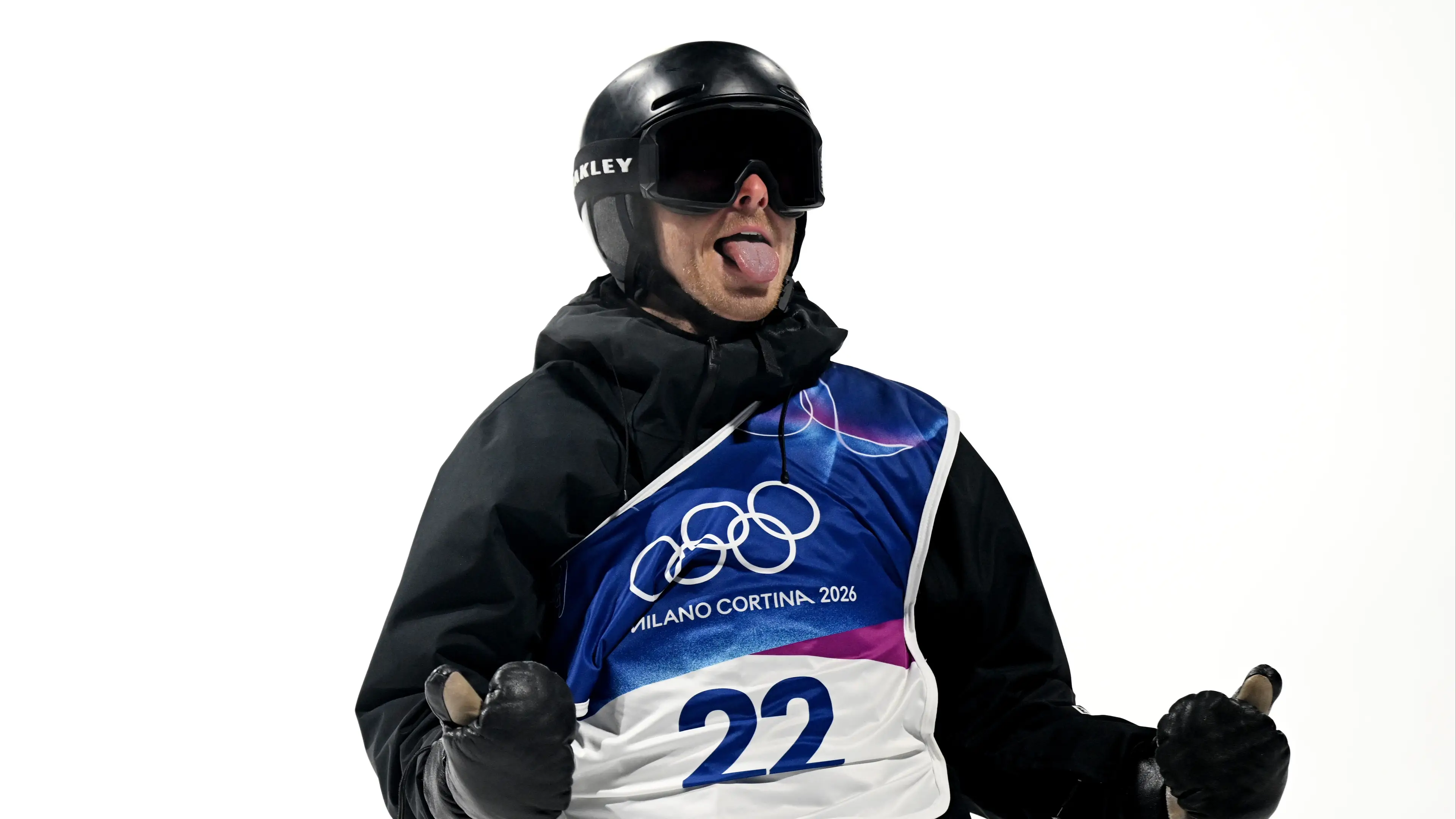
Many Olympic fans have also been intrigued as to why so many snowboarding athletes wear their official bibs across one shoulder.
While it may look like a cool, asymmetric styling choice, it's far from a fashion statement as it's actually a safety precaution for when snowboarders are shredding the snow at speeds of up to a whopping 70mph.
Advert
"Sometimes those bibs can fly up in your eyes. That's very, very dangerous. So a lot of the riders will tuck it under their arm," CBC Olympics snowboarding expert Craig McMorris said during China's 2022 winter games.
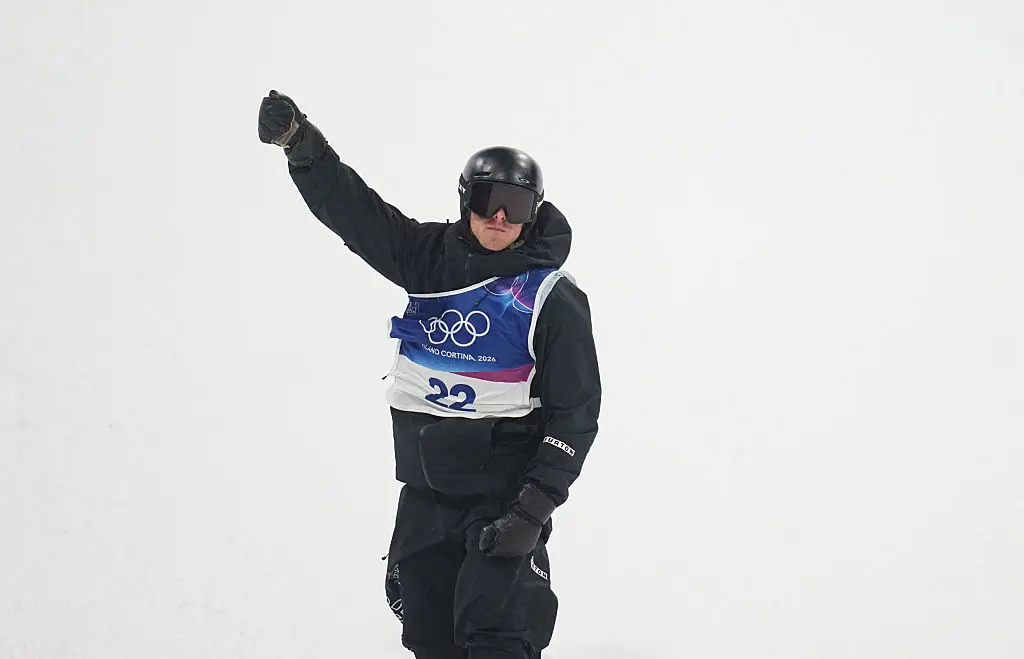
Snowboarding Help echoes this, explaining: "Snowboarders wear bibs on one shoulder as a safety measure, as the bibs can flap around and block their vision when performing tricks. When tucked under the arm, the chances of this occurring are very low. This is not standard practice, but it is an effective manoeuvre for some top athletes."
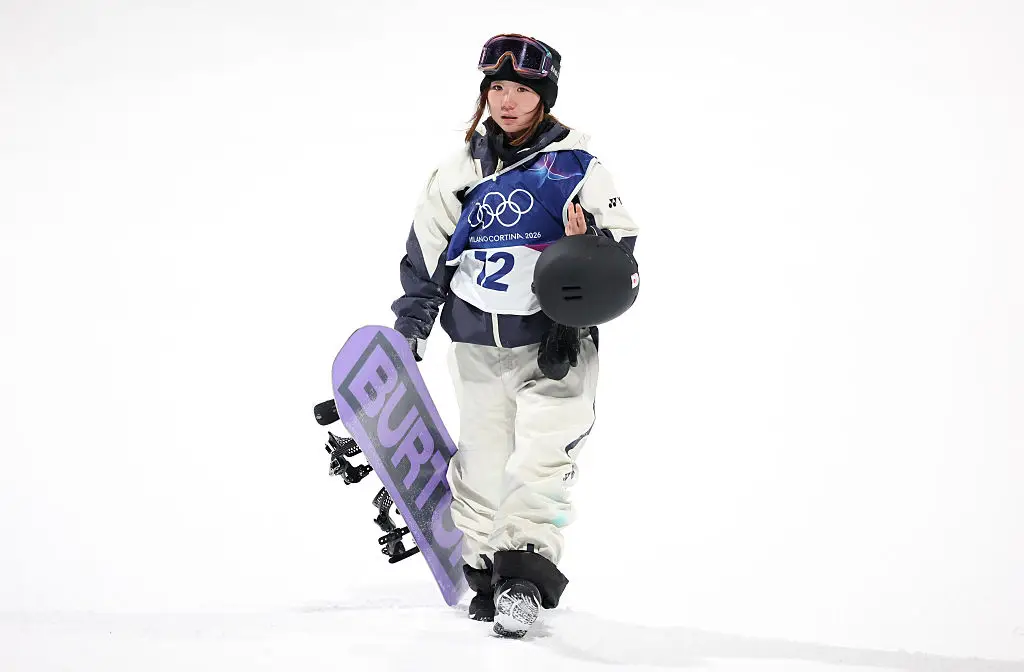
Now, it is important to note that not every snowboarder treats their bib like this, but plenty have been seen tucking theirs neatly under one arm at this year’s Winter Games.
On Monday (9 February), one of those riders took home the gold medal victory.
Team Japan’s Kokomo Murase dominated the Big Air, a discipline that sends athletes flying off a ramp to throw a high-risk trick before sticking the landing.
With spins, grabs and blind landings in play, anything blocking your view is asking for trouble, hence the one-arm bib tuck.
But why do Olympians wear bibs in the first place?
Well, years and years ago, athletes had paper signs pinned on in order to help officials identify them on and off the slope - a system which has since been replaced by electronic tags built into the bibs.
Colour also matters, as in ski and snowboard cross, bib colours reflect ranking with red going to the top seed, followed by green, blue, yellow, white and black.
Those colours also decide gate choice for each heat, with the rider in red getting first pick and so on.
Topics: Olympics, Sport, News, World News, Explained
 Rhiannon Ingle