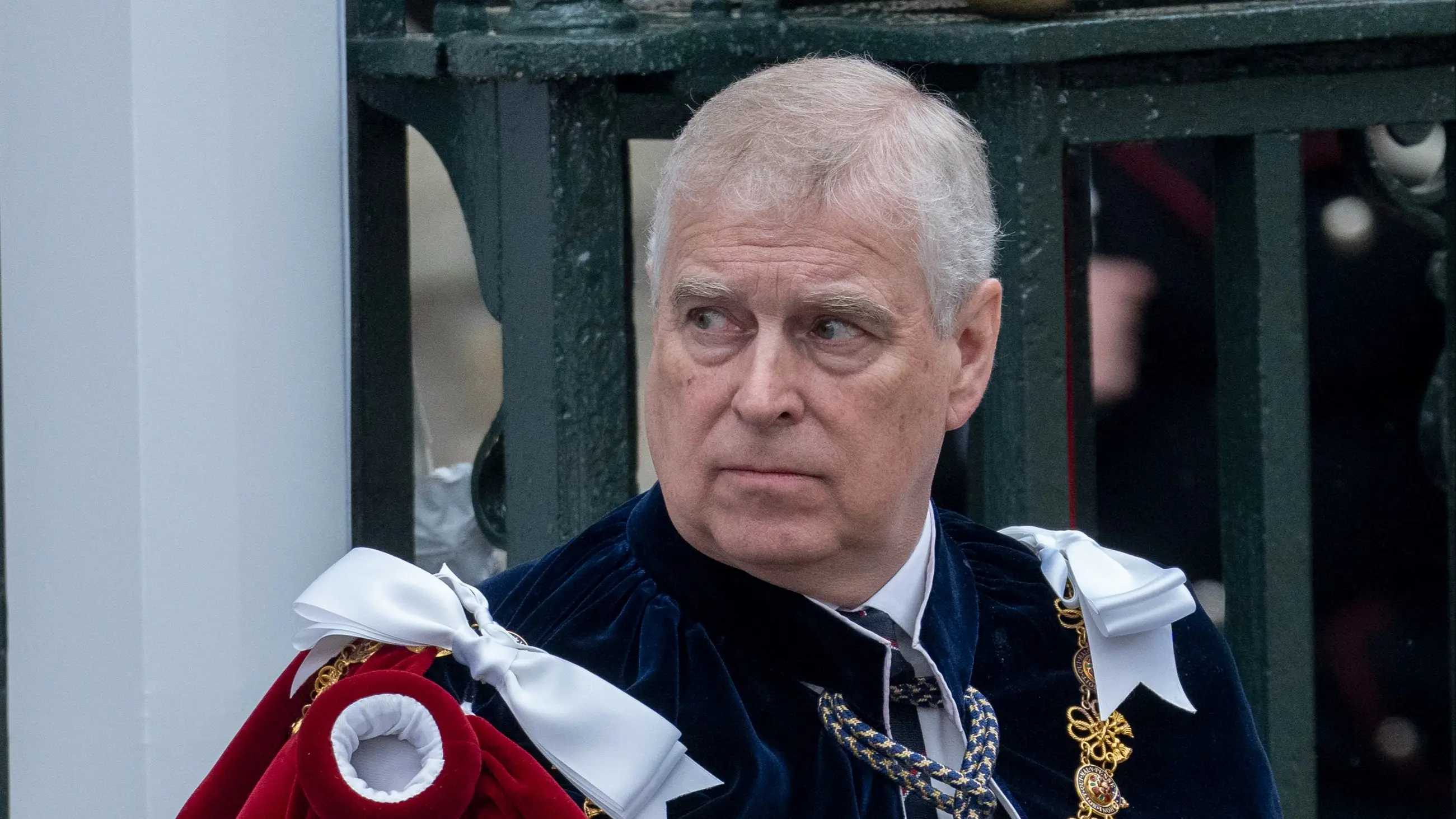
What 'misconduct in public office' offence Andrew Mountbatten-Windsor has been arrested for means

Questions have been raised following the reported arrest of Andrew Mountbatten-Windsor.
News broke earlier today (19 February) that the former 'Prince' had been arrested by Thames Valley Police on suspicion of misconduct in public office.
Photos subsequently emerged showing unmarked police cars arriving at the royal residence, Wood Farm in Norfolk, while plain-clothed officers gathered outside the property.
Police previously told the press they were in the midst of reviewing allegations that a woman was trafficked to the UK by late sex offender Jeffrey Epstein, to have a sexual encounter with Andrew, who turns 66 today.
Advert
It came following the release of three million federal files by the US Department of Justice relating to Epstein's heinous abuse crimes, many of which shed a damning light on his relationship with Andrew.

The royal has long faced allegations of sexual abuse himself, which he has continuously denied, including that he had sex with the late Virginia Giuffre when she was a minor, after she'd first been trafficked by Epstein.
In 2022, he paid his alleged victim an undisclosed amount to settle a civil sexual assault claim.
Andrew's final royal titles were stripped by his brother, King Charles III, last year, ahead of the first release of the Epstein files.
In the documents, Andrew's name appeared hundreds of times, including in private emails and images. One, especially controversial image showed him crouched on all fours over an unidentified woman.
It's vital to note, however, that being named or pictured in the files doesn't suggest any wrongdoing.

The father-of-two has also been accused of sharing sensitive information with the paedophile - who took his own life in 2019 - while serving as the UK’s trade envoy.
According to the Institute for Government, misconduct in public office describes an offence in abuse or neglect of power or responsibilities by someone holding public office.
This applies to individuals in both government or public sector roles, examples including elected officials, civil servants, the police and judiciary, as well as working members of the Royal Family. It's an offence that carries a maximum sentence of life imprisonment in the most severe cases.
"As part of the investigation, we have today (19/2) arrested a man in his sixties from Norfolk on suspicion of misconduct in public office and are carrying out searches at addresses in Berkshire and Norfolk," a new statement from the force read.

"The man remains in police custody at this time. We will not be naming the arrested man, as per national guidance."
The message continued: "Please also remember that this case is now active so care should be taken with any publication to avoid being in contempt of court."
Assistant Chief Constable Oliver Wright also spoke out, telling the press: "Following a thorough assessment, we have now opened an investigation into this allegation of misconduct in public office.
"It is important that we protect the integrity and objectivity of our investigation as we work with our partners to investigate this alleged offence. We understand the significant public interest in this case, and we will provide updates at the appropriate time."
Simarjot Singh Judge, Managing Partner at Judge Law, has also provided an insight into how a misconduct in public office charge might be applied to Andrew.

"Misconduct in public office is a serious common law offence which requires prosecutors to show that a public officer deliberately breached their duty in a way that represents a serious abuse of public trust," he explained.
"It is not enough for there to have been an error of judgment - the conduct must be wilful and sufficiently serious."
Judge continued: "If sensitive government material was shared without proper authority, the question would be whether that amounted to a deliberate breach of official duty. Prosecutors would need to establish intent, seriousness and whether the conduct crossed the threshold into criminal wrongdoing.
"An arrest under suspicion does not mean a charge has been brought, and it does not imply guilt."
He added: "Police must gather and assess evidence before deciding whether the case meets the charging threshold."
Topics: Prince Andrew, Royal Family, UK News, Crime, Jeffrey Epstein
 Rhianna Benson