What to do if you’re ever caught in an avalanche after 8 people die in California ski resort

Officials have confirmed that eight people have been found dead and one remains missing after an avalanche near Lake Tahoe in California on Tuesday (17 February), in what is the deadliest avalanche in the US in more than four decades.
Search and rescue crews were dispatched to the Castle Peak area of the Sierra Nevada after a 911 call reporting the avalanche had buried 15 skiers. Six of them have been found alive.
Nevada County Sheriff Shannan Moon said during a news conference that authorities have told the families the mission has moved from rescue to recovery.
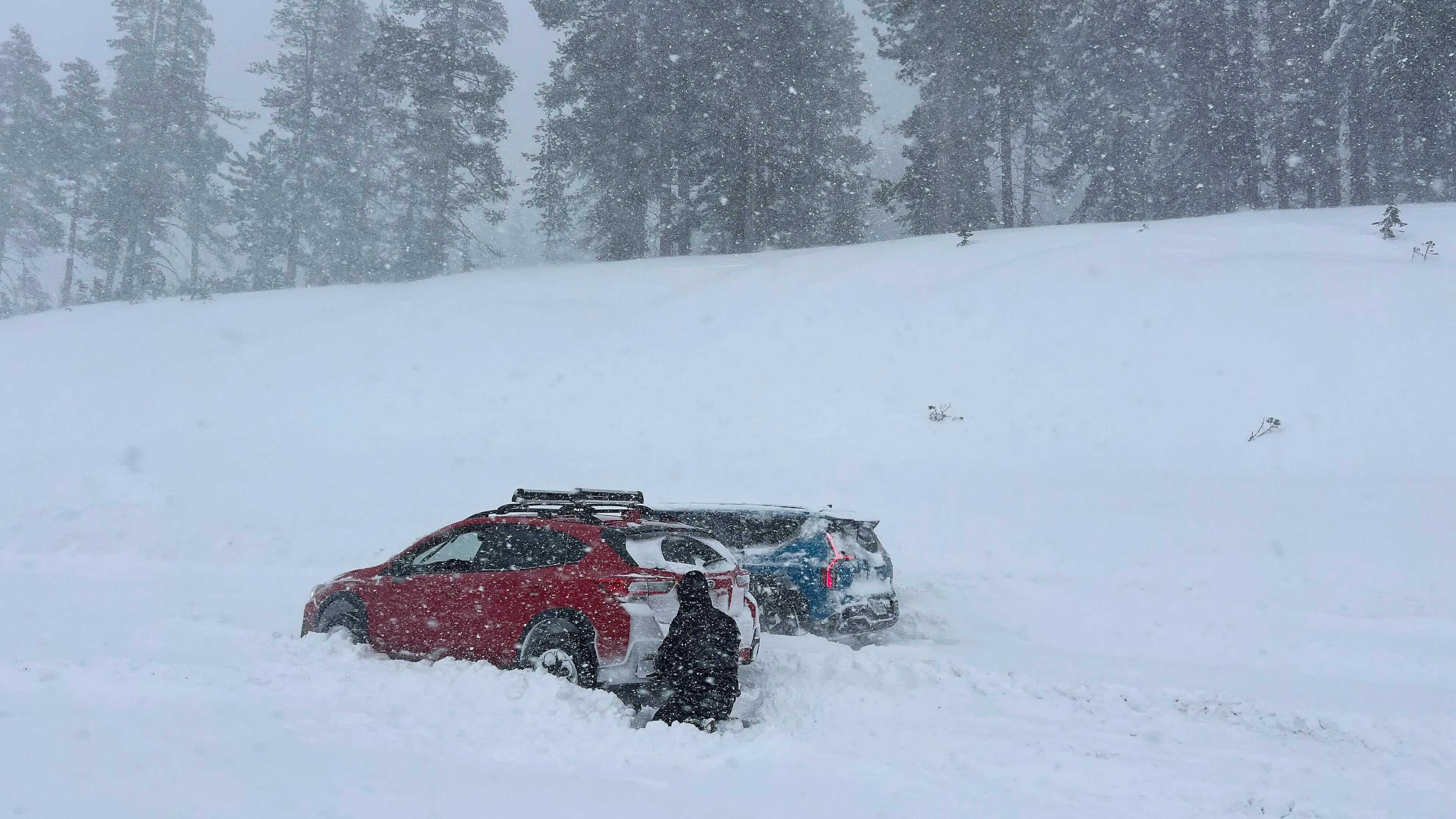
The group was on a three-day trek in Northern California’s Sierra Nevada as a monster winter storm pummelled the West Coast.
Advert
The skiers were on the last day of their trip and had spent two nights in remote huts, said Steve Reynaud, an avalanche forecaster with the Sierra Avalanche Center.
He said the area requires navigating rugged mountainous terrain, and all food and supplies need to be carried to the huts.
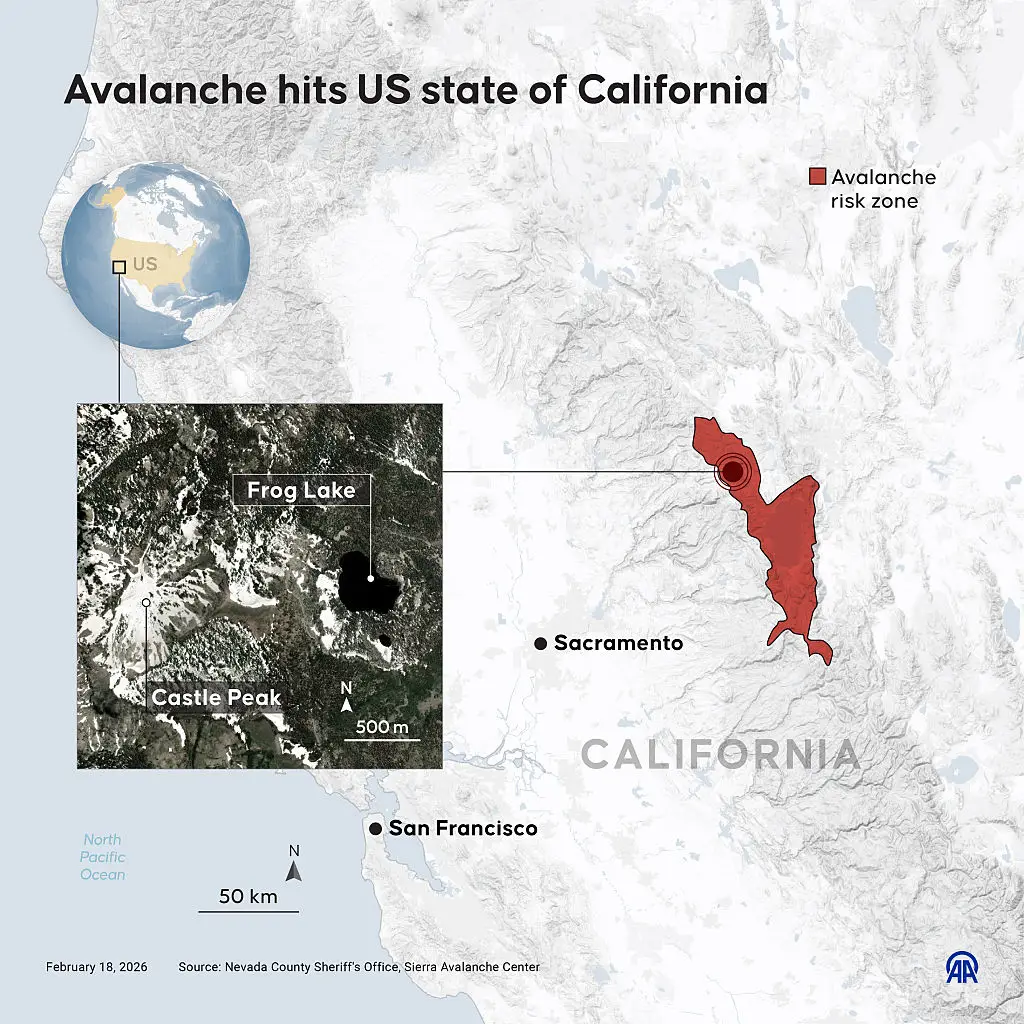
The area near Donner Summit is one of the snowiest places in the Western Hemisphere, and until just a few years ago was closed to the public.
It sees an average of nearly 35ft of snow a year, according to the Truckee Donner Land Trust, which owns a cluster of huts where the group was staying near Frog Lake.
Blackbird Mountain Guides said in a statement that the group, including four guides, was returning to the trailhead when the avalanche occurred.
"Our thoughts are with the missing individuals, their families, and first responders in the field," Blackbird said in a statement.
Ashley Quadros, a spokesperson for the Nevada County Sheriff’s Office, explained that two of those rescued after several hours of searching were taken to a hospital for treatment.
The Sierra Avalanche Center warned that the risk of avalanche remains high and advised against travel in the area.
Multiple feet of snowfall and gale-force winds in recent days left the snowpack unstable and unpredictable, and more snow was predicted to fall, the center said.
Nevada County Sheriff Captain Russell Greene said authorities were notified about the avalanche by Blackbird Mountain Guides, which was leading the expedition, and the skiers’ emergency beacons.
What to do if you're caught in an avalanche
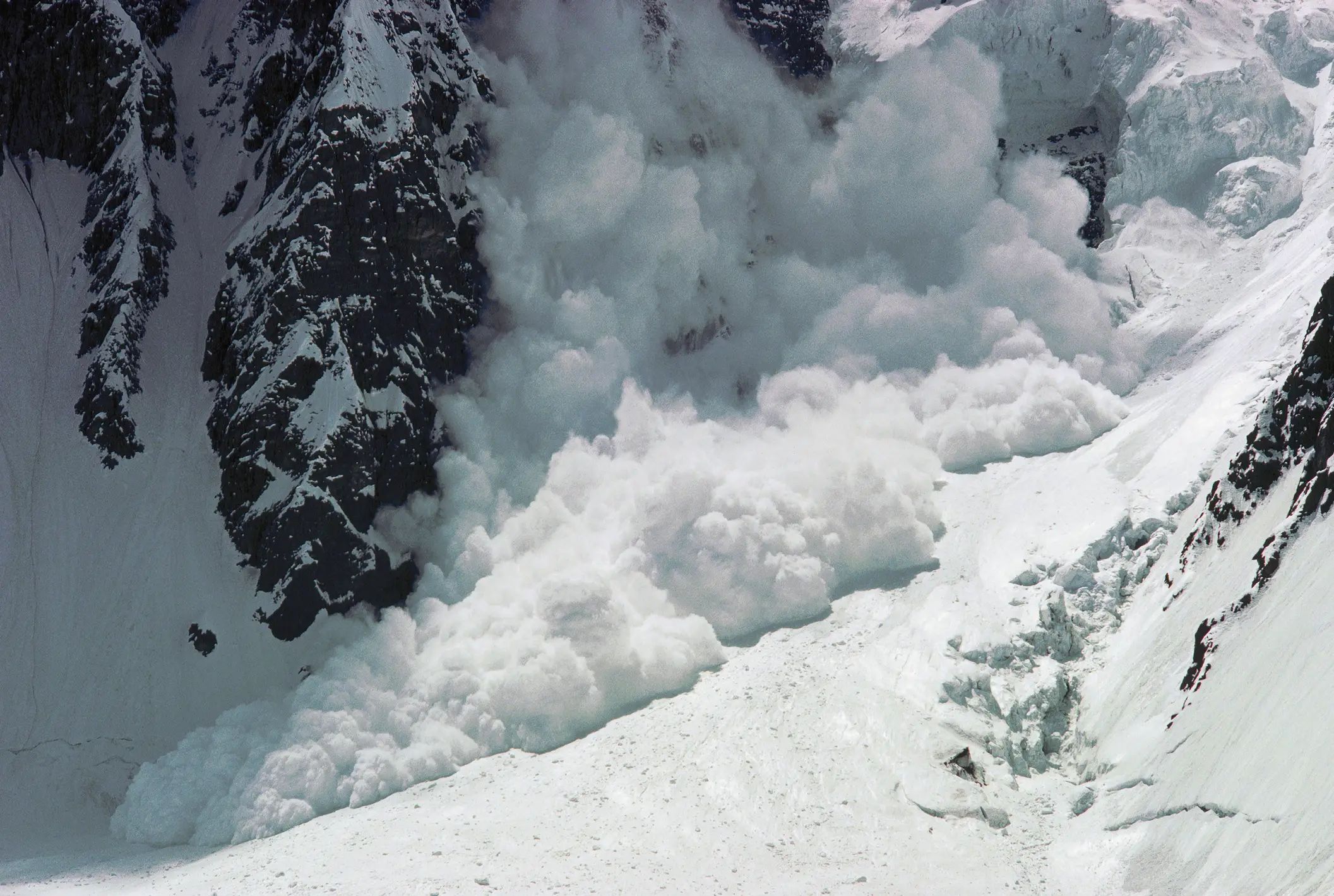
Mountaineering Scotland explains that, if caught in an avalanche, any defensive action is very difficult, with movement relative to the debris often impossible.
With that said, however, the experts outlined several tips that may be useful:
- Try to delay departure by plunging an ice axe into the under-surface. This may help to keep you near the top of the slide
- Shout. Others may see you
- Try to run to the side, or jump up-slope above the fracture
- If a hard slab, try to remain on top of a block
- Get rid of gear, sacks, skis, etc
- Try to roll like a log, off the debris
- Swimming motions sometimes help
- As the avalanche slows down, you may be able to get some purchase on the debris. Make a desperate effort to get to the surface, or at least get a hand through
'First reactions' guidance to an avalanche
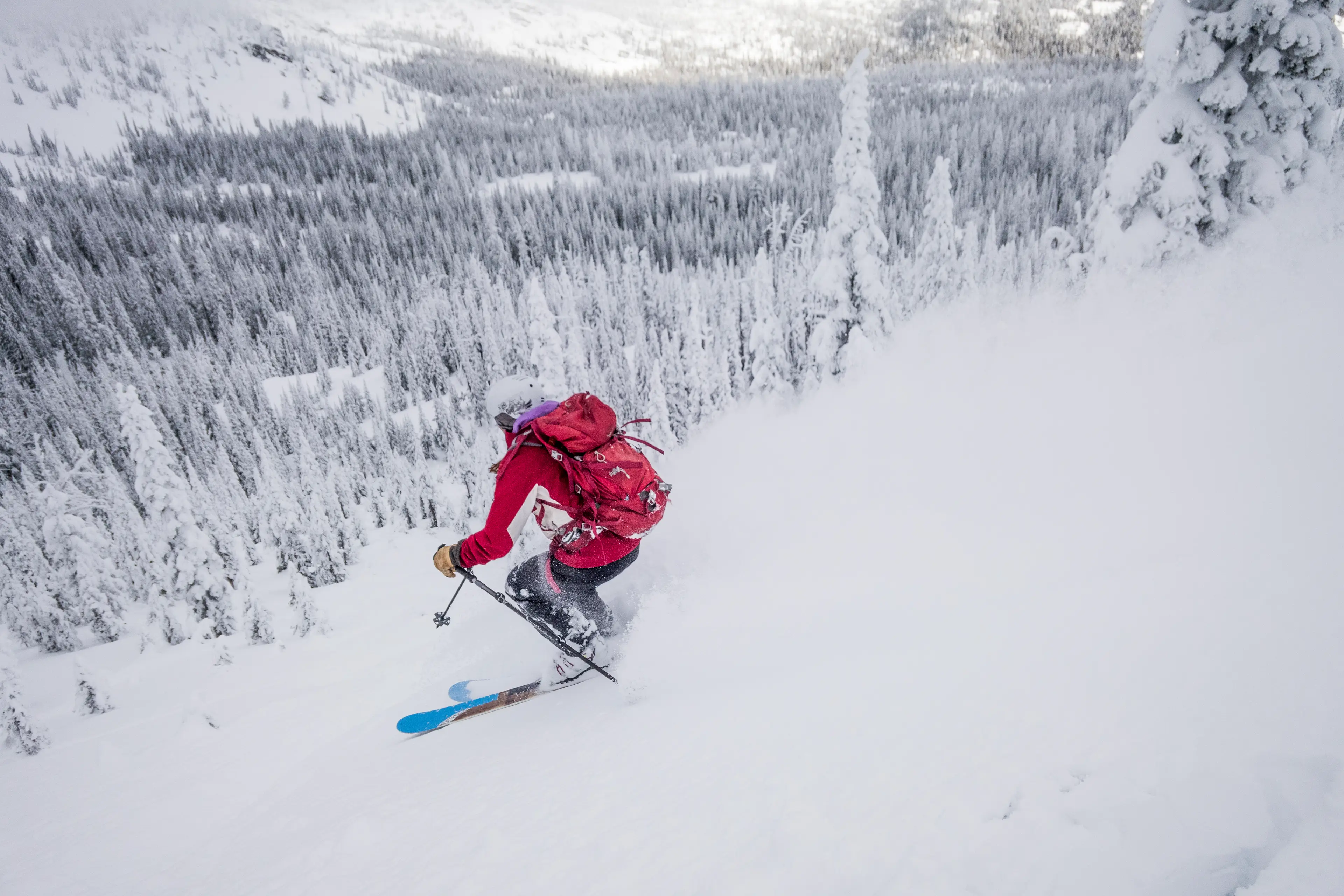
Snowsafe has also provided a rundown of some handy 'first reactions' guidance, which includes moving sideways 'to give yourself the best of chances of avoiding being caught in the middle' of an avalanche.
The second tip was jumping 'upslope' to avoid getting caught, with the third tip recommending skiers to carry an avalanche transceiver so rescuers can pinpoint your exact location and start digging you out as quickly and safely as possible.
Fourth on the list was 'lose everything you have'.
"Its important to get rid of everything, skis, rucksack, poles, whatever you have on lost it. It’ll only weigh you down further into the avalanche, so you need to make yourself as light as possible so you can get to the surface as quickly as possible," they explain.
The penultimate point is to 'grab something close', with the website outlining: "While you may not be able to do this in a bigger, more powerful avalanche, you should grab onto something for the smaller, less powerful avalanches as it can save your life, like a rock or a tree."
And the final tip is to 'swim for your life'.
"Once you have found yourself being dragged down the mountain by large amounts of snow, start swimming as hard as you can in the direction of the snow to try and stay afloat and to avoid getting buried deep in the snow once it settles," Snowsafe adds.
And, if you find yourself buried in the snow, the experts at Mountaineering advise you:
- Keep one hand in front of your face and try to clear and or maintain an air space
- Try to maintain space for chest expansion by taking and holding a deep breath
- Try to avoid panic and conserve energy. Your companions are probably searching for you
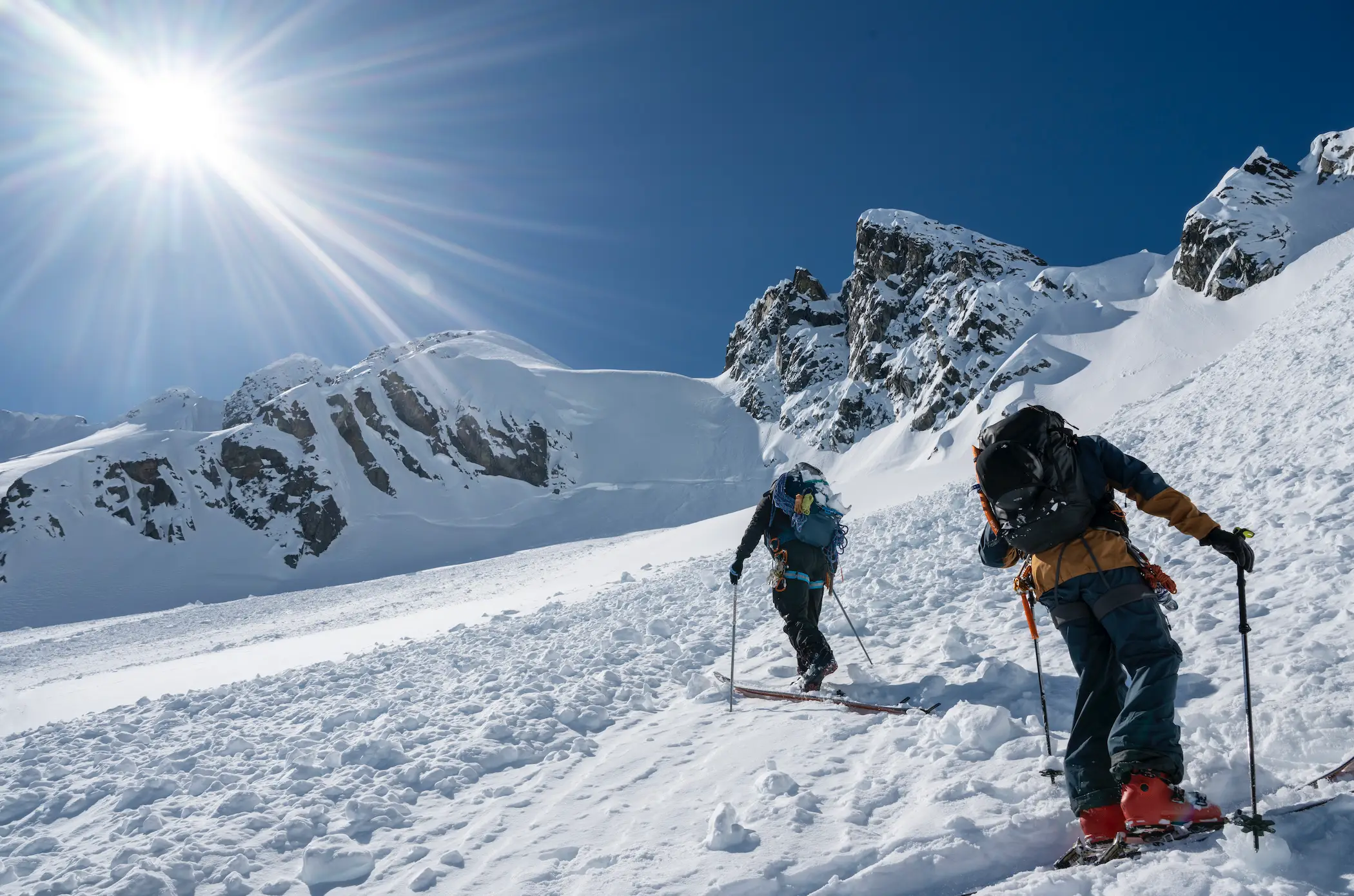
'Try not to scream'
Snowsafe, meanwhile, recommends you also try not to scream as 'no one can hear you scream in an avalanche', warning that snow can easily force itself into your mouth, which stops you from being able to breathe.
The experts also recommend creating an air pocket by cupping your hand over your mouth to help your breathing.
"Once you come to a stop, take several big, deep breaths to allow your lungs to fully inflate and deflate," they add, with the final point being to 'remain calm'.
Snowsafe concludes: "When you’re caught in an avalanche, you know it is a life or death situation, so your natural instinct would be to panic. If you are able to keep your head together, you have a better chance of surviving.
"Victims would normally have a 15-minute window where they can breathe under the snow should they have space. Panicking will cause your breath to be faster, therefore you have less survival time."
Topics: News, US News, World News, Advice, Weather, Travel, Explained
 Rhiannon Ingle