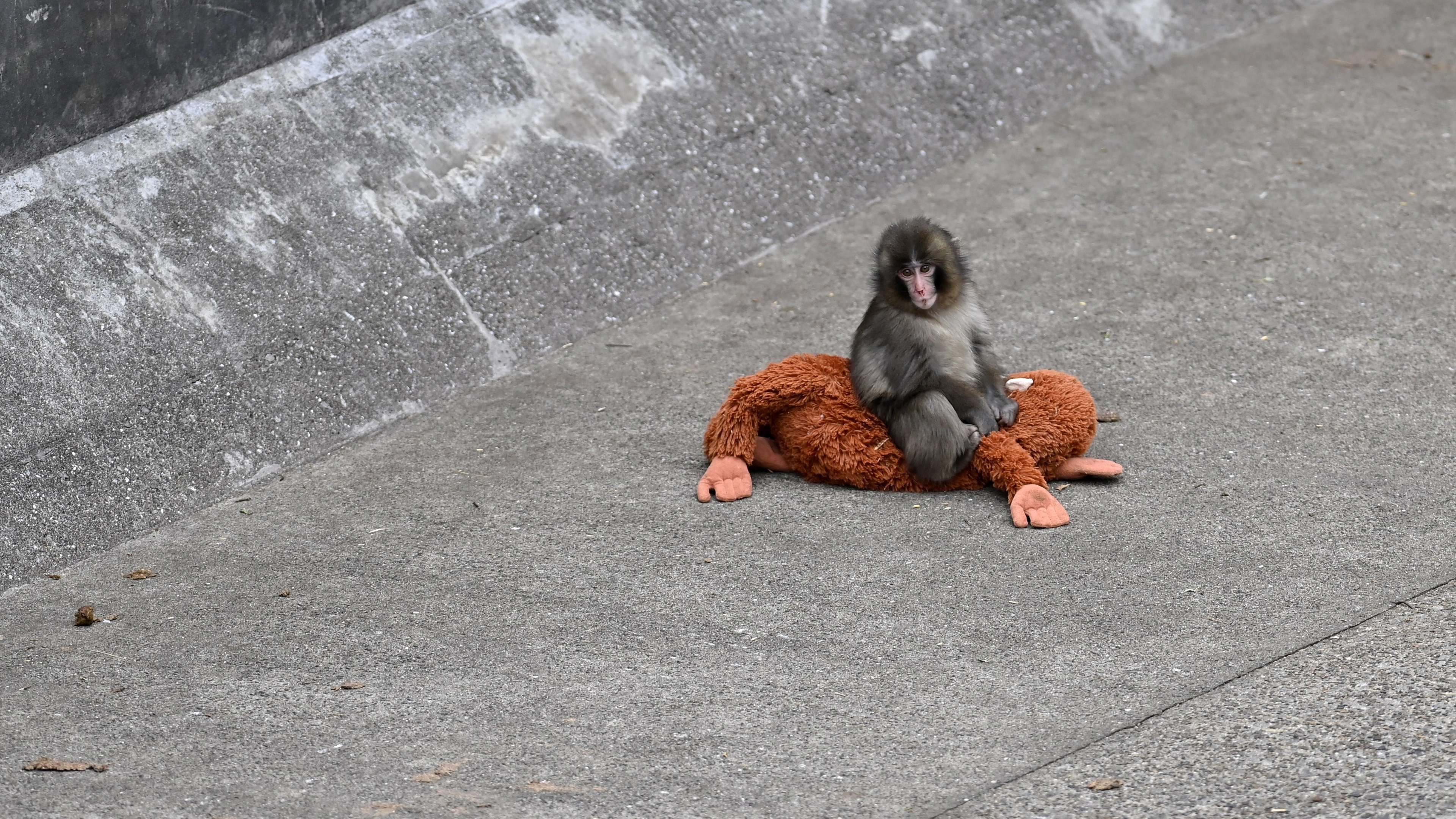
Punch the monkey could suffer heartbreaking fate, scientist reveals

Unless you've been living under a rock for the past week or so, you'll no doubt know all about Punch the monkey.
In case the viral craze has somehow passed you by, Punch the baby monkey is a Japanese macaque housed at the Ichikawa City Zoo in Japan, who has stolen the internet's hearts after videos circulated online of him being 'bullied' by other monkeys after being rejected by his mother at birth back in July last year.
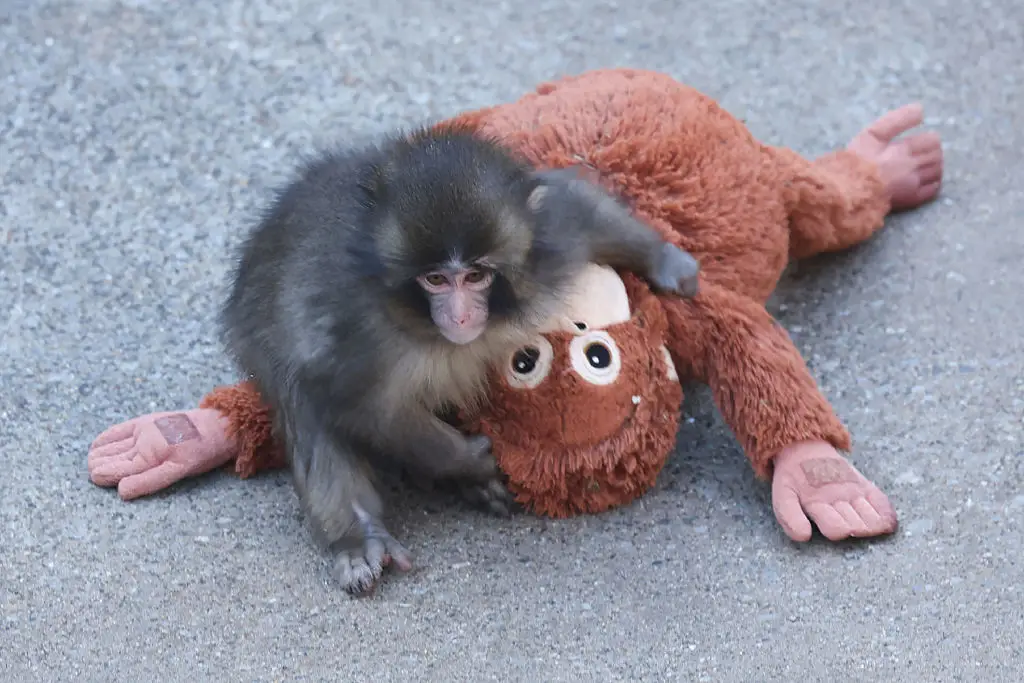
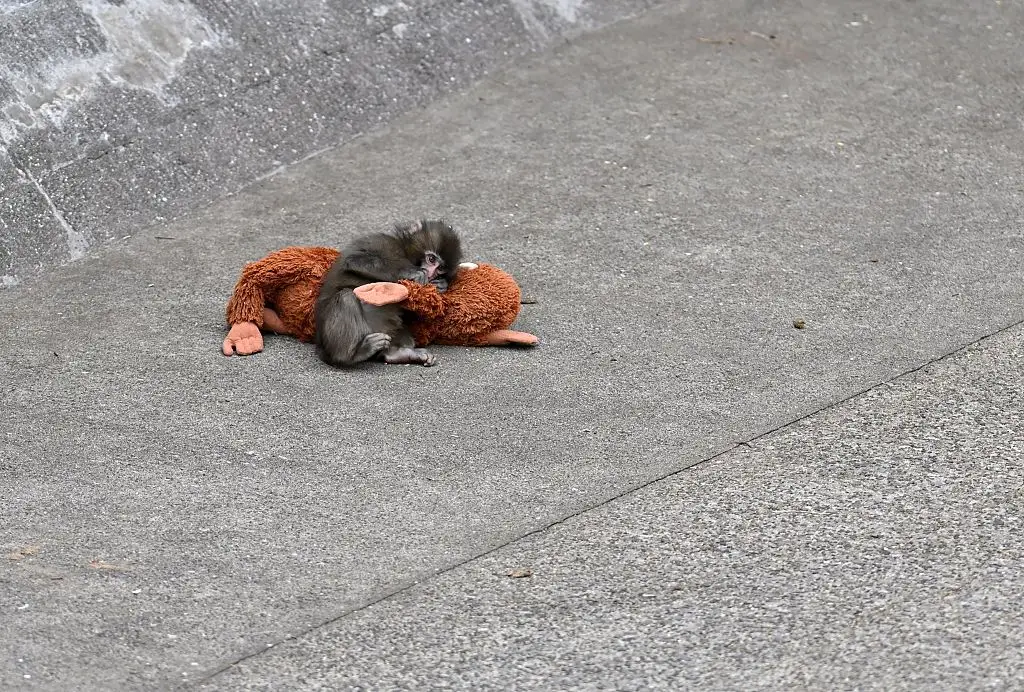
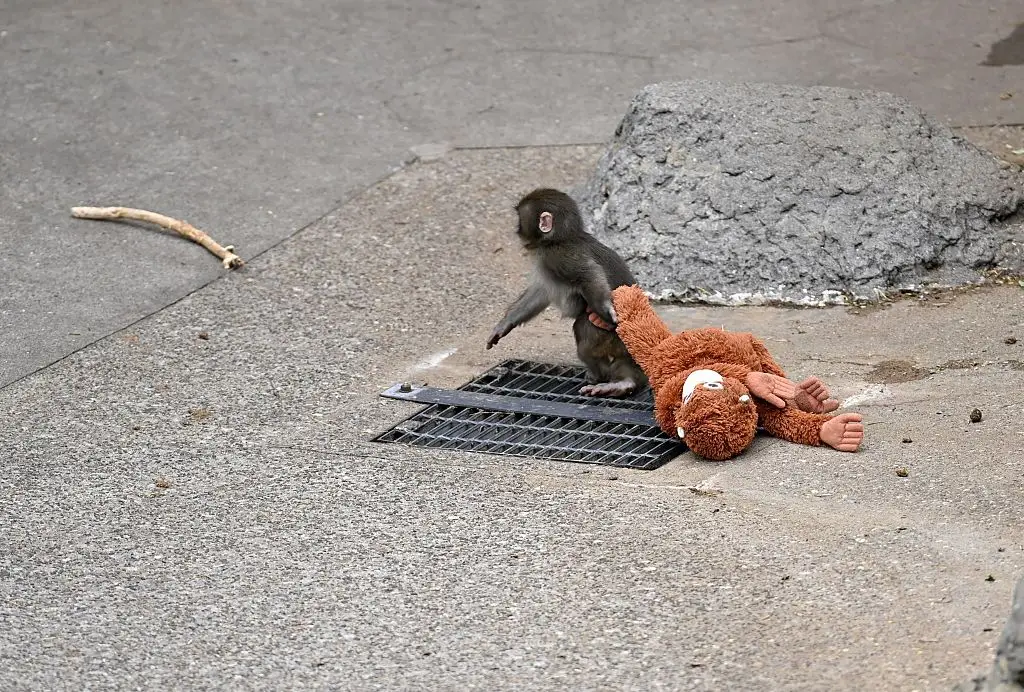
Punch, who has since sought comfort in an orangutan teddy bear following his mum's rejection, was raised by zookeepers through hand-rearing and has been living with the monkey troop since last month, keeping his teddy with him at all times in case things get tough.
As we say, it seems like Punch is having a hard time adjusting, with footage on social media showing him being dragged, thrown and pushed around by the other monkeys in the enclosure.
Advert
The zoo has since issued an update on the little critter, reassuring the concerned public that this behaviour is nothing to worry about, explaining that 'although Punch has been scolded many times by other monkeys, no single monkey has shown serious aggression toward him'.
Addressing worries over 'the health conditions of the Japanese macaques and the environment of the facility', a spokesperson for the zoo wrote on X today (25 February): "A lot of visitors are currently coming to the zoo to see baby monkey, Punch. Many of them ask us about the health of the Japanese macaques, and we would like to explain their current condition and our plans. A few macaques in the troop exhibit significant hair loss, or alopecia."
The keeper explained that 'many visitors have expressed concern about this issue,' however, the 'amount of food they receive and their weight are appropriate according to a veterinarian's diagnosis, and no clear sickness is evident'.
"We believe the main cause is excessive grooming habits. To improve this issue and promote healthy group life, three staff members have been working together since June 2025 to develop approaches and conduct testing," the statement added.
Addressing the 'various opinions concerning the environment of the monkey mountain,' the post continued: "Animal welfare is the top priority in the current environment, and we are doing our best to improve the monkeys' living conditions.
"Four rooms are always open at the back, which is invisible to visitors, and Punch also uses this space to hide.
"Also, many of the trees provided for environmental enrichment have become excellent play tools, especially for the young monkeys, including Punch. We are always seeking the best ways to improve the environment. However, Punch is currently trying to integrate with the troop."
The zoo outlined that making a 'radical change' to the monkey mountain environment would upset the macaques and 'may lead to Punch being bullied'.
"For this reason, we would like to prioritise Punch becoming a member of the troop safely while improving the monkeys' health conditions as much as possible," the statement concluded.
The spokesperson signed off with: "By observing the conditions, we can implement measures to improve the environment for Japanese macaques on the monkey mountain. We ask for your continued support for Punch and the other troop monkeys."
A scientist has since revealed that Punch the monkey could suffer a heartbreaking fate, with Dr Emily Bethell, Associate Professor in Primate Cognition and Welfare at Liverpool John Moores University, telling the Daily Mail: "I expect Punch will be under careful observation by the keepers, and it sounds like they are trying various approaches to find a way to keep Punch in the group, which is best practice.
"If it looks like he is at risk of physical harm, he would be removed from the group. As macaques are highly social, intelligent primates, this would be the last resort, only if he were deemed to be at risk of physical harm."
Dr Bethell explained to the outlet that the biggest risk to Punch isn't another physical attack but instead the long-term psychological effect of social isolation.
"Having been abandoned by his mother and the social group more broadly, he has missed key developmental opportunities to learn appropriate social behaviours that would help him to navigate the hierarchical social world of macaques," she continued.
"At six months old, a wild macaque would still be somewhat reliant on the mother for comfort, nutrition and opportunities to learn about social behaviour."
But Dr Bethell highlights that the fact that Punch is a male could end up working in his favour, as she explained: "Japanese macaques are female–bonded and males typically migrate out of the social group at sexual maturity.
"There is evidence that mothers may invest more in raising daughters since they will stay in the natal group.
"He may therefore be moved to a new social group when he gets older and has an opportunity to forge new social relationships."
She also made sure to emphasise that, despite the public's outcry for zookeepers to remove Punch from harm's way, a human intervention could be detrimental to Punch's socialisation down the line.
"What is key at this stage is that he has the opportunity to interact with conspecifics to develop species–typical social skills," she explained.
"If he is raised mostly by keepers, and his interactions are mostly with humans, he may never learn the necessary skills to integrate into a social group fully."
As for a possible reason as to why Punch was abandoned by his mother in the first place, Professor Jo Setchell, a primatologist at Durham University, explained: "Punch was his mother's first baby, in which case she might not have had a great deal of experience.
"I have seen inexperienced primate mothers hold their baby upside down, for example, and appear to be very stressed when the baby wriggles.
"It's a big change to go from being pregnant to having a baby clinging to your tummy all the time, for the first time!"
"If the mother is in poor condition herself, she might prioritise her own survival and her future offspring over caring for a baby that is unlikely to survive the current conditions," Professor Setchell added.
Topics: Animals, World News, News, Real Life, True Life
 Rhiannon Ingle