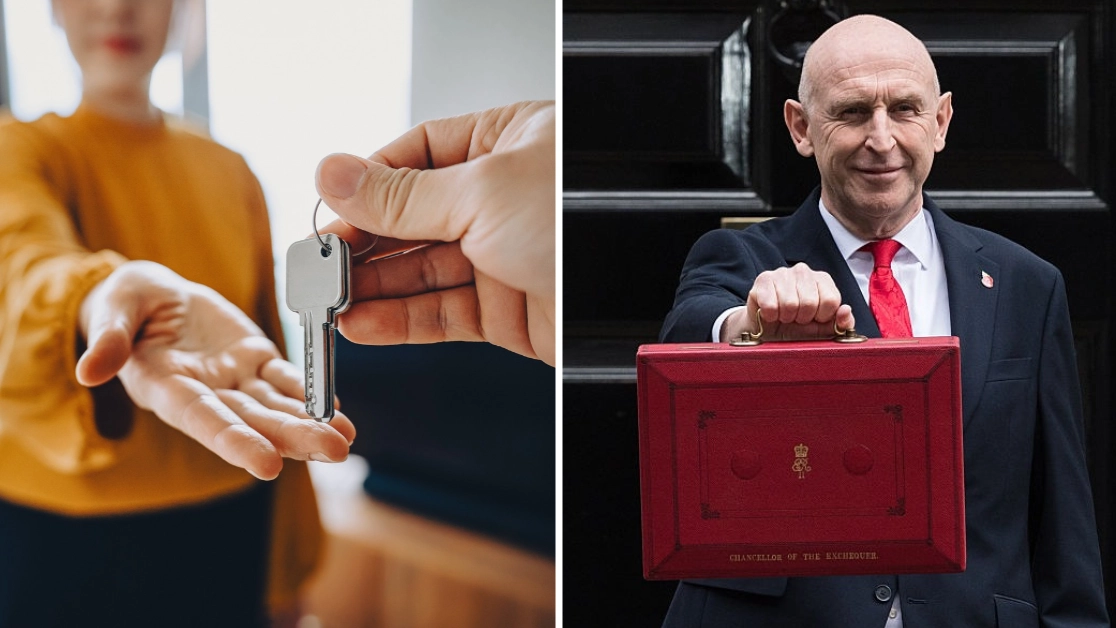
New First-Time Buyer ISA to help buyers without the 'bank of Mum and Dad'

The UK Government's 2026 Budget has only just been announced, and already, there's plenty to unpack.
This is especially true for young Brits who, for decades, have wondered whether they'll ever be able to afford a home of their own.
Thankfully, however, following years of new home shortages, soaring affordability gaps and a shrinking stock of social housing, Chancellor Healey just announced the introduction of a new First-Time Buyer ISA.
The initiative will replace the Lifetime ISA (LISA) in a major shake-up of how aspiring homeowners save for their first property.
Advert
But while the announcement could offer a fresh glimmer of hope to those struggling to get on the ladder, questions are already emerging over what the changes will actually mean for savers.
With house prices high, living costs squeezing disposable income and deposits feeling increasingly out of reach, will this finally make buying a first home more achievable - or is there more to the story?
In his speech, delivered from the House of Commons on Wednesday (28 Oct), Healey also pledged to tackle the controversial LISA withdrawal penalty, promising that buyers whose chosen property exceeds the price limit will get back 'at least what you put in'.
Under the current LISA rules, savers can receive a 25% government bonus on contributions of up to £4,000 a year.
However, withdrawing money for an unapproved reason usually triggers a 25% charge on the amount withdrawn, meaning you can lose some of your own savings.
The proposed changes could make saving for a first home less stressful, particularly for buyers whose circumstances change along the way.
But the replacement ISA's bonus rate, property price limit and eligibility rules will be crucial to understanding how much difference it makes.
Tim Grimsditch, Managing Director at Unbiased, exclusively explained to Tyla: "Your First Home is a £4.7bn equity loan scheme for first-time buyers in England. Buyers put down 2.5%, the government lends 20%, and the mortgage covers the remaining 77.5%.
"The First-Time Buyer ISA replaces the Lifetime ISA for new savers from April 2029, keeping the £4,000 annual limit and the 25% bonus, but paying that bonus when you withdraw to buy rather than as you save - which is what removes the need for a withdrawal charge."
The First-Time Buyer announcement comes alongside the government's Your First Home Scheme, backed by £4.7 billion in government-backed lending.
Expected to launch next spring, the scheme is designed to help eligible first-time buyers purchase new-build homes with deposits as low as 2.5%, alongside a government-backed equity loan worth 20% of the property's value.

It's aimed particularly at people who don't have family wealth - or, as Healy put it, the 'bank of mum and dad' - to fall back on when saving for a deposit.
According to the government's Your First Home guidance, the scheme is intended to tackle one of the biggest barriers to homeownership - finding enough money upfront.
"The deposit saving gets the attention, but the mortgage matters more," Grimsditch continued. "On a £273,000 home, 2.5% is £6,825 rather than £13,650 at 5%.
"Borrowing at 77.5% instead of 95% means nearly £48,000 less debt, which, together with five years interest-free on the equity loan, is where the monthly saving comes from."
While replacing the LISA and introducing a lower-deposit route could help some buyers, affordability remains the bigger question.
Saving for a deposit is only one part of the equation, with mortgage costs, house prices and everyday living expenses continuing to put pressure on younger generations.
However, Grimsditch warned that there are still significant unanswered questions about the scheme's terms and what buyers could end up owing.
"The warnings are mostly about what isn’t published yet," he noted. "Under Help to Buy, you repaid a percentage of the property’s value rather than the sum you borrowed, so a rising market increased what you owed.
"We know the loan is interest-free for five years, but not whether Your First Home works the same way, exactly what’s charged after that, or most of the local price caps.
"With 2.5% of your own money in the property, and if repayment works as it did under Help to Buy, a fall of just over 3% would wipe out your stake - so the repayment terms matter more here than they did under Help to Buy, not less."
On the changes to the Lifetime ISA, Grimsditch continued: "On the ISA, existing Lifetime ISA holders aren’t being cut adrift. You can keep saving into your account under the current rules.
"The chancellor also cut the withdrawal charge from 25% to 20% for first-time buyers going above the £450,000 limit, from tomorrow, so the value of what savers have paid in is protected."
He also explained how the new ISA will differ from the existing account.
"The main difference between the two products is the timing of the bonus," Grimsditch went on. "In a Lifetime ISA, it’s added as you save.
"In the new account, it’s paid when you withdraw for a first home, based on the full balance at that point. That removes the penalty that caught people out, but ties the bonus to the purchase itself."
Healy explained while concluding his announcement earlier today: "The decision I’ve taken today will help steer Britain through and, when the storms pass, what matters is where Britain is heading - a Britain re-industrialised, a Britain with power returned to communities, threats deterred, global opportunities seized.
"In our first 100 days, this Labour government has set a course for fresh hope, good growth and support for those who need it."
The Chancellor added: "We know who we are. We know where we’re going. We can see the Britain we want. It’s a vision burnt into every line of this budget statement, breathing space now, fresh hope for the future, delivered to the British people by this Labour government."
Topics: UK News, Money, Politics, Andy Burnham
 Rhianna Benson