Doctor issues warning to anyone who gets 'itchy nipples'

There are some health symptoms people will happily spend hours Googling in private rather than mention out loud, and itchy nipples are definitely one of them.
In the past, it’s been easy to think that it should have a simple explanation, whether that is dry skin, an irritating fabric, a new body wash, or a random reaction that seems to vanish as quickly as it arrived.
That is also what makes it so easy to brush off. In many cases, it will be down to something much less serious than people fear. By the time it starts to feel worth mentioning, plenty of people have already convinced themselves it is nothing at all.
However, doctors say persistent nipple changes are not always harmless to your health, and one rare condition behind them is Paget's disease of the nipple.
Advert

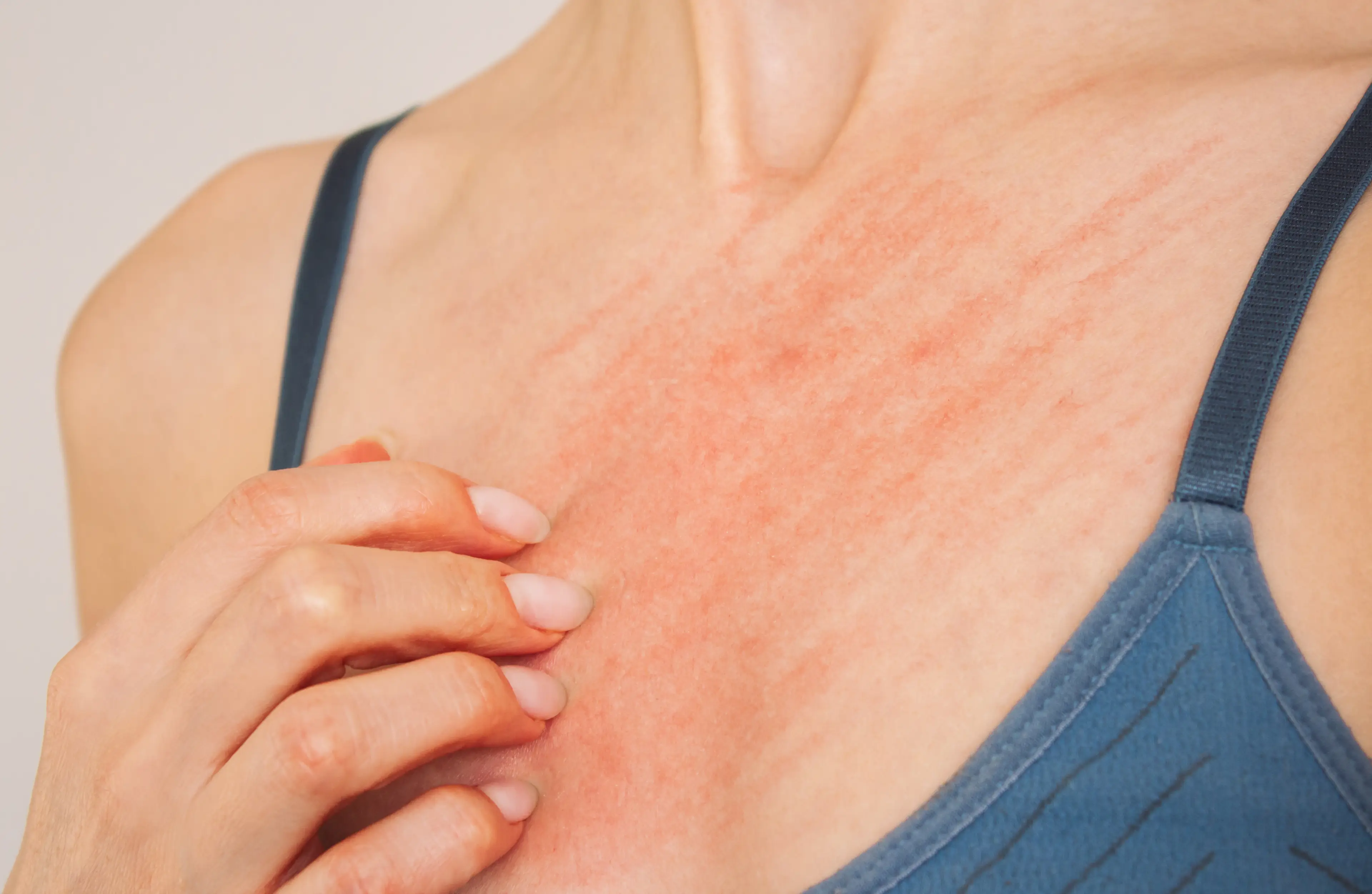
The condition, also known as Paget’s disease of the breast, is associated with breast cancer and causes eczema-like changes to the skin of the nipple and areola. According to the NHS, it always starts in the nipple and may spread to the surrounding darker skin, often showing up as a red, scaly rash. The affected area can be sore, inflamed, and itchy, and some people may also notice a burning sensation.
This is where a condition like this can be tricky, as those are symptoms that can be mistaken for something far more common. The NHS also points out that the rash can look similar to eczema or psoriasis, while Cancer Research UK notes that itching is not usually a sign of breast cancer and is more often caused by other conditions affecting the breast, such as eczema or mastitis — making for a concerning overlap.
Paget’s disease can also cause discharge or bleeding from the nipple, and the nipple can sometimes become ulcerated or scab over. According to the NHS, around half of all women diagnosed with Paget’s disease of the nipple have a lump behind the nipple, and in nine out of 10 of those cases, it is invasive breast cancer. Some women do not have a lump, but there can still be cancer present.
While itchiness, burning, or bleeding without redness or scaliness is unlikely to be Paget’s dieases of the nipple, the NHS still notes that ‘you should still have it checked by a doctor’.
Cancer Research UK also advises, when saying a patch of itchy skin is likely to be eczema or another condition: “...it is important to get anything that is not normal for you checked out by your GP as soon as possible."

If Paget’s disease is suspected, the NHS says a biopsy is used to confirm the diagnosis, with a small sample taken from the nipple and examined under a microscope. Patients will then usually have a mammogram to investigate further.
Treatment depends on whether the cancer has spread, but surgery is the main option. Some people may also need chemotherapy, radiotherapy, targeted treatment, or hormone therapy.
 Ben Williams