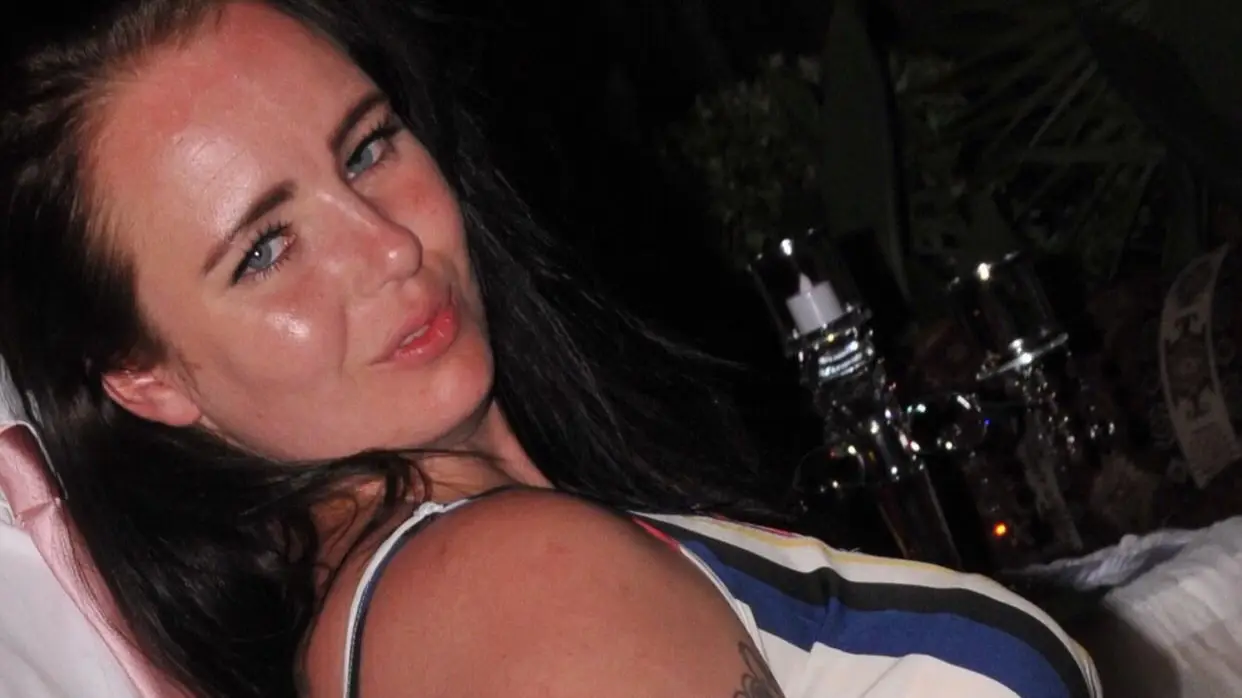
Mum who drowned after head got stuck in seaside rocks ‘could have been saved’

A British woman who drowned after her head got stuck in the rocks at the seaside 'could’ve been saved' if emergency services had been alerted more quickly, according to a coroner.
Saffron Cole-Nottage, 32, from Lowestoft, Suffolk, had been walking her dog with her daughter along the town’s seafront on February 2nd of last year, when she fell.
At 7:52 pm, a young girl called 999 and told an ambulance call handler within the first 30 seconds that a woman was 'caught head down in the rock' by the 'seafront'.
The caller later reported hearing Ms Cole-Nottage 'screaming' at 7:57 pm and again at 7:58 pm.
Advert
A minute later, at 7:59 pm, she said the woman was 'in the water now'.
Despite the urgency of the situation, Suffolk Fire and Rescue Service was the last of the four emergency services to be contacted, with the first alert sent at 8:04 pm.

Firefighters arrived at 8:22 pm and, according to Suffolk area coroner Darren Stewart, managed to free Ms Cole-Nottage in 'less than half a minute' after rescue attempts began at 8:29 pm.
The mother, however, was tragically pronounced dead at 8:44 pm.
The coroner, recording a narrative conclusion, said Ms Cole-Nottage 'died from drowning, which has come about due to accidental circumstances'.
He said the East of England Ambulance Service 'didn’t immediately contact the fire service'.
He continued: "Had the Suffolk Fire and Rescue Service been immediately alerted to the incident … it’s possible that Saffron would have been extricated from the rocks sooner and survived.
"However, it’s not probable she would have done so."
The coroner said he would write to the chief executive of the East of England Ambulance Service and the head of NHS England with a series of concerns, including the time taken by the ambulance service to identify the incident as a rescue, during the 999 call, and to pass that information to the fire service.
The coroner said he would also share his concerns with the National College of Policing, as it has national ownership of the Joint Emergency Services Interoperability Principles.
He praised those who tried to rescue her and the firefighters who freed her.
Stewart described Ms Cole-Nottage, who worked as a cleaner, as a 'loving mother completely devoted to her children'.
He noted that she 'had been drinking' on the day of the accident.
The inquest was earlier told that a level of 271 mg of alcohol per 100 ml of blood was recorded for Ms Cole-Nottage.
The legal limit for driving in England is 80 mg of alcohol per 100 ml of blood.
 Rhiannon Ingle