Nearly half of the UK might have slept badly last night and the reason is among the stars above

If you found yourself tossing and turning, waking more than usual or struggling to switch off last night, the answer could be written in the skies.
In the early hours of Friday, a partial lunar eclipse transformed the full Moon into a striking Blood Moon, as it passed through the Earth’s shadow.
And while the jury is still out on whether the lunar cycle itself can really affect our sleep, almost half of people (48%) say their sleep is always disrupted during a full moon, according to a poll by Dreams, suggesting many of us already feel there’s a connection between what’s happening in the night sky and what happens in our bedrooms.
This week’s eclipse may have made that connection feel even more real, with the spectacle taking place at around 03:33 BST, meaning some skywatchers would have stayed up into the early hours to catch a glimpse.
Advert
The Moon reached the peak of the Blood Moon phase at 05:12 BST, when around 93% of it was covered by the darkest part of Earth’s shadow, giving it its distinctive deep-red hue.
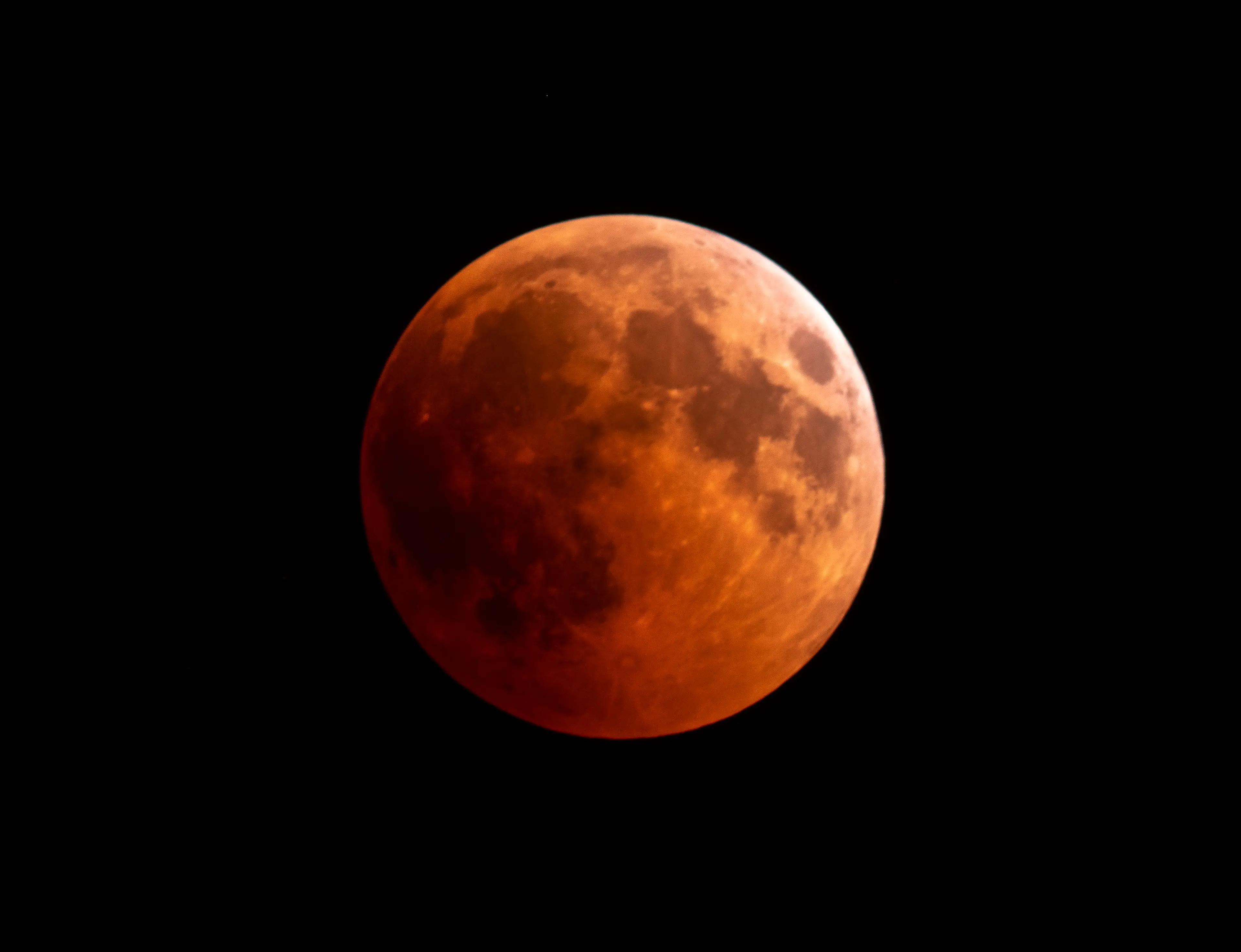
A Blood Moon occurs when the Sun, Earth and Moon align, causing sunlight passing through Earth’s atmosphere to cast a reddish glow across the Moon. This particular eclipse unfolded shortly before moonset, with the Moon sitting low on the horizon and appearing especially large and dramatic thanks to the optical effect known as the Moon illusion.
While cloud and rain obscured the spectacle for some, others were treated to a spectacular celestial display.
Scientific research has suggested that the lunar cycle may have a modest effect on our sleep, with some studies exploring whether a full moon can influence the amount of deep, restorative sleep we get.
If you were one of those who stayed up to watch it, there may be a more down-to-earth reason you struggled to sleep afterwards.
Of course, there’s also a much simpler explanation: you stayed up late to catch a glimpse of the Blood Moon and, quite frankly, we can’t blame you.
Dreams Sleep Expert, Sammy Margo, has shared advice for going back to your regular sleep pattern after staying up for an eclipse.
“The later bedtime and extra exposure to light can disrupt your usual sleep routine and make it harder to switch off afterwards,” Sammy tells Tyla.
“I’d recommend getting bright natural light within the first hour of waking that morning, as this helps anchor your circadian rhythm and can make it easier for your body to adjust if bedtime shifts later than usual.”
There are also key things to keep in mind when watching an eclipse, such as tweaking home lighting and how much you use your phone in-between looking at the sky.
“Try to keep other light exposure to a minimum. Dim indoor lights and put your phone on night mode or low brightness, particularly in the hour before you eventually go to bed, as this can help protect melatonin release and signal to your body that it’s still nighttime.
And what should you do after gawking at the Moon all night?
“The morning after the eclipse, try to keep your usual wake-up time rather than sleeping in to ‘catch up’, as this can delay your body clock from realigning. Once you do head to bed, keep your bedroom cool and dark at around 16–19°C to create the best environment for restful sleep.
“I’d also avoid caffeine after early afternoon if you know you’ll be staying up later for the eclipse, and avoid alcohol close to bedtime. Alcohol can fragment sleep in the second half of the night, which is particularly important when your night’s sleep may already have been shortened by staying up to watch the eclipse.”
 Greg Harris