Three things you should not do tonight during rare blood moon

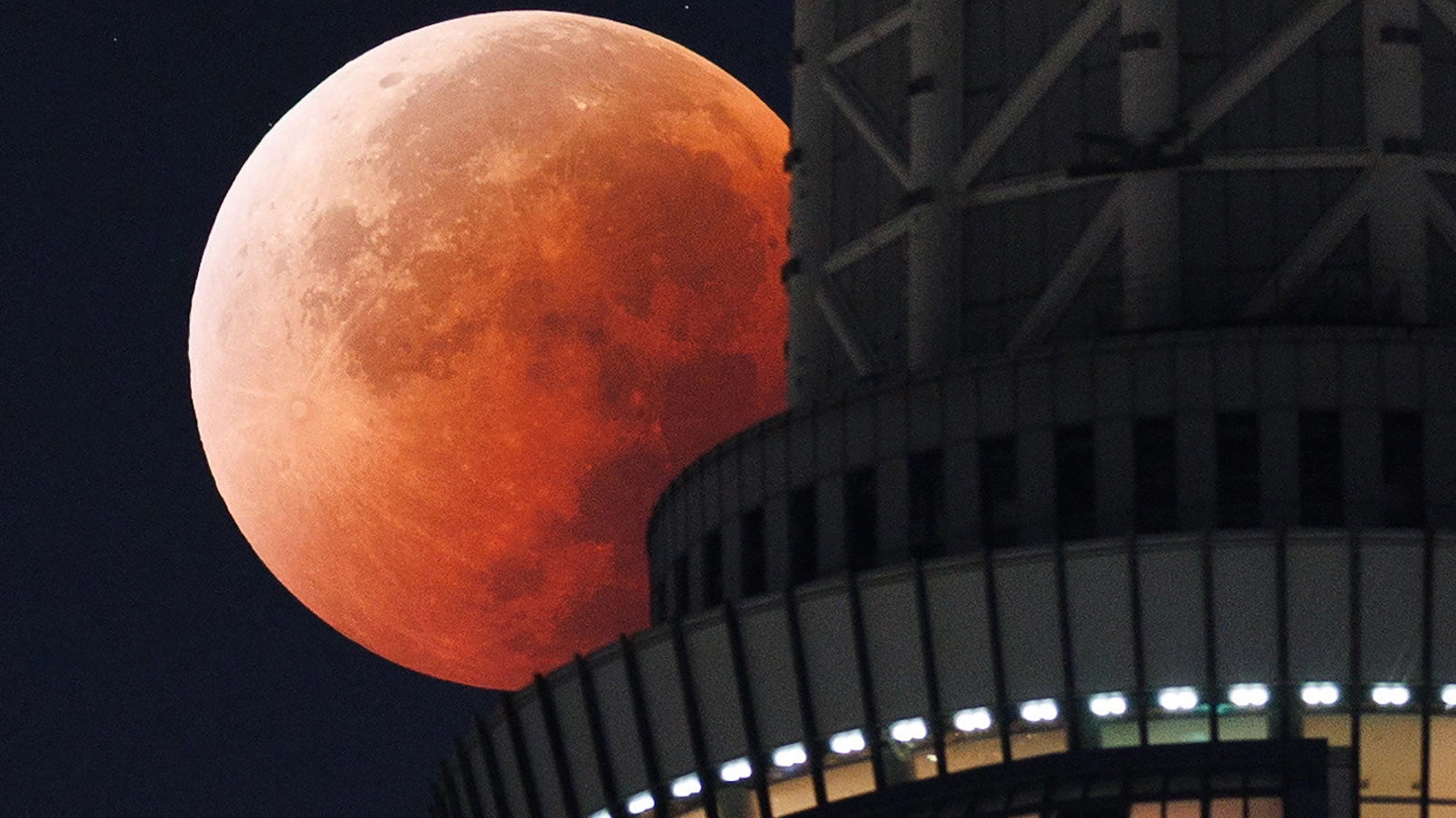
It's clearly a pretty busy time when it comes to the cosmos, as a total lunar eclipse, also known as the blood moon, is set to light up our skies tonight (3 March) and bring with it a whole lot of cosmic energy.
And that's not all, as tonight's eclipse is also coinciding with yet another Mercury Retrograde, which is set to go on until later on this month (20 March), so it's fair to say things may be feeling a tad more chaotic than usual right now.
"Eclipse periods are a time for grand, sweeping karmic events and sudden revelations," explains Jill Brown, certified Evolutionary Astrologer and former NASA research scientist.
She continued, via VICE: "Not only is this blood moon eclipse a time of heightened emotions and unpredictable changes, but it’s also overlapping with Mercury Retrograde in Pisces."
Advert
Now, before we get into all the ins and outs about when, where and how to see it, let's get into what the 'blood moon' actually is and why it's called that in the first place.
What is a blood moon?
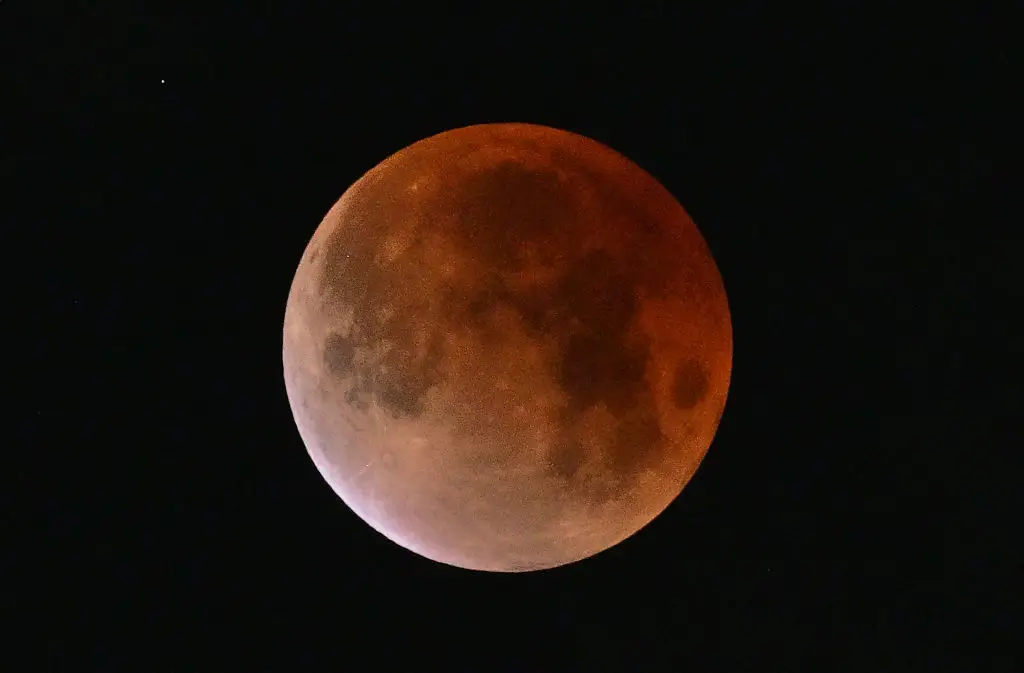
A blood moon is a full lunar eclipse, which is when the Earth passes between the moon and the sun.
During a total lunar eclipse, the moon usually turns a 'deep, dark red' as it is illuminated by light that has passed through the Earth's atmosphere and has been 'bent back towards the moon' by refraction, Royal Museums Greenwich (RMG) explains.
And, as we say, the cosmic phenomenon only happens a handful of times a year, with tonight (3 March) being your next chance to spot one in the UK.
Now, many astrology experts and spiritual practitioners believe this period carries with it some pretty intense emotional energy.
So, without further ado, here's a list of three things you should try your hardest to avoid during tonight's blood moon, according to Brown as well as Tarot card reader and crystal healer Kishori Sud of EnigmaTarotTribe.
Avoid manifesting
Kishori tells Hindustan Times that during a regular full moon, people often set intentions or manifest goals.
However, an eclipse is a totally different kettle of fish.
This is because experts see eclipse energy as unstable, leaning more towards release rather than attraction.
They caution pushing for big manifestations now, as you may get crossed wires or sharp turns you did not plan for.
Around a blood moon, it's better to hold fire and wait for things to settle.
"Probably the only good manifestation practice you want to embrace during eclipse season is anything related to letting go," says Brown. "Have you been wanting to release insecurity? Set your intention on letting that go. Are you tired of relationship patterns that don’t serve you? Set your manifesting intention on releasing outdated thought and behaviour patterns. Sick of being anxious or letting anxiety make the choices in your life? Work with the eclipse energy to release and let go of that old behaviour and ways of being."

Avoid making major life decisions
Emotions spike during an eclipse, meaning that clear thinking can slip from time to time.
Because of this, it's probably not the best moment to:
Instead, try to press pause and give any major decisions 48 to 72 hours.
Brown advises reflecting on the changes that are occurring around you right now; that way, you'll be able to have more clarity once eclipse season ends. Until then, she recommends you avoid starting anything new.
Hopefully, once the emotional static fades, decisions will tend to feel steadier and far less dramatic.
Avoid arguments and conflict
A full moon already dials everything up, but it's clear that an eclipse cranks things up even higher.
Due to this, previously small irritations can snowball fast, so be sure to take some space, press pause on any heated chats, and opt for a few moments of silence in the short-term to save you a lot of clean-up later down the line.
"People are going to be saying and doing all kinds of craziness that you are not obligated to react to at the moment," Brown outlined. "If you can practice taking a deep breath, counting to 10, and exhaling before responding to texts, insults, or stimuli, you’ll be a much saner and calmer soul this eclipse."
What you should do instead
That may sound like a look, but during a blood moon, you can keep things simple by:
- Journaling your thoughts
- Meditating or deep breathing
- Decluttering your space
- Spending time alone
- Getting proper sleep
The experts conclude that you should be treating an eclipse like a 'cosmic pause', inviting us to slow down, notice what surfaces and go from there.
Total lunar eclipse: what you need to know
What are the exact times you’ll be able to see the Blood Moon Total Lunar Eclipse?
This isn’t the kind of thing you can just catch next time, so here are the exact times you’ll be able to see it, depending on where you are in the US:
- Eastern Time: 6:04-7:02 a.m. EST
- Central Time: 5:04-6:02 a.m. CST
- Mountain Time: 4:04-5:02 a.m. MST
- Pacific Time: 3:04-4:02 a.m. PST
- Alaska Time: 2:04-3:02 a.m. AKST
- Hawaii Standard Time: 1:04-2:02 a.m. HST
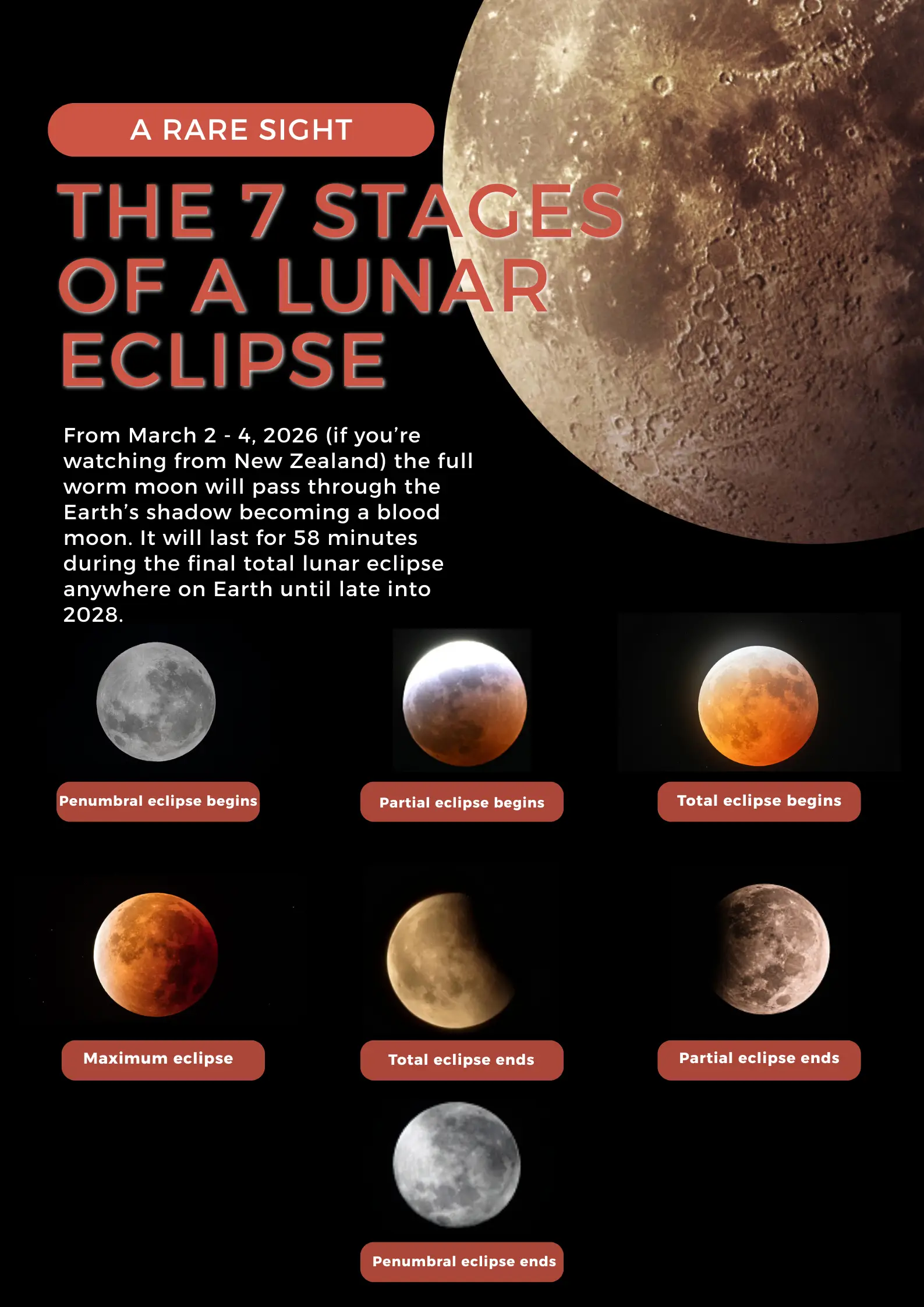
What are the seven stages of the lunar eclipse?
An eclipse doesn't just happen, and during the event, the moon actually goes through five stages. As per Astrid Trails, those stages are:
- Penumbral eclipse begins: This begins when the penumbral part of Earth's shadow starts moving over the Moon, but it is not easily seen by the naked eye.
- Partial eclipse begins (1st contact): The Moon becomes visible over the Sun's disk, not completely, but just a slither.
- Total eclipse begins (2nd contact): The Moon covers the entire disk of the Sun.
- Totality and maximum eclipse: The Moon completely covers the disk of the Sun. Only the Sun's corona is visible, and it's the most dramatic stage of a total solar eclipse. The sky goes dark, temperatures can sometimes fall, and wildlife often go quiet.
- Total eclipse ends (3rd contact): The Moon starts moving away, and the Sun reappears.
- Partial eclipse ends (4th contact): The eclipse ends as the Moon leaves the Sun's disk.
- Penumbral eclipse ends: At this point, the eclipse ends, and Earth's shadow completely moves away from the Moon.
Do you need to wear protective eyewear?
Unlike a solar eclipse, you don't actually need to wear any protective eyewear for this super rare Blood Moon Total Lunar Eclipse - quite the mouthful, isn't it? You watch on with the naked eye, and it will cause no harm to your vision. The reason being a lunar eclipse is simply reflected sunlight fading and reddening, unlike a solar eclipse, because with that, the dimness of the moon gives you the chance to stare directly at the sun, letting the infrared and ultraviolet radiation damage your poor retinas.
Can I see the Blood Moon if I'm not in the US?
The short answer is yes. If you're in Australia or parts of Asia, you'll be able to see it later on March 3 in the evening or March 4 just after midnight in New Zealand. Here's the full list of times for those outside the US:
- Auckland, New Zealand (NZDT): 12:04-1:02 a.m., Wednesday, March 4
- Sydney, Australia (AEDT): 10:04-11:02 p.m., Tuesday, March 3
- Brisbane, Australia (AEST): 9:04-10:02 p.m., Tuesday, March 3
- Adelaide, Australia (ACDT): 9:34-10:32 p.m., Tuesday, March 3
- Darwin, Australia: 8:34-9:32 p.m., Tuesday, March 3
- Perth, Australia: 7:04-8:02 p.m., Tuesday, March 3
- Tokyo, Japan (JST): 8:04-9:02 p.m., Tuesday, March 3
- Seoul, South Korea (KST): 8:04-9:02 p.m., Tuesday, March 3
- Beijing, China (CST): 7:04-8:02 p.m., Tuesday, March 3
- Hong Kong (HKT): 7:04-8:02 p.m., Tuesday, March 3
Topics: Space, Advice, Life, Astrology, World News, News, Explained
 Rhiannon Ingle