
Sleep doctor reveals unorthodox trick he uses to nod off

When it comes to tackling insomnia, expert-recommended methods are anything but universal.
What one sleep professional claims knocked them out for the night, another will insist left them staring at the ceiling for hours on end.
From herbal teas to sleep-tracking technology, pill popping to blue light avoidance, the most effective route to true restorative rest continues to be debated by leaders in the field each and every day.
This week, however, one sleep expert has sparked a fresh discussion, by shedding light on a rather unconventional trick he personally relies on to nod off at night - especially after a few rough evenings.
Advert
For those in need of a reminder, insomnia is a sleep disorder characterised by either difficulty falling, or difficulty staying, asleep.
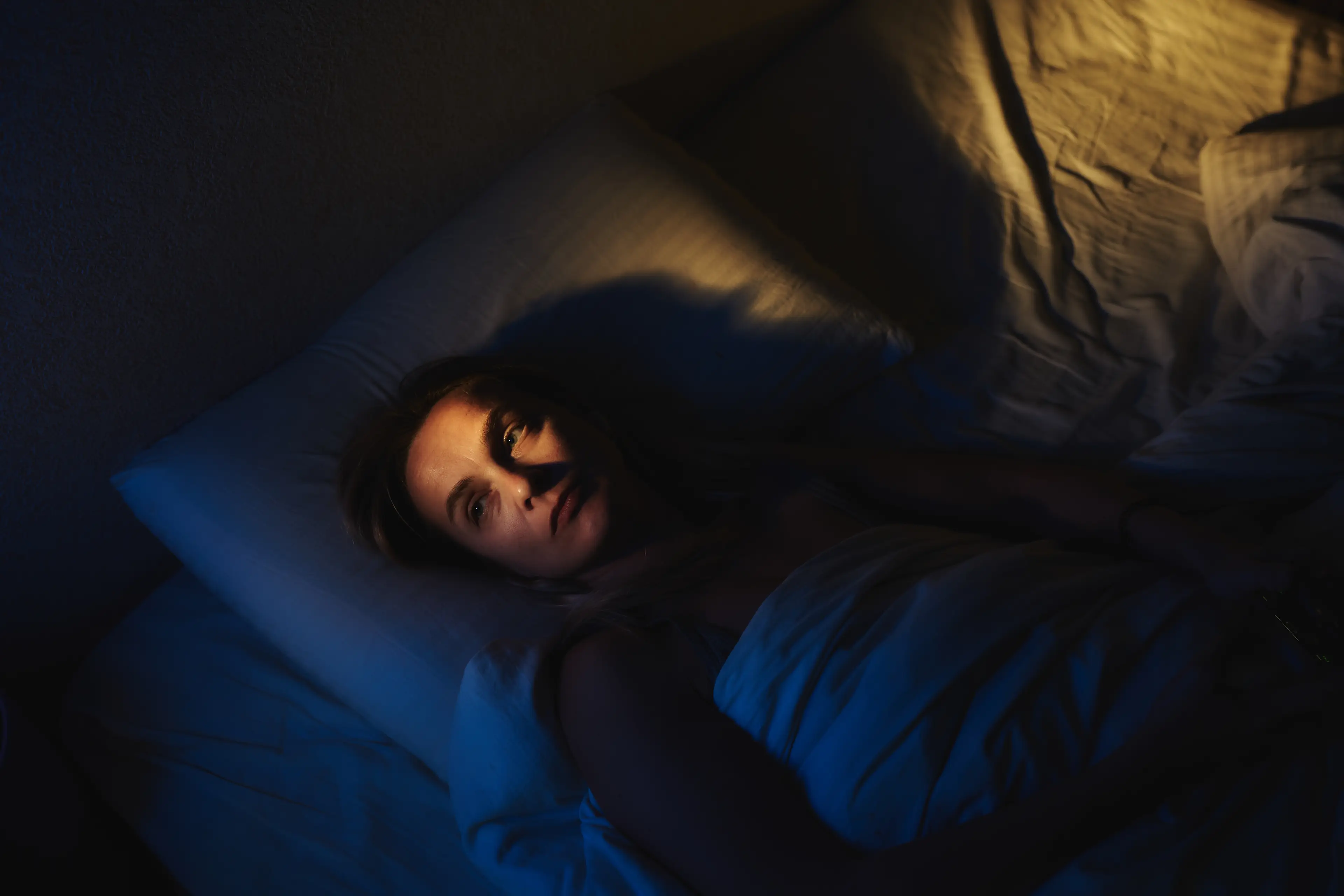
This common yet frustrating condition can result in side effects like daytime fatigue, as well as irritability and trouble concentrating.
Whilst some people might suffer insomnia on a short-term basis - with the condition being sparked by things like stress - others can battle it for several months, if not years.
One of the latter individuals is Dr Guy Leschziner, who works as Professor of Neurology and Sleep Medicine at Guys & St Thomas.
Speaking recently to The Telegraph, the medic claimed he'd suffered with difficulty sleeping for some time, having tried a number of treatments.
In an unexpected admission, however, Dr Leschziner insisted that his recommended means of tackling sleep deprivation, is to continue depriving yourself of sleep. I know, didn't expect that, did you?
Offering an explanation for his theory, he told the publication: "I deprive myself of sleep, going to bed a couple of hours later than normal so my sleep deprivation overcomes my insomnia."

The doctor - also author of The Nocturnal Mind - continued: "It’s tried and tested, and evidence based. My sleep usually resets within a few days."
According to the National Library of Medicine, this technique actually has an official name - Sleep Restriction Therapy.
A derivation of Cognitive Behavioural Therapy, this practice is recommended by numerous medical professionals, being considered around the world a structured and supervised technique.
The aim of the technique is to limit the time spent in bed to the actual time spent sleeping, building a strong, consistent sleep drive. Usually, it starts with a healthcare provider calculating an initial time in bed based on a patient's sleep diary.
If they usually only spend six out of the recommended eight hours actually sleeping, they'll be told to only spend six hours in bed - and so on.
As sleep efficiency improves, the time permitted in bed gradually increases until a healthy duration of sleep is achieved.
The more you know, eh?
Topics: Sleep, Health, True Life, Real Life, Life, NHS, Advice
 Rhianna Benson