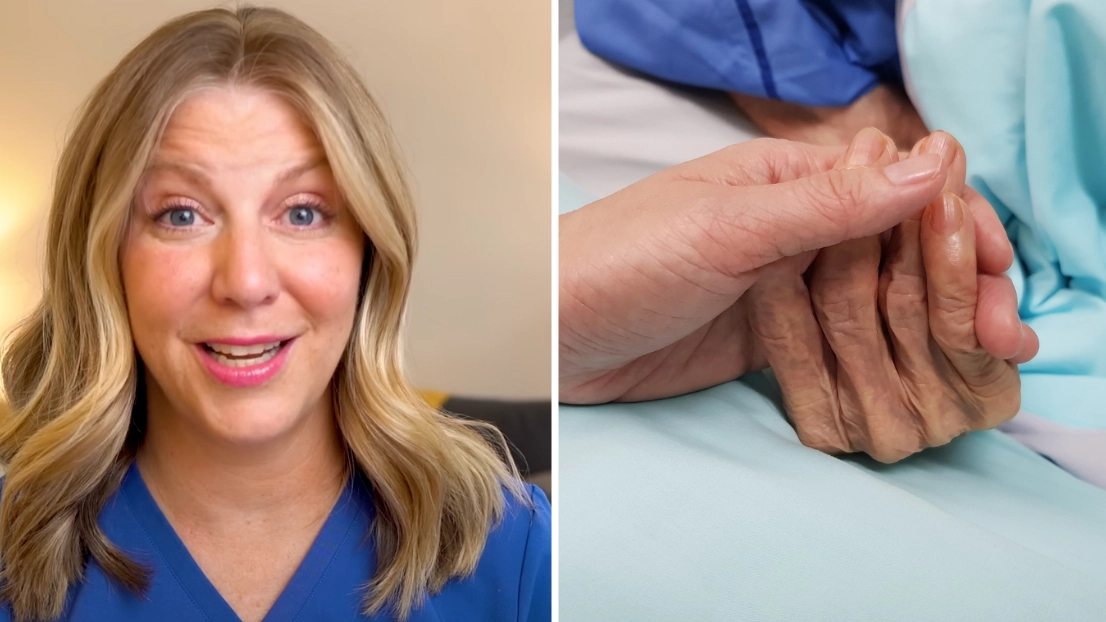
Hospice nurse reveals three things that indicate someone is ‘very close to death’

A hospice nurse is shedding light on the signs that indicate someone is about to pass away.
Death can be an uncomfortable topic for many people.
However, knowing and understanding the signs may actually help overcome anxiety about it.
Hospice nurse Julie shared three signs she often sees in people in their last 24 hours to educate and help families who may be confused about these signs.
When speaking to her viewers, the nurse warns that these signs are a general overview of what she typically sees, and sometimes death happens differently.
Advert
“It’s a lot of ‘not doing’,” she says on how people should react when they see these signs. “It’s a time to ‘just be’.”
For example, calling relatives to see their loved one before they pass away. She urges them to do this before the last 24 hours.
Changes in breathing
Nurse Julie describes this as the ‘number one indication’ that someone is close to dying.
“Someone close to death, within a few days of death, will start to have changes in breathing, usually,’ she explains.
“And when they’re getting closer and closer, meaning I think they’re going to be dying in the next 24 hours, they will have significant changes in how they are breathing.
"It usually will look like long, deep pauses before the next breath. Sometimes you think they are dead and then suddenly they’ll breathe again. It can actually startle the family sometimes.”

The nurse explains sometimes it may look like they are gasping for air, but they’re not, and this is actually called ‘agonal breathing’.
It's a sign that a loved one may die within the next 24 hours.
The NHS also says changes in breathing are common for people nearing death. A person’s breathing may become more shallow.
Increased terminal secretions
Nurse Julie describes this as the ‘gurgling noise with someone's breath’.
She adds that you’ll hear it in the last 24 hours and if you have already heard it in the days prior, you’ll hear it even more.
The NHS says a rattling noise may be heard in the breathing of a dying person.
“This may be because they are very sleepy or unconscious so are not able to cough or swallow the normal fluids in their chest or throat," the service explains. “This may be upsetting to hear, but it doesn’t usually cause any distress to the dying person."

Fully unconscious
The person who is dying will be ‘fully unconscious’, which means they will not be waking up no matter what you do’, nor will they eat and drink.
The end of life care nurse adds: “They’ll have their mouth open and their eyes open but not fixating on you, they’ll have that death stare."
The NHS also says a person may sleep more, and will often be drowsy if they are awake and the end of their life is near. Additionally, the health service says: “Some people become completely unconscious for a period of time before they die. This could be short, or as long as several days.”
Despite being unconscious, it’s important to continue talking to the dying person just like you normally would if they could respond, as it is believed that hearing is the last sense to go after death.
For help and support, contact the Marie Curie helpline on 0800 090 2309 or visit the website here.
Topics: Health, News, Social Media
 Greg Harris