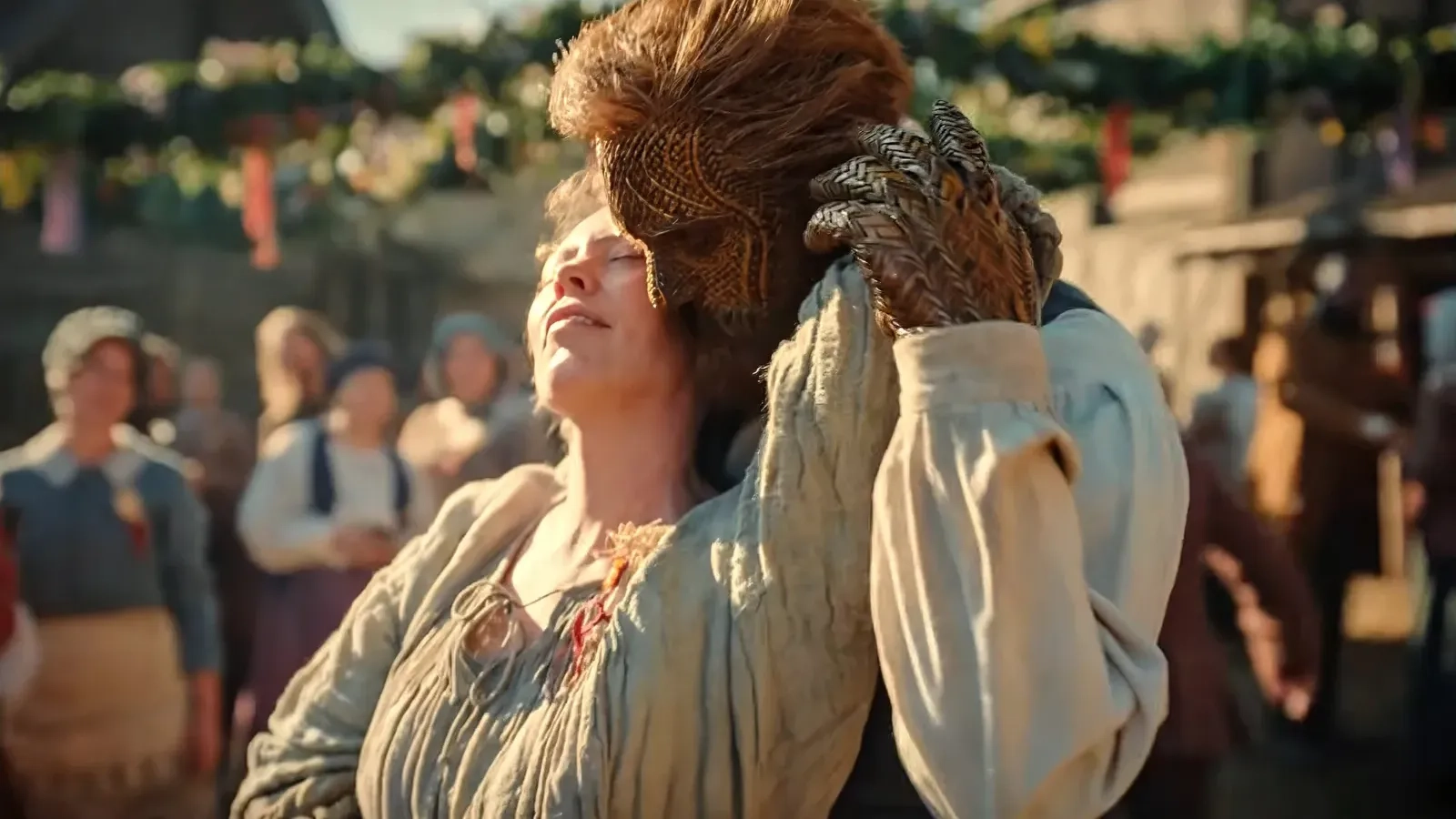
Wicker viewers spot disturbing collar detail as deeper meaning is explained

Wicker has been in cinemas for only a few days, and already viewers are picking apart all of the deeper meanings and hidden messages the film is trying to convey.
Starring Olivia Colman, 52, and Alexander Skarsgård, 50, the movie is much more than the raunchy trailers and marketing let on, and is actually an impressive satire on gender norms and societal expectations.
It follows an ostracised fisherwoman who, after being teased by her local villagers, commissions a local basketmaker (Peter Dinklage) to weave her a husband.
To everyone’s surprise, he turns out to be attentive, romantic, and devoted - more so than any of the other human husbands in the village - breaking the toxic patriarchal norms and sparking jealousy and chaos among the other locals.
Advert
At its core, fans have realised that the film is also a clever criticism of marriage and the social structures associated with it.
Most notably, when the women in the village get married, they’re presented with a ‘matrimonial collar’ instead of a ring, which literally looks like a large metal dog collar, clasped around their necks as a ‘symbol of lifelong duty’.
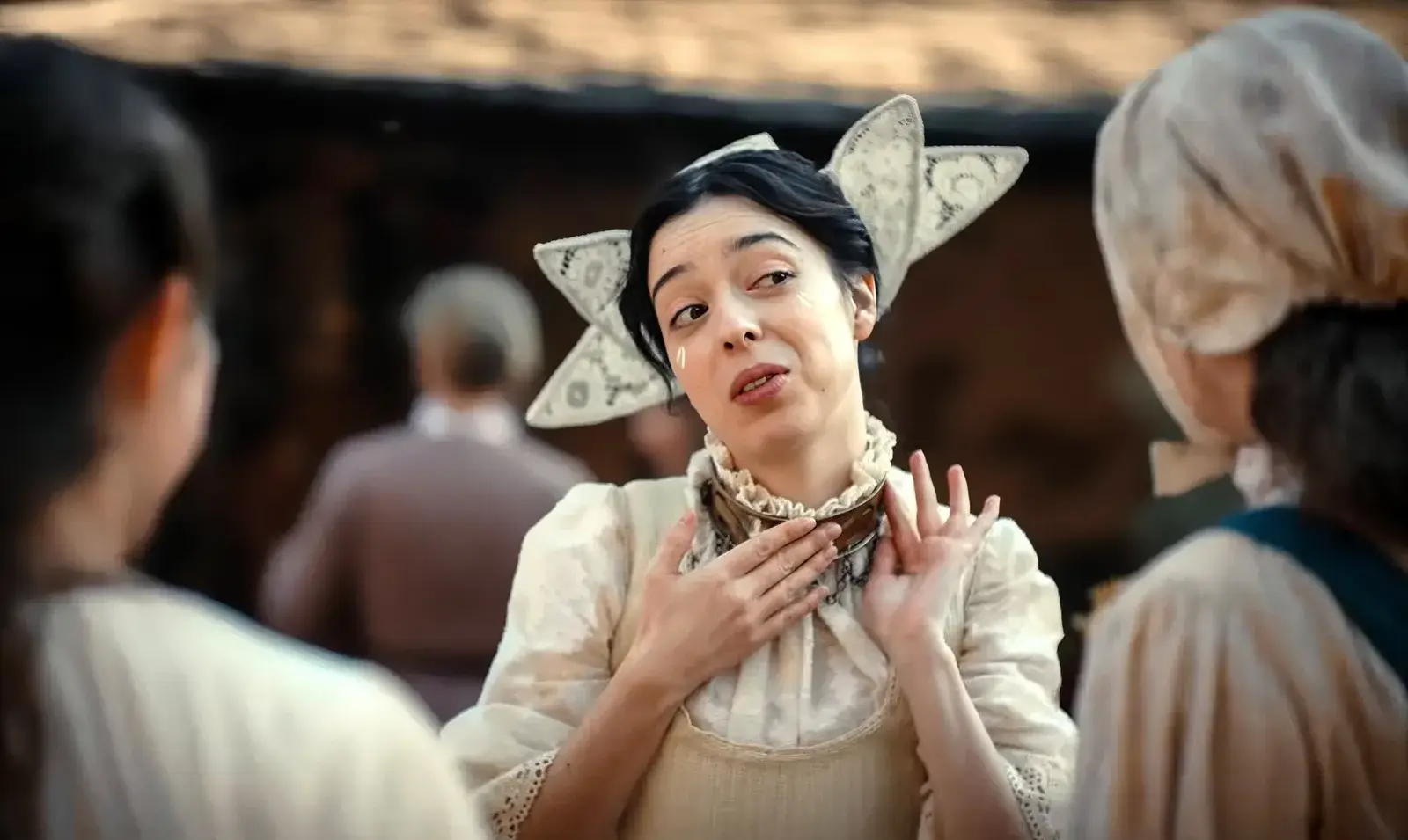
The language also pushes this narrative, with the officiant announcing that ‘man and woman will become man and his wife,’ and the women only being referred to as their husband’s profession, for example ‘Bottlewasher’s wife’ or ‘Baker’s wife’.
Showing that their love is something different and more freeing, when the Fisherwoman and Wicker husband marry, someone asks where the collar is, and she responds, “We won’t be needing that.”
Soon, after watching their relationship blossom, the other women in the village realise that they can have more than what they've been taught to expect is normal.
Since the film’s release on Friday (30 October), fans have come forward to pick out all of these details, with the collars becoming a hot topic.
One Reddit user penned: “It’s obvious and on the nose, but seemingly no more ridiculous or patriarchal than the kinds of laws you’d see in actual 1800s Europe or wherever this seems to take place.”
While a second added: “To add to the collar bit and worldbuilding, I liked that no one had names - men were all "x job" and women were "x job's wife" (eg, Tailor and Tailor's Wife) except for the main couple, who remained "Wicker Man" and "Fisherwoman" even after marriage, with Colman's character being the only woman given her own job/trade title.”
A third wrote: “The world-building was so bizarre (the collars, some of the odd dancing) that it felt like an alternate universe it was so odd and fun.”
Meanwhile, others rushed to praise the film as a whole, especially its unexpected social commentary - who knew a bizarre fairy tale about a man made out of wicker would have all us crying in the cinema?
One social media user penned: “The commentary on love and marriage in a patriarchal society and what it means to be in an equal relationship was incredible.”
While another agreed: “The marketing for #Wicker did not do it justice. It’s funny, deeply moving, and gives you a lot to reflect on re: gender norms and societal expectations of marriage. was pleasantly surprised at how much I loved it.”
And another fan praised: “Wicker being a great film about the institution of marriage and how a lot of marriages are only for show.”
Topics: TV And Film, Entertainment, Life, Social Media, Wedding, Sex and Relationships
 Madison Burgess