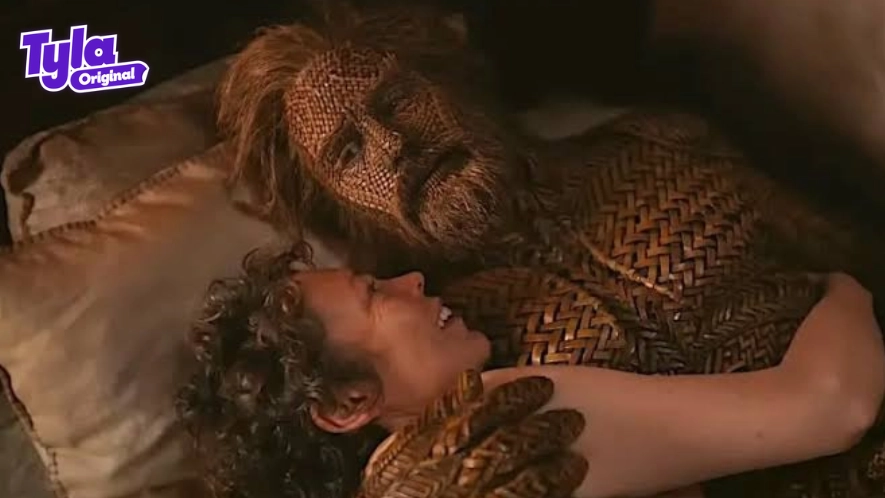
The real fantasy in Wicker isn't the man made of wood - it’s how he treats women

Much of the buzz around the romantic satire Wicker has been about a certain NSFW body part and the sex scenes between leads Olivia Colman and Alexander Skarsgård. And that’s completely fair.
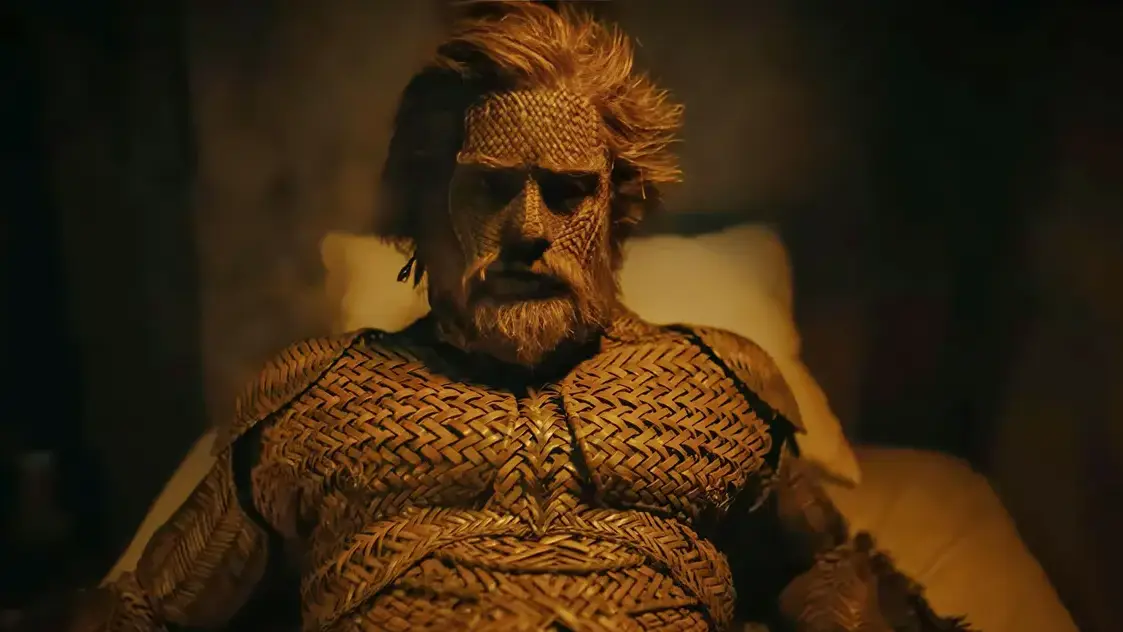
The story stars Colman as an ostracised Fisherwoman in an alternate historical reality who, after being teased by her fellow villagers about being single, commissions a local basketmaker to weave her a wicker husband, played by Skarsgård.
But what the marketing of the film didn’t let on is that there’s so much more to it than it simply being a more eccentric version of Fifty Shades of Grey.
Advert
It’s a clever commentary on gender norms, the societal expectations of marriage, not to mention how men view women, and the state of dating in 2026.
While Wicker is set in an extreme parallel universe - think The Handmaid’s Tale meets The Shape of Water - its underlying issues are not too far from those in our own world.
The women wear dog collars instead of wedding rings, and they’re referred to by their husband’s profession rather than their name, such as ‘Baker’s Wife’ or ‘Tailor’s Wife’.
With misogyny and sexism seemingly on the rise thanks to the Manosphere, the idea that the Fisherwoman had to pay a basketweaver to create a kind man who sees her as an equal, rather than just find one, sadly, isn’t too far-fetched.
More and more women are choosing to opt out of marriage, fewer people are using dating apps, and voluntary celibacy is also on the rise.
When the Wicker husband turns out to have more compassion and be a better partner than any of the actual human men, his presence sparks upheaval and jealousy among the villagers.
All of the women are swooning over him, prompting cracks in their own marriages - so what exactly is it about him that’s got everyone in a chokehold?
The sad thing is, it’s nothing revolutionary. He loves the Fisherwoman; he helps her with the chores, he’s good in bed, he’s kind, and he gives her words of affirmation.
After they broke the bed having sex, they’d barely finished before the Wicker husband declared: “Bring me a hammer; I will fix it.”
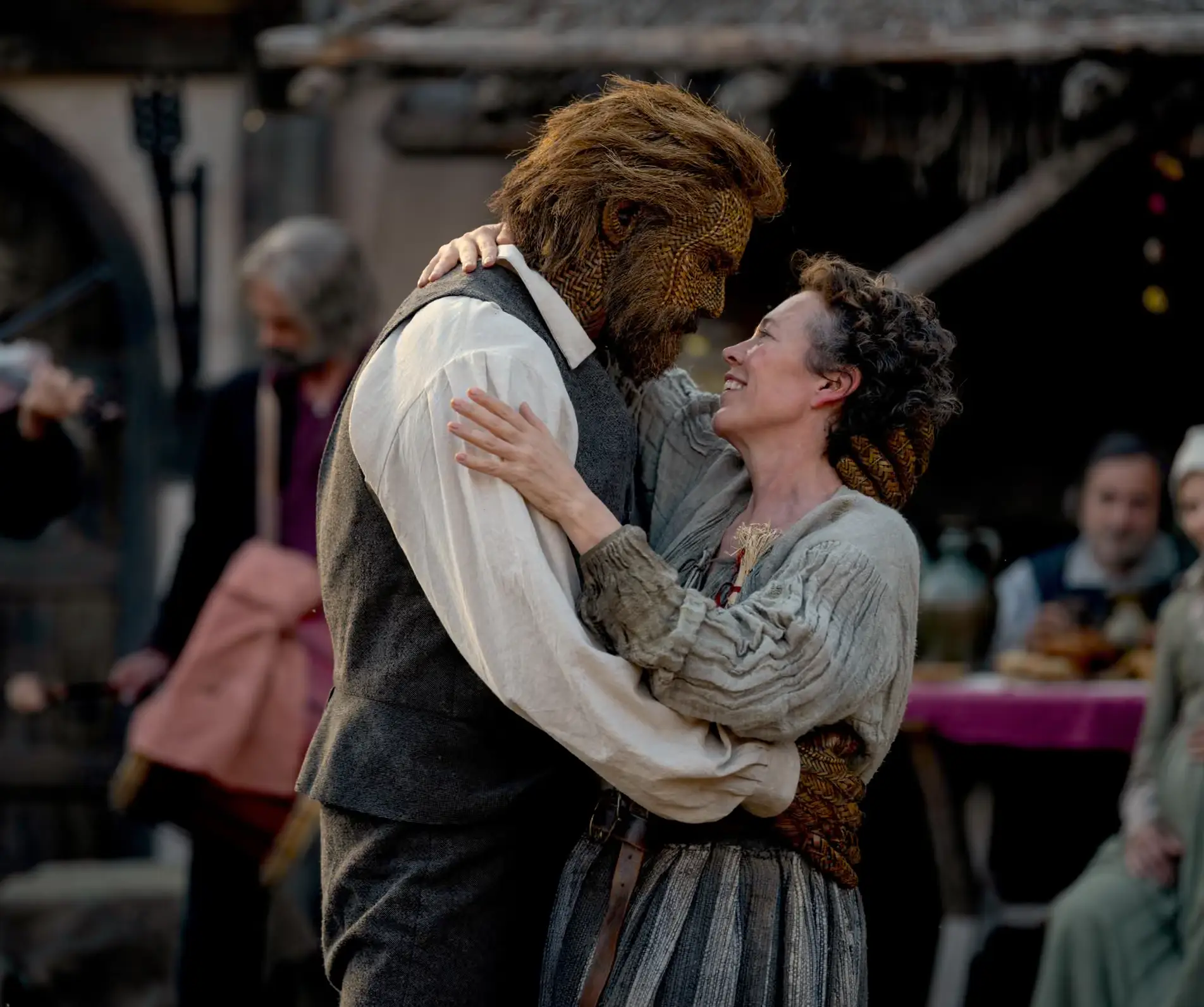
He isn’t afraid to speak highly of her in front of the other men, and forces them to confront their own feelings and actions by asking them if they ‘love their wives’.
“His filthy declarations of fondness, men are not like that,” one of the husbands demanded, while another questioned whether she’d ‘bewitched him’.
Unravelling why the character has resonated with women so much, Anna Richards, Sex Expert and Founder at FrolicMe, told Tyla: “I think it reflects a growing frustration with modern dating.
“Many women are tired of feeling that they have to do the emotional heavy lifting, explain basic expectations, or settle for relationships where the effort isn't equal.
“When a fictional man feels more appealing than the real-life options available, it raises an interesting question about whether women's expectations are genuinely unrealistic or whether their experiences of dating have simply fallen short.”
And it’s not just the Wicker husband that makes the movie what it is - Colman’s quirky Fisherwoman, who unashamedly goes after what she wants, allows herself to receive pleasure, and isn’t afraid to do so, is just as key to the tale.
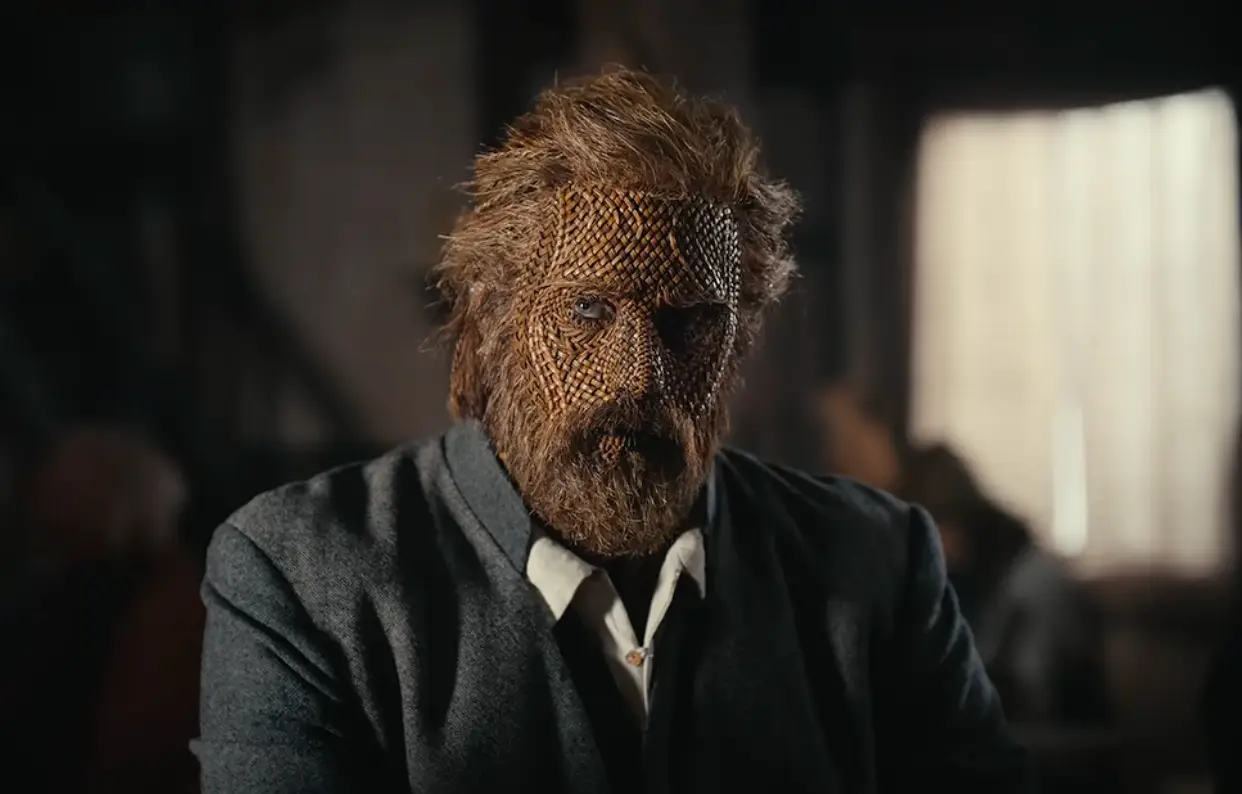
The expert explained that there’s something ‘powerful’ about a woman being in control of the fantasy rather than waiting around to be chosen by someone else.
All of the fairy tales we’re used to rely on traditional patriarchal structures, with a helpless princess often waiting to be saved by the prince. The Fisherwoman is the centre of her husband’s world, but still is entirely herself and is always his equal.
“It's a fantasy in which female desire comes first, and I think that feels particularly appealing when so many women are questioning what they actually get out of modern dating,” Richards explained.
And the more the women in the village see the Wicker husband’s ways, the more they realise there’s a life where they can have pleasure and love in a relationship, rather than the institutional and heartless marriages we see elsewhere in the movie.
Richards admitted: “I think it says something quite revealing that being nice, considerate, and sexually attentive can be presented as the ultimate package.
“These shouldn't be extraordinary qualities; they should be the foundations of a healthy relationship. If a man who treats a woman well and cares about her pleasure feels like a fantasy, we have to ask why the basics can sometimes seem so rare in real-life dating.”
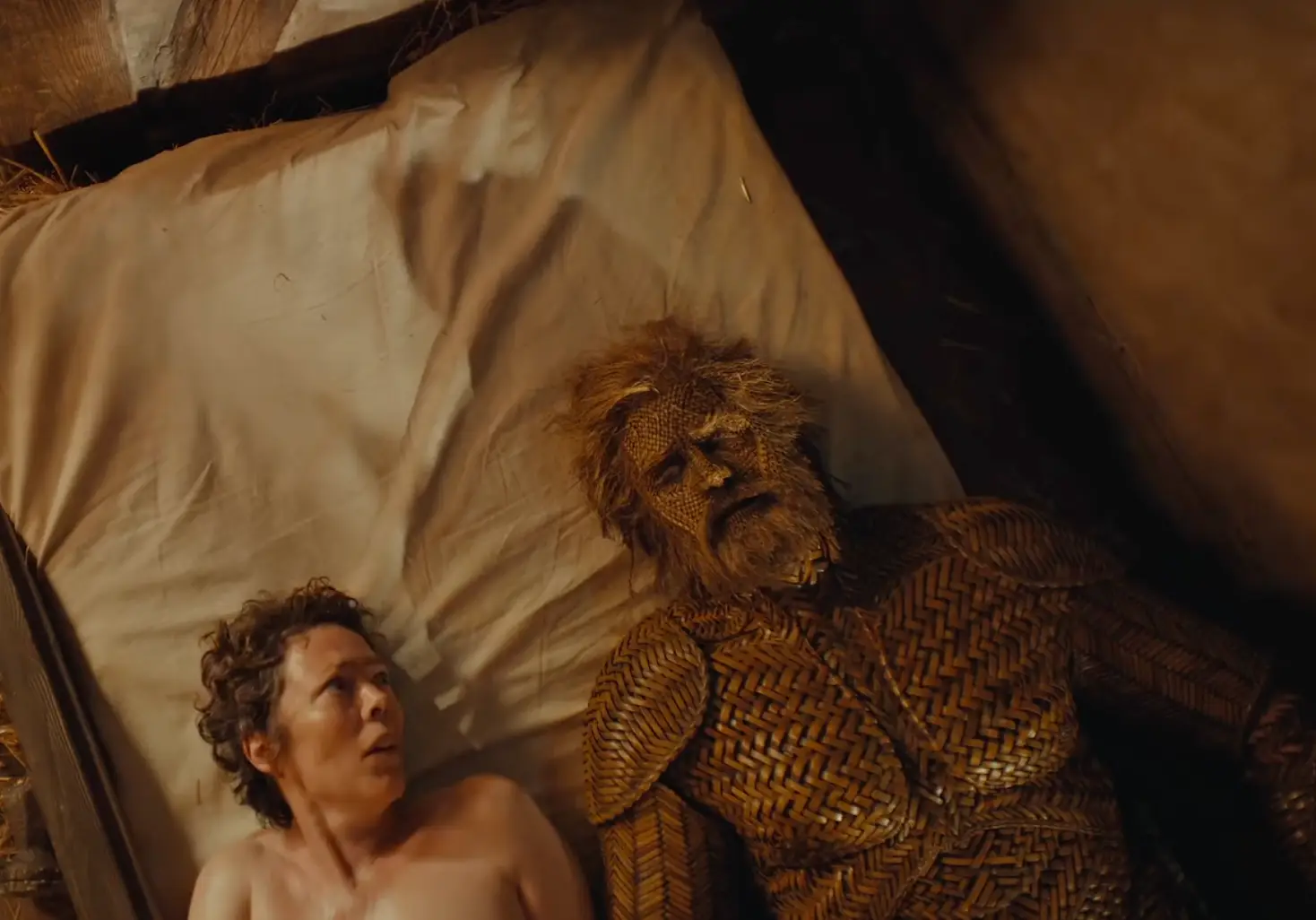
She told Tyla: “The bar isn't necessarily too high for women; in some cases, it's that the basics have been made to feel like bonuses.
“I think women want to feel desired, respected, and understood, without having to sacrifice their own needs to get those things.
“That includes physical chemistry and good sex, but also kindness, consistency, communication, and emotional availability. The fantasy might be an exaggerated fictional man, but the underlying desires are very real.”
The expert concluded what we already know: that 'women aren't necessarily looking for perfection; they want relationships that feel reciprocal, where they're not the only ones putting in the effort'.
Ultimately, women aren’t really desperate for a man made of wicker. They’re asking for someone who listens, makes an effort, and is kind.
If that sounds like a fantasy, maybe the problem isn’t women's expectations, but what we’ve been taught to expect.
Topics: Tyla Exclusive, TV And Film, Entertainment, Sex and Relationships, Dating
 Madison Burgess