The Odyssey scene with Tom Holland and Robert Pattinson sparks 'daddy kink' discussion as psychologist explains the term

We're just a matter of hours away from The Odyssey hitting cinemas on Friday (17 July), and it's safe to say that the internet has been sent into a right spiral with anticipation.
Boasting a star-studded cast including Matt Damon, Anne Hathaway, Zendaya, Elliot Page, Charlize Theron, Tom Holland and Robert Pattinson, the action-fantasy flick directed by cinema legend Christopher Nolan is based on Homer's epic, following King Odysseus of Ithaca (Damon) on a perilous 10-year journey home after the Trojan War.
The action-packed trailer has left fans beyond buzzing for its cinematic release, but there's one particular scene which has caught the attention more than others.
Advert
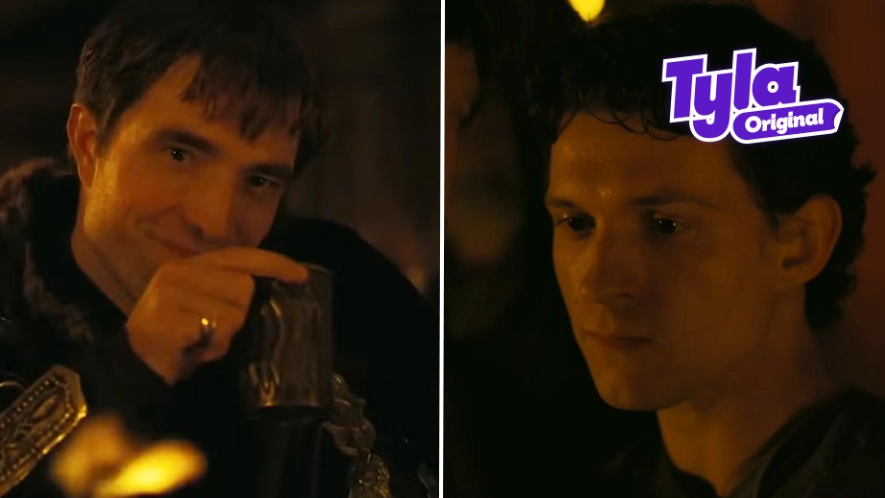
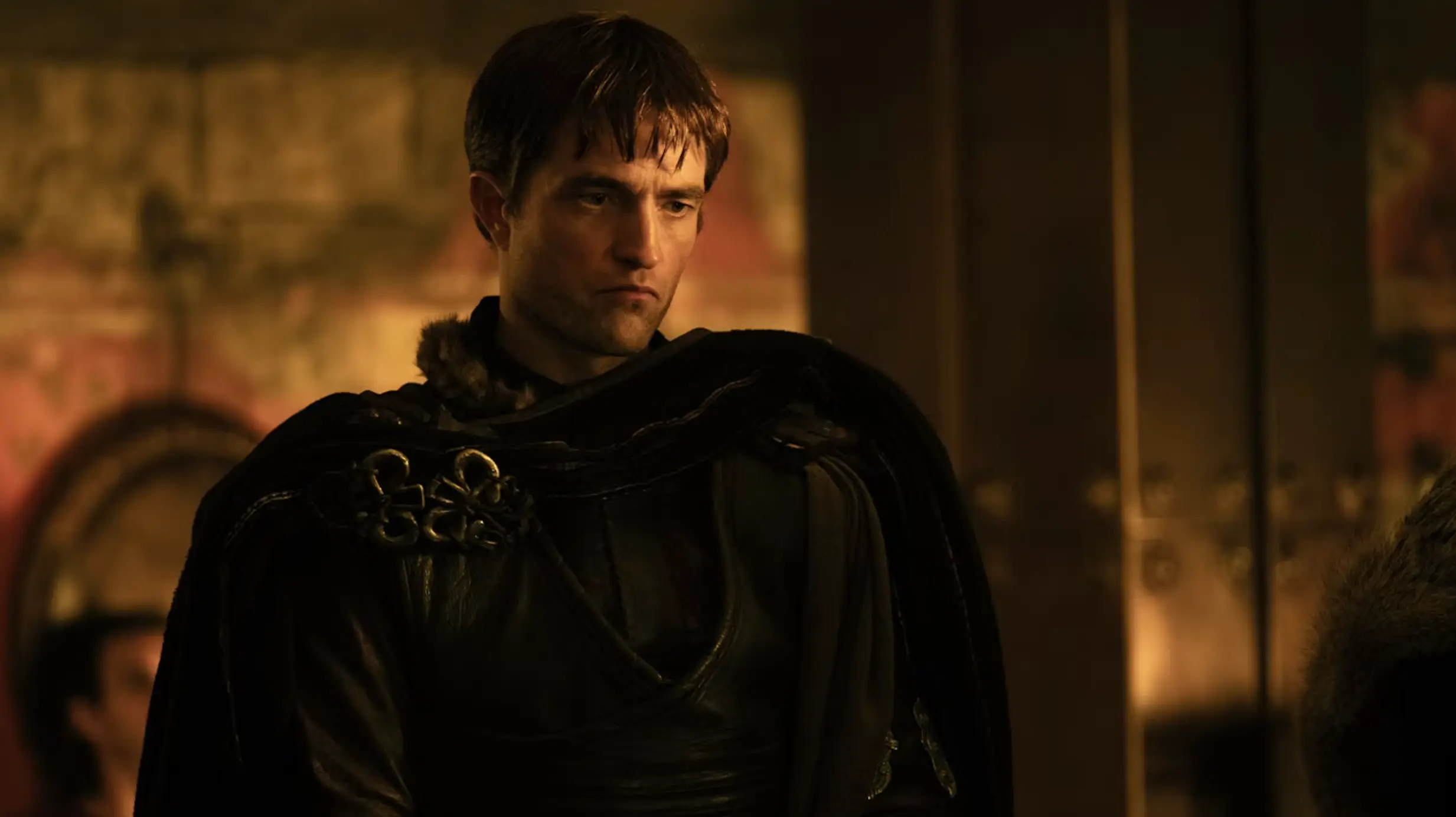
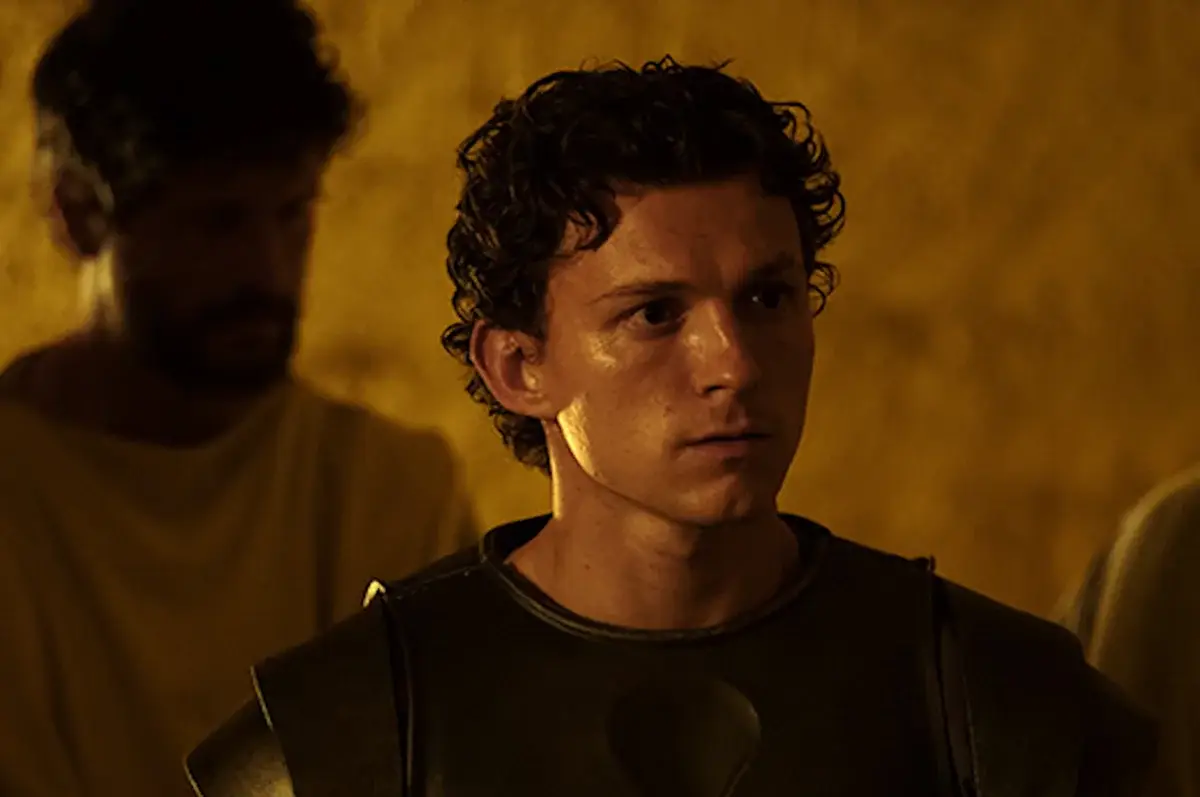
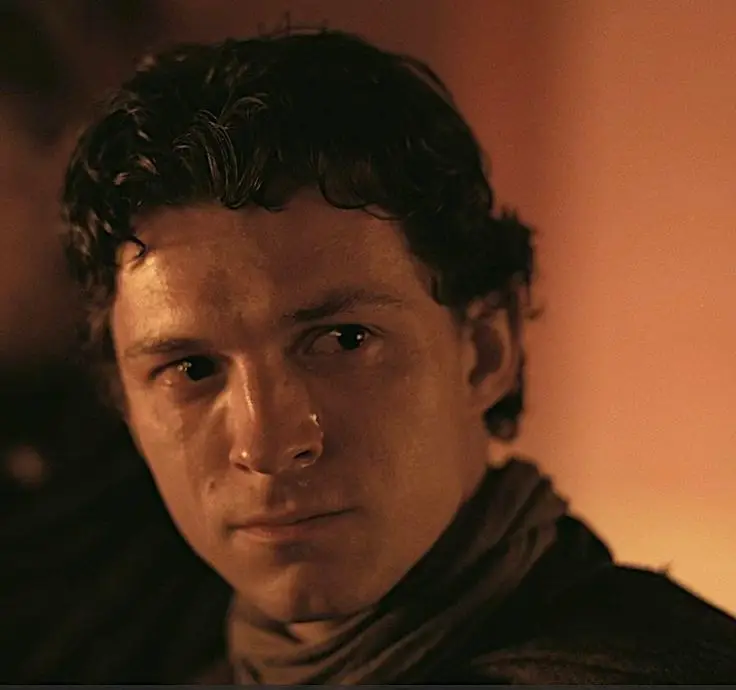
The scene in question features Holland, who plays Odysseus' son Telemachus, and Pattinson, who stars as Antinous - AKA one of the suitors sniffing around Penelope (Hathaway) in her husband Odysseus' absence.
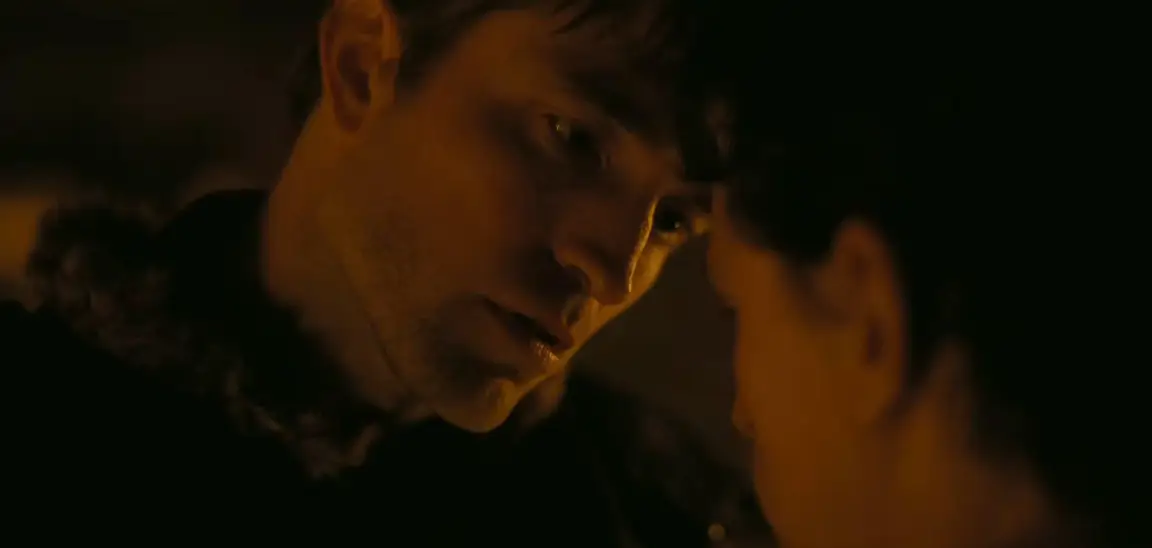
Looking for a rise, Antinous mocks Telemachus over 'pining for a daddy you didn't even know', before jabbing: "Like some snivelling b*stard."
Now, there's a whole load of debate over the use of modern dialogue and American accents in the box-office smash-hit, but, needless to say, the line has sent fans into overdrive, with one X user confessing: "Last time I’m seeing The Odyssey trailer in the cinema. Gonna miss Robert Pattinson pining for a daddy line."
"The homoeroticism oh I'm sat," gushed a second as a third piped up: "Can he be my daddy."
Another chimed in: "I don't know how many times I’ve mouthed along to Robert Pattinson’s 'you’re pining for a daddy you didn’t even know like some snivelling b*stard'."
And a final X user joked: "Best quote from The Odyssey: 'Oh Daddy uwu'."
So what's the deal with all the 'daddy' hype?
Well, Senior Educational and Child Psychologist Dr Sasha Hall exclusively explained to Tyla all we need to know about the phenomenon.
What is a 'daddy kink'?
Dr Hall explains: "A 'daddy kink' is generally understood as a consensual sexual preference or fantasy centred around a power dynamic, where one person takes on a more dominant, protective or authoritative role.
"Despite the name, it is not necessarily about someone’s father or a desire for a parental relationship."
For many people, the psychologist continues, the term 'daddy' has evolved into a form of flirtatious language associated with confidence, security, leadership and emotional or physical strength rather than anything familial.
"It is also worth remembering that people use the word in different ways. For some, it is part of a sexual dynamic, while for others it has become internet slang used to describe someone they find particularly attractive or charismatic," she added.
What is the psychology behind 'daddy kinks'?
Dr Hall outlines that there is no single psychological explanation.
She notes that human attraction is complex, and people are often drawn to qualities that signal confidence, competence, emotional security or the ability to take charge.
"Across many relationships, people naturally gravitate towards different interpersonal dynamics, including those where one partner is more dominant, and the other enjoys relinquishing some control," she says.
Importantly, the expert notes that fantasy does not necessarily reflect what someone wants in everyday life, as 'many people enjoy exploring particular themes in fantasy that bear little resemblance to the kind of relationship they would actually want or choose'.
"Some psychologists have suggested that early attachment experiences may influence the types of relationship dynamics people find appealing as adults, but there is no evidence to suggest that daddy kinks are caused by a particular attachment style or childhood experience," she states.
"It is much more nuanced than that."
Why do people have or develop 'daddy kinks'?
Explaining that there is not one single answer, Dr Hall underlines the common misconception that 'daddy kinks' are simply the result of 'daddy issues'.
"That idea has become part of popular culture, but psychology does not support such a straightforward explanation," she says.
Like many aspects of attraction, these preferences are likely shaped by a combination of personality, individual experiences, culture, media and personal fantasy.
"For some people, it is the power dynamic that appeals," the psychologist continues. "For others, it is the sense of confidence or security associated with that role.
"Social media has also normalised certain language and relationship archetypes, meaning words like 'daddy' now carry cultural meanings that extend far beyond their original definition."

Is it ever a red flag or problematic?
Dr Hall states that what matters is whether the relationship is built on mutual consent, respect, communication and clear boundaries.
"The concerns arise when there is coercion, manipulation or a genuine imbalance of power that is being exploited," she warns.
"For example, relationships involving someone below the age of consent, a significant abuse of authority, or situations where one person has disproportionate control over another are very different from two consenting adults engaging in an agreed dynamic."
The psychologist emphasises that 'focus should not be on the language people use, but on whether the relationship is psychologically safe, respectful and genuinely consensual'.
Why has the 'daddy scene' in The Odyssey generated such a huge reaction?
This is where internet psychology becomes particularly interesting, Dr Hall tells Tyla.
"The reaction is not just about one word. It is also about who is saying it and the meaning audiences attach to that person," she explains.
"Robert Pattinson has spent well over a decade as one of the internet’s biggest heartthrobs, largely because of his role as Edward Cullen in Twilight. Even though he is playing a very different character in The Odyssey, audiences do not simply switch off those existing associations.
"People naturally interpret new performances through the lens of what they already know about someone."
Psychologists refer to this as projection, the expert outlines, where people overlay their own expectations, fantasies or existing perceptions onto a person or situation.
She continued: "Add social media into the mix and those reactions can quickly become amplified. Once a handful of posts frame a moment in a particular way, thousands of others begin viewing it through the same lens, creating a viral cultural narrative.
"It is also worth asking whether the reaction would have been quite so intense if the exact same line had been delivered by an actor without Robert Pattinson’s history or devoted fan base.
"His long-standing status as a cultural heartthrob almost certainly shapes how audiences interpret the scene, regardless of the character he is actually portraying."
The Odyssey hits cinemas Friday (17 July).
Topics: Tyla Exclusive, TV And Film, Cinema, Sex and Relationships, Explained
 Rhiannon Ingle