
'High risk' dermal piercings explained as Kim Kardashian's daughter North gets body modification

Questions have been raised on the topic of dermal piercings this week, after Kim Kardashian's daughter North West revealed she'd undergone the controversial procedure.
Despite having first been spotted with what appeared to be some new finger bling during a trip to Rome back in August, taking to TikTok this week, the 12-year-old confirmed that the piercings were very much real.
A series of vids featured North showing off her new bling, which saw two piercings embedded into her fingers. Whilst one saw a pair of silver gems poking out, another consisted of a blue gemstone.
Unsurprisingly, after snaps of her seemingly sore fingers began circulating on social media, hordes of trolls began dragging mum Kim, 45.
Advert
One on Reddit wrote: "This is what happens when you need to be your child's best friend and not a rational adult."
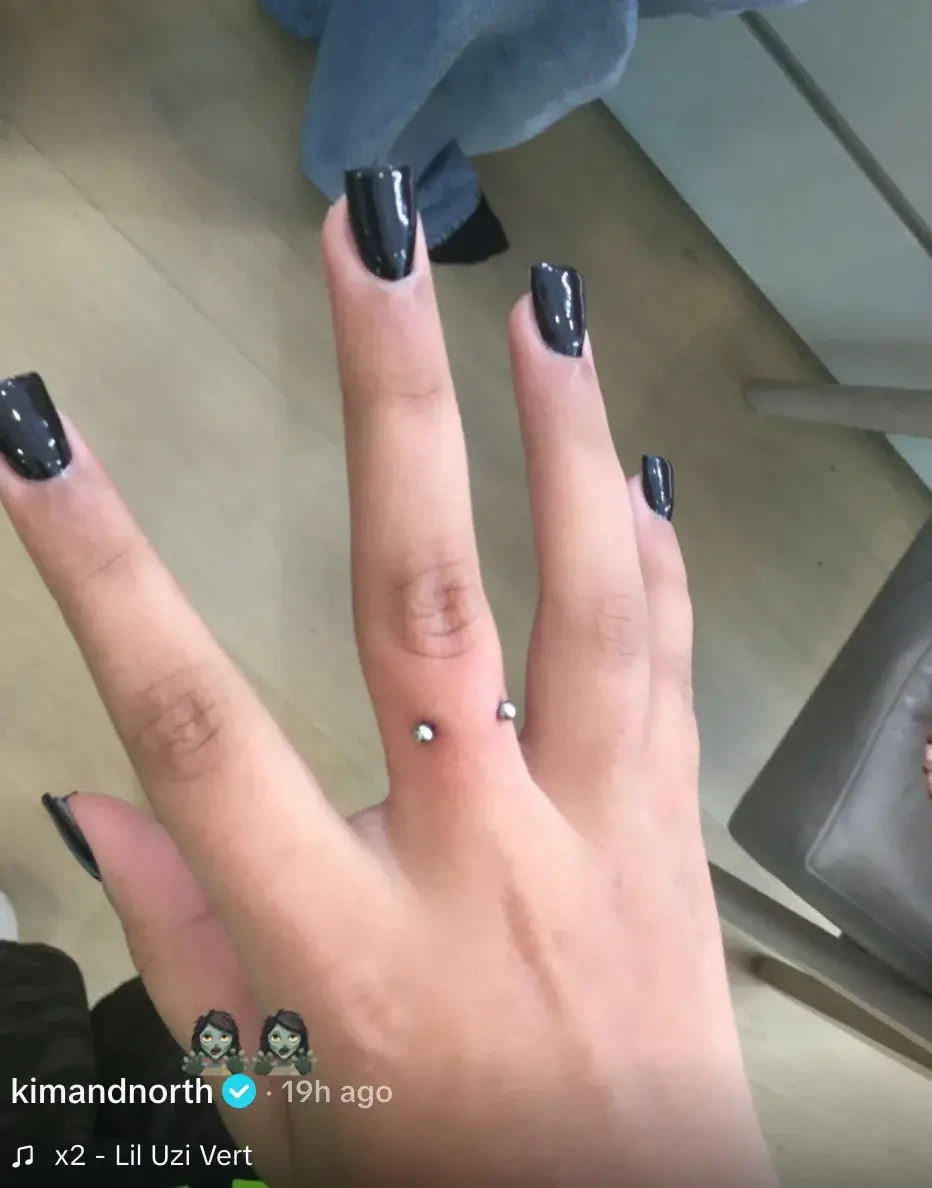
"I couldn't imagine giving my 12-year-old permission to have dermal and surface piercings like this, especially with the complications that come with them," a second confessed, whilst a third added: "Dermal piercings at 12 on your hand is wild. I'm all for letting kids express themselves, but not this, not at 12."
Whilst we're never ones to judge A-list mums and dads over their parenting decisions, according to experts in the industry, onlookers are right to be concerned for North, given that dermal piercings are often considered 'high risk'.
What is a dermal piercing?
For those unfamiliar with the terminology, dermal piercings differ from conventional piercings in that they're defined by single point entry.
Experts at Stretch It Body Jewellery recently explained that the procedure sees a small anchor - of either surgical titanium, surgical stainless steel, niobium or gold - inserted under the dermis layer.
After being secured into place, this flat base serves as a tiny platform for dermal jewellery.

More specifically, North's latest style choice can be described as a dual dermal set-up, positioned alongside one another across her finger.
Dr Neeharika Goyal of Only My Health went on to note: "This type of piercing is decorative and looks elegant, but it’s also one of the more delicate forms of body modification because of its location."
She added that dermal piercings can be placed almost anywhere across the body, though areas like the chest, neck, wrists and fingers - where surplus skin is minimal - are seen as the most popular.
Sadly, however, placement around the latter area is often seen as the most dangerous.
Why are they considered 'high risk'?
Despite often being considered a modern, potentially daring piercing variation, dual dermal set-ups often come with a series of warnings, many of which are issued on the basis that everybody's body reacts differently to foreign objects.
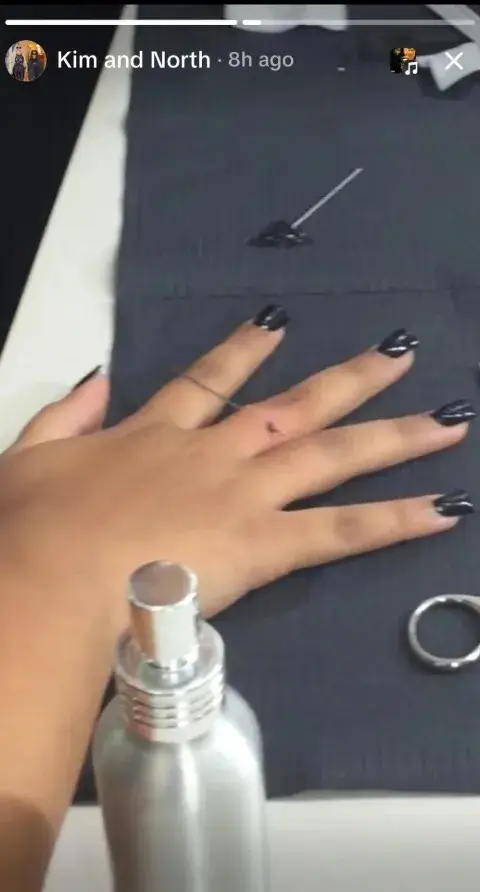
If a person's immune system attempts to fight against the anchor, this is described as rejection. According to Healthline, the body physically pushing the jewellery out of the dermis is common with anchor displacement.
Migration, meanwhile, sees the base shifting over to a different, often uncomfortable position, with this most commonly occurring if the anchor 'isn’t inserted deep enough'.
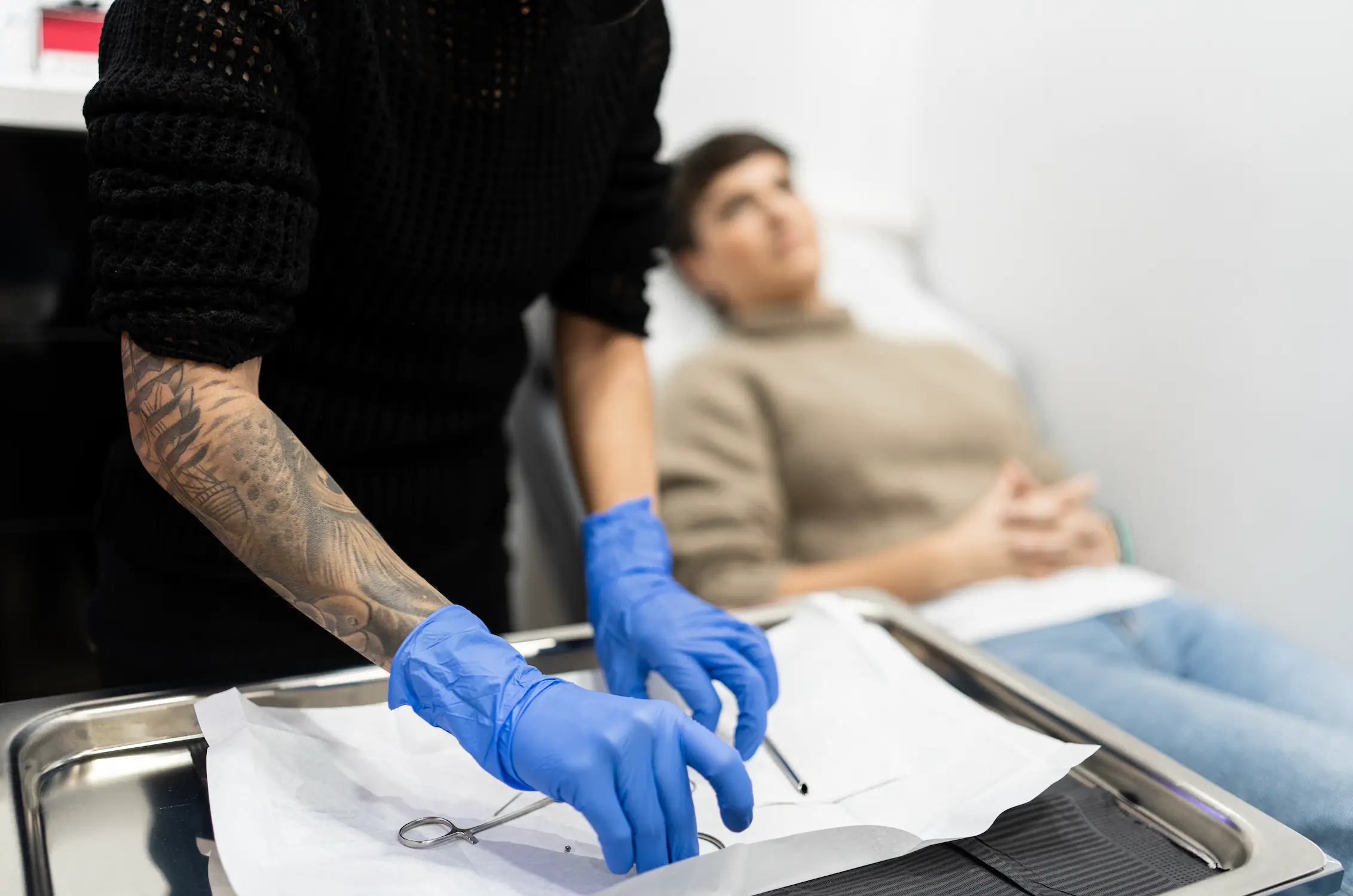
There's also the risk of infection, with a sterile environment for the piercing being essential. On this, Dr Goyal explained: "The skin on the hands moves constantly and comes into contact with soap, water, and bacteria, which can make healing harder."
On the importance of proper aftercare, she added: "It’s important to keep the area clean, avoid excessive handwashing in the first few days, and stay away from tight gloves or anything that could irritate the piercing."
Though not deadly, anyone considering a dermal piercing should also be aware of the risk of scarring, which could occur in cases of rejection once the hole has started to shut.
There's also the risk of snagging the piercing on clothing or bags - especially if placed somewhere like the hands.
And in the most severe of cases, there's the risk of nerve or tissue damage if the anchor is inserted incorrectly, or even too deeply.
How should North care for her piercing?
Healthline experts advise that recipients of a dual dermal set-up keep the area covered with a bandage for a few days immediately afterwards, and washing their hands with antibacterial soap if they absolutely must do so.
It's also important for a new paper towel to be used each and every time the piercing is cleaned, which should be done using saline solution or sea salt.
Any crust that begins to form in between cleaning should always be gently wiped away, and during showers, the area should be protected from getting wet. It should also be patted dry in cases where this proves impossible.
For finger piercings specifically, the expert outlet adds that gloves or tight hand clothing are absolute no-go's, and that piercing recipients should always be careful not to allow hair to become wrapped around the jewellery.
Tyla has contacted Kim's reps for comment.
Topics: Kim Kardashian, The Kardashians, Celebrity, US News, Reality TV
 Rhianna Benson