
Women's health GP shares has important advice for anyone with 'egg white discharge'

If you've ever noticed your discharge suddenly becoming clear, slippery and stretchy, you might have wondered what on earth is going on down there.
According to one women's health expert, however, 'egg white' discharge - as it's sometimes referred to - is totally normal. In fact, she added, it can actually prove rather beneficial when it comes to teaching you about the ins and outs of your own menstrual cycle.
That said, however, there's a 'but'.
Speaking exclusively to Tyla, women’s health GP and founder of The Female Health Doctor clinic, Dr Nikki Ramskill, explained that so-called 'egg white discharge' is usually cervical mucus, which can change in appearance and consistency throughout the month.
So, what actually is 'egg white' discharge?
The clue is very much in the name. It's a description given to cervical mucus that becomes clear, slippery and stretchy, a little like raw egg white.
Advert
And, as we say, it's really common.

"For most women, it’s completely normal and is actually a useful sign of what’s happening hormonally during the menstrual cycle," Dr Ramskill explained. "I will often remind women to check for this sign when they are wanting to time ovulation to avoid or to get pregnant."
When it comes to what's actually happening inside your body when this change occurs, she continued: "As we get close to ovulation, oestrogen levels rise, and this changes the amount and consistency of mucus produced by the cervix.
"It becomes wetter, more slippery and stretchy, creating the best conditions for sperm to survive and travel through the cervix."
Which means that if you're trying to conceive, spotting this type of discharge can be pretty useful.
"This is why noticing egg-white cervical mucus can be particularly useful if you’re trying to conceive: it often indicates that you’re approaching your most fertile time of the month," the GP continued.
What's the catch?

While noticing egg-white cervical mucus can help you understand your cycle, the expert stressed that it shouldn't be treated as a standalone form of contraception, especially for someone specifically avoiding pregnancy.
“Equally, it’s useful information if you’re not trying to become pregnant," Dr Ramskill went on. "Seeing this type of mucus can be a clue that you’re within your fertile window, although I wouldn’t recommend relying on discharge alone as contraception.”
In other words, spotting the tell-tale stretchy discharge can give you a useful indication that you're in your fertile window, but it isn't enough on its own to prevent pregnancy.
"A natural cycle protocol also needs temperature checking every morning on waking, a regular period and a year of data to be fully reliable," she warned.
Lastly, the GP also wanted to reassure women who might be worried about seeing discharge in the first place, claiming society has a whole has been conditioned to think 'strange' discharge is always a sign that something is wrong.
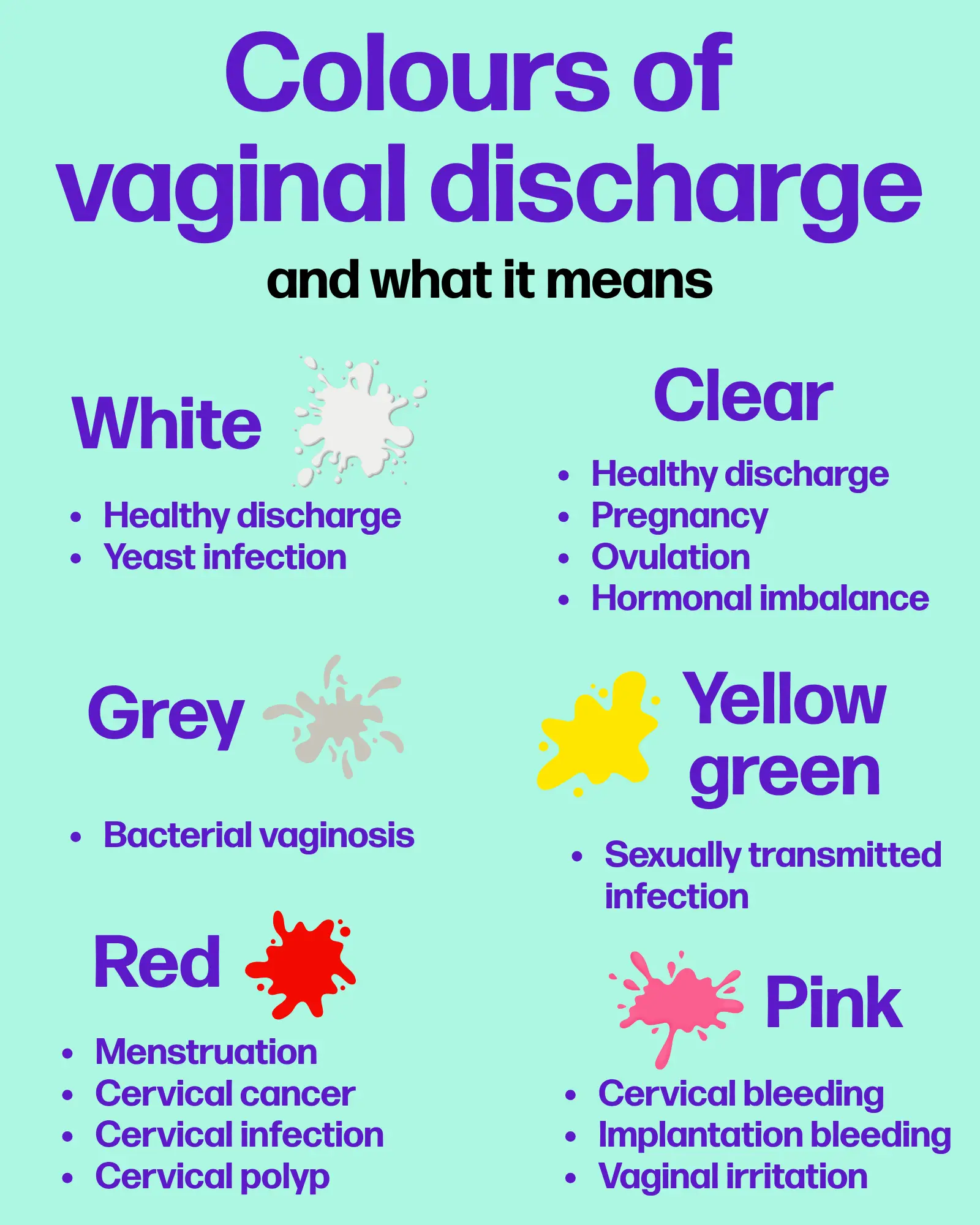
"Actually it changes naturally throughout the menstrual cycle," Dr Ramskill urged, referring to its ever-changing colour, texture and amount.
And if you've ever noticed that your discharge looks slightly yellow once it's on your underwear, there's no need to immediately panic.
"The white colour of the discharge can also turn a faint yellow when it hits the air, particularly when in less fertile parts of your cycle," she said. "Discharge without an unpleasant smell, itching, soreness or pain is generally nothing to worry about."
When should you get your discharge checked?
Concerning when discharge should be seen as a concern, Dr Ramskill pointed out that some signs are worth paying attention to - especially a significant change from your usual pattern.
"Particularly if it develops a strong or fishy smell, becomes green or yellow, is thick and ‘cottage-cheese’ like," she continued. "Or comes alongside itching, soreness, pain when passing urine, pelvic pain, bleeding between periods or bleeding after sex."
So, if your discharge suddenly looks or smells very different to what you're used to, or you're experiencing other symptoms alongside it, it's worth speaking to a healthcare professional.
Topics: Health, Women's Health, Periods, Pregnancy, Advice
 Rhianna Benson