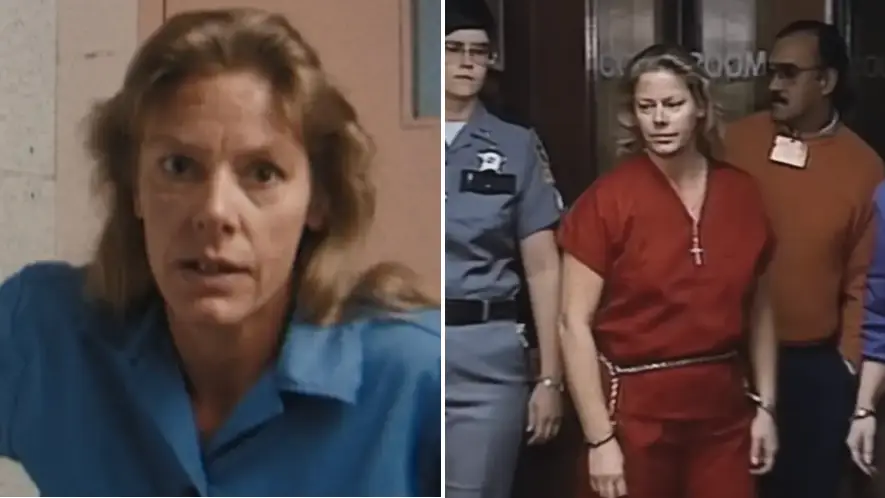
Aileen Wuornos' disturbing final letter from death row to pen pal before she was executed for murders

Aileen Wuornos' harrowing case has resurfaced after the infamous killer was unexpectedly fictionalised in Netflix's Monster: The Lizzie Borden Story – but what did she write in her final days?
The 'Damsel of Death' is portrayed by Sarah Paulson - a longtime pal of producer and writer Ryan Murphy - despite the fact that Wuornos and Lizzie Borden lived almost a century apart.
That's right, there's no evidence the two women ever had any real-life connection. Borden was tried in 1893 after being accused of murdering her father, Andrew, and stepmother, Abby, with an axe in Massachusetts in 1892, after which she was acquitted.
Advert
Wuornos, meanwhile, was born in Michigan in 1956 and carried out her crimes in Florida nearly a century later.
The link between them is entirely fictional, with the series using Wuornos as part of its wider exploration of infamous women and violence.
"So we are kind of doing this fantasia of women vs. the system," Murphy told THR. "And it’s not what they did; it’s the question of: What made them do it? Why did they do it, if they did it? That’s what the show is about."
But while Netflix has created its own version of Wuornos, her real-life story is disturbing enough without any added drama.
And among the most revealing records left behind are the hundreds of letters she wrote during her years on death row, including a lengthy final letter to her childhood friend Dawn Botkins.
What did Aileen Wuornos do?
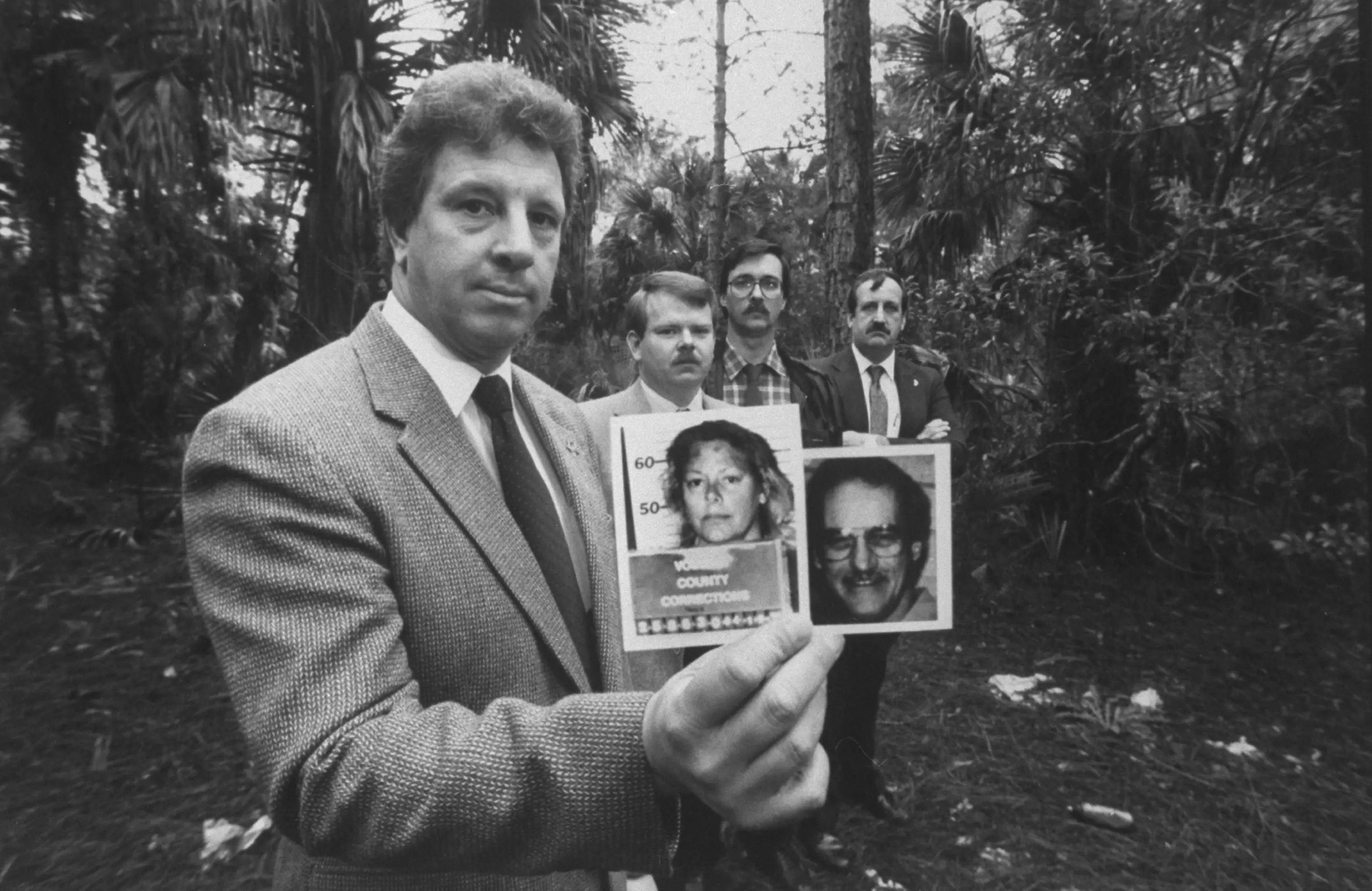
Wuornos was convicted of murdering six men in Florida between 1989 and 1990, while a seventh man, Peter Siems, was also linked to her but his body was never found.
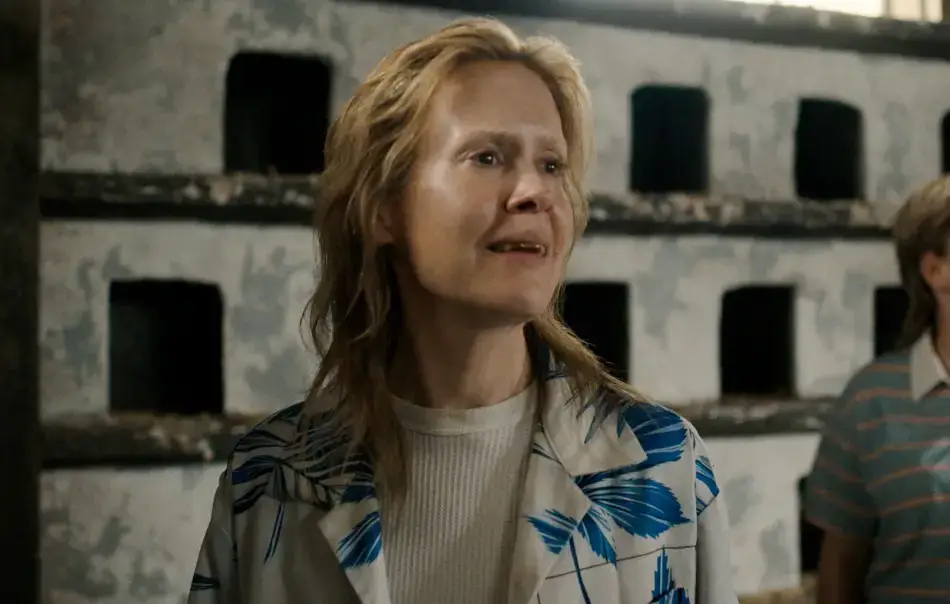
Wuornos didn't deny killing Richard Mallory, David Spears, Charles Carskaddon, Peter Siems, Troy Burress, Charles Humphreys and Walter Antonio, but her explanation for the murders changed over time.
She claimed that she had acted in self-defence, saying some of the men had assaulted or attempted to sexually assault her while she was working as a sex worker along Florida's highways.
Prosecutors, meanwhile, argued the killings were connected to robbery.
How did her trial pan out?
One of the most important people in Wuornos' case was her girlfriend, Tyria Moore, whom she'd been living with for several years, and whom supported her through her sex work.
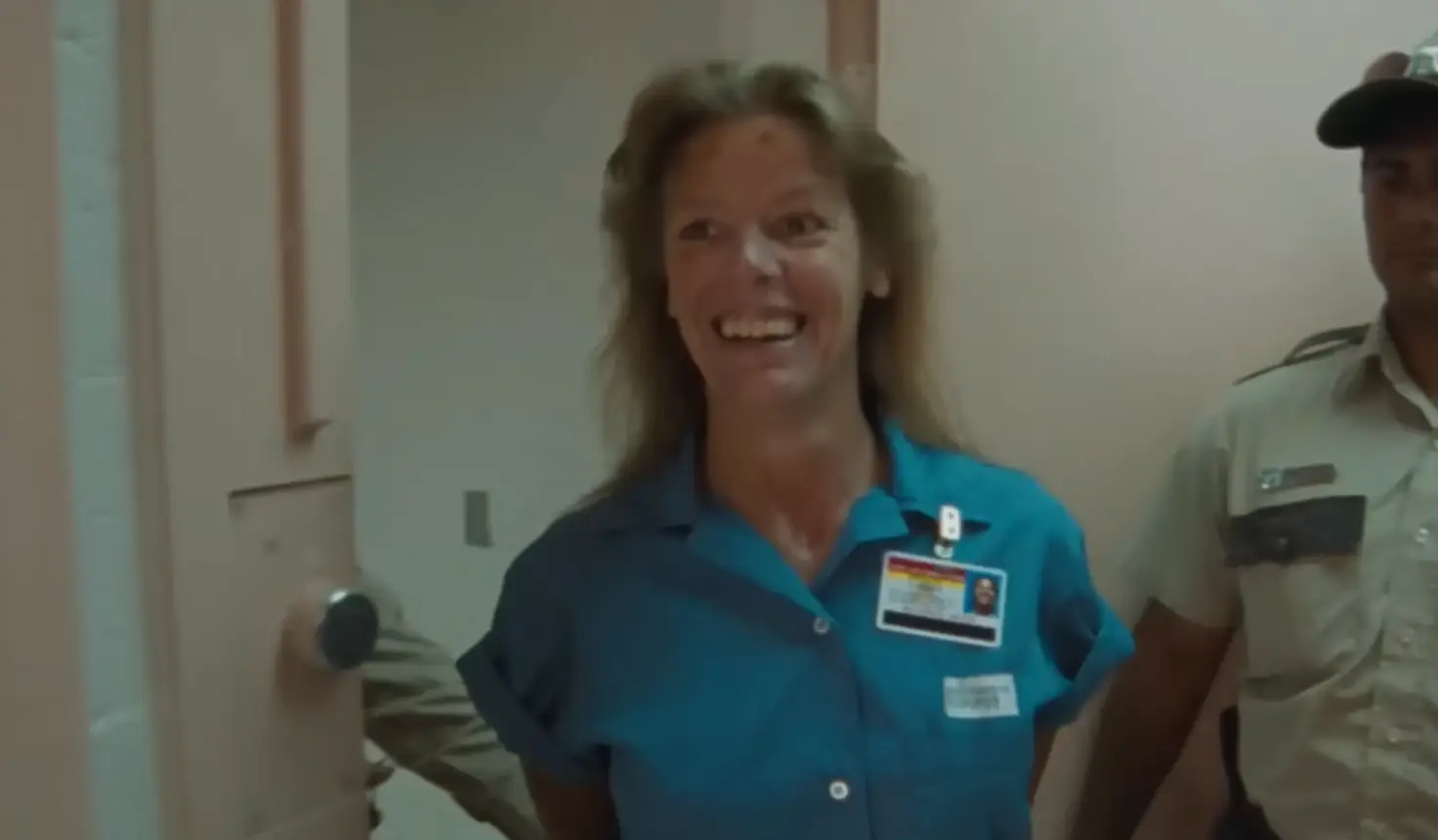
After police began investigating the murders, Moore left Wuornos and returned to Pennsylvania.
Authorities eventually persuaded Moore to cooperate with the investigation. She travelled back to Florida and, during recorded phone calls, encouraged Wuornos to talk about what had happened, prompting her to confess.
During the proceedings, the killer maintained that her first victim, Mallory, had attacked her and that she had shot him in self-defence. Evidence given by Moore during her testimony, however, contradicted key parts of that account.
Wuornos was found guilty of the first-degree murder of Malloey with the jury unanimously recommending the death penalty, voting 12-0.
She subsequently pleaded guilty or no contest to several of the other murders and received additional death sentences. She was never tried for Siems' death because his body was never recovered.
What did Wuornos write on death row?
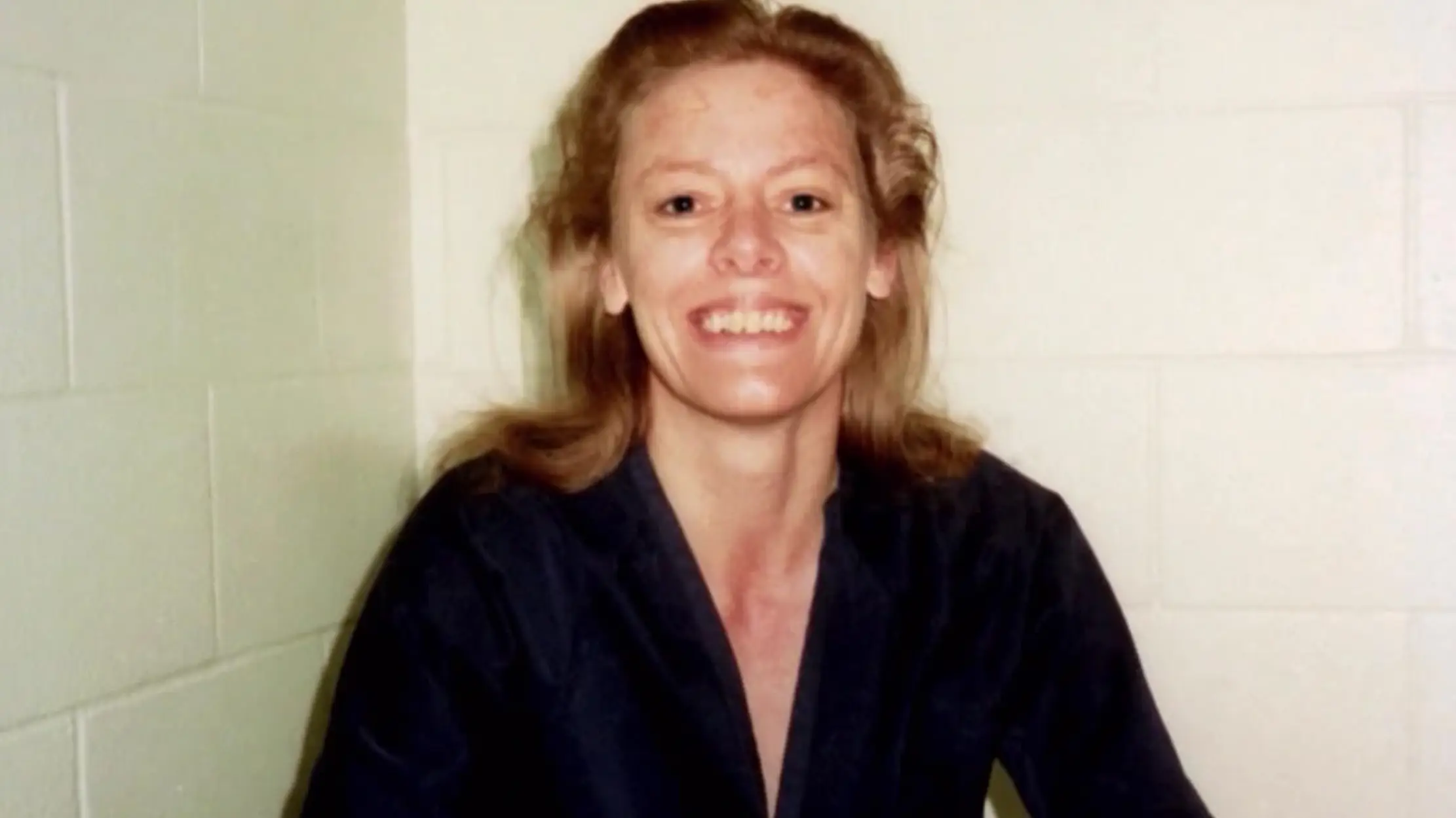
Wuornos spent around a decade on death row, and during that time she exchanged hundreds of letters with her childhood friend, Dawn Botkins.
The letters were eventually collected in Dear Dawn: Aileen Wuornos in Her Own Words, offering a remarkably personal glimpse into the woman behind the infamous case.
Surprisingly, however, given Wuornos fate, not all of her letters were sombre.
In some, she wrote about religion, aliens, prison food and her fellow inmates. In one particularly bizarre passage, she imagined herself partying with Jesus after death. But her final letter to Dawn had a markedly different tone.
Dated seven days before her execution, it was essentially a final thank-you to the friend who had continued to support her.
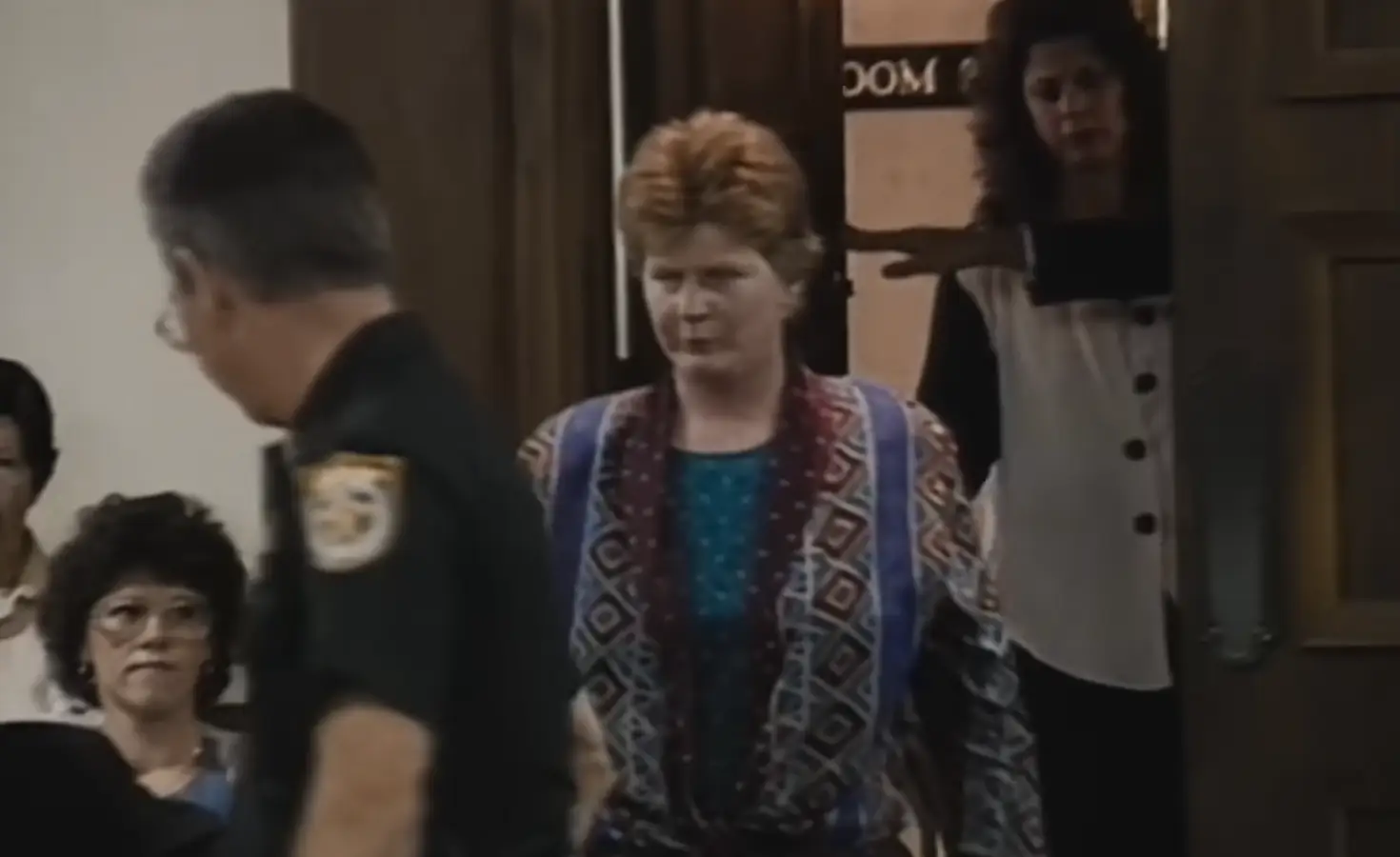
"So again – Would like to 'THANK YOU' for helping me through it all!." she told Botkins. "And from the 'DEBTS OF MY SOUL' . . . sis 'THANK YOU FOR EVERYTHING!' 'THANK YOU SOOOO MUUUUCH!' 'SOOOO SOOOO VERY MUUUUCH.'
"Will Love ya buddy. 'FOREVER – MAN!'"
Wuornos continued: "And with that good thought 'SOOOO MEEEAANNT.' 'SOOOOO FOR REAL!' I’ll close here and find a way to relax a little more before the end. I’ll see ya at Starke, and again someday on the other side.
"Love ya buddy, and take good care 'My FRiEND.' You’ll be 'FOREVER REMEMBERED BY ME.' Love Aileen."
She concluded: "P.S. I’d like to also 'THANK YOUR FAMILY' for all the support and Understanding they gave in our friendship too., and how they stood by it. Was definetly cool., and., brave. Thanks a million Dawn!.
"And you too, you guys in the family. Will Love ya. 'FOR EVER!.'"
What happened during her execution?
Wuornos died by lethal injection in Florida on 9 October 2002, aged 46, after spending around a decade on death row. Interestingly, however, Netflix's Monster changes some of the details surrounding her final hours.
In the series, Wuornos is shown eating KFC as her final meal. In reality, she declined the meal and instead had coffee, while reportedly spending much of her final morning reading the Bible.
Her actual final statement was also very different from the dramatic speech created for the Netflix series.
Before the lethal injection, Wuornos said: "Yes, I would just like to say I’m sailing with the Rock, and I’ll be back, like Independence Day with Jesus. June 6, like the movie. Big mother ship and all, I’ll be back, I’ll be back."
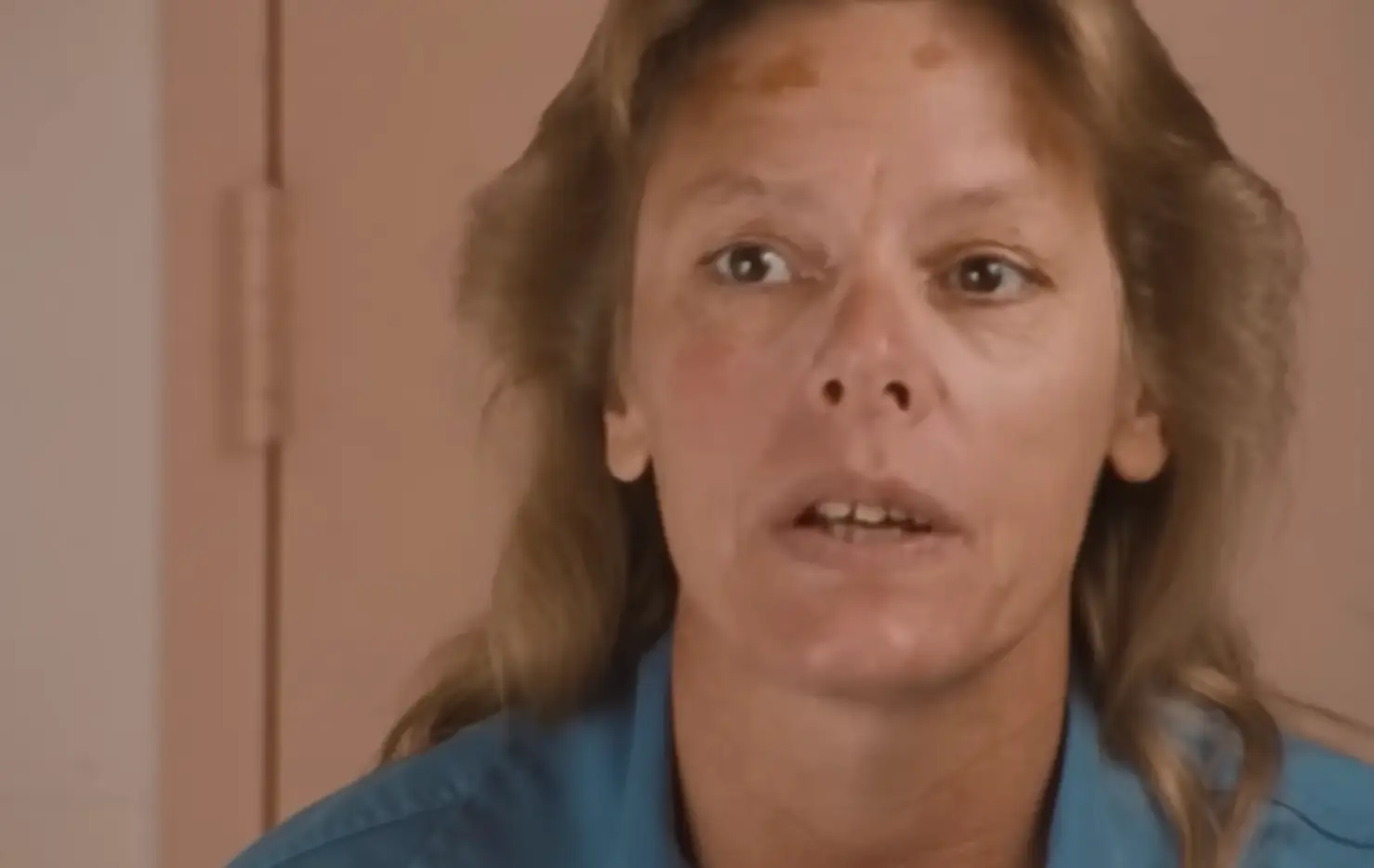
She also reportedly requested Natalie Merchant's Carnival before her execution - another detail that made its way into the Netflix series.
Topics: True Crime, Crime, US News, Netflix, Real Life
 Rhianna Benson