• News
  • Life
  • TV & Film
  • Beauty
  • Style
  • Home
  • News
    • Celebrity
    • Entertainment
    • Politics
    • Royal Family
  • Life
    • Animals
    • Food & Drink
    • Women's Health
    • Mental Health
    • Sex & Relationships
    • Travel
    • Real Life
  • TV & Film
    • True Crime
    • Documentaries
    • Netflix
    • BBC
    • ITV
    • Tyla Recommends
  • Beauty
    • Hair
    • Make-up
    • Skincare
  • Style
    • Home
    • Fashion
    • Shopping
  • Advertise
  • Terms
  • Privacy & Cookies
  • LADbible Group
  • LADbible
  • UNILAD
  • SPORTbible
  • GAMINGbible
  • UNILAD Tech
  • FOODbible
  • License Our Content
  • About Us & Contact
  • Jobs
  • Latest
  • Topics A-Z
  • Authors
Facebook
Instagram
X
Threads
TikTok
Submit Your Content
Urgent warning over contaminated wet wipes after death of six people

Home> News

Published 15:38 6 Mar 2026 GMT

Urgent warning over contaminated wet wipes after death of six people

The UKHSA has advised people to check for these wipes in their home, including in first aid kits

Madison Burgess

Madison Burgess

google discoverFollow us on Google Discover

At least six deaths have reportedly now been linked to using potentially contaminated skin cleansing wipes in the UK.

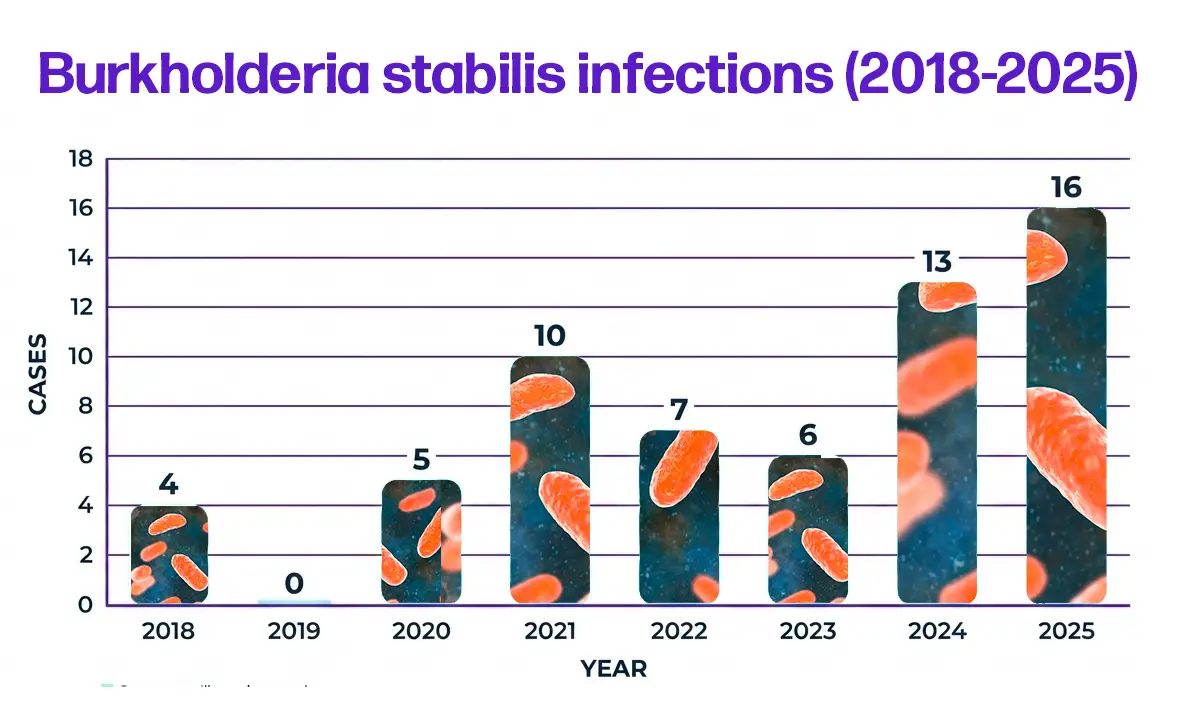
Last month, Brits were warned to avoid specific brands of alcohol-free wipes, following an outbreak of Burkholderia stabilis infection which took place between January 2018 and February of this year.

Burkholderia are a type of bacteria found naturally in the environment, including in soil and water.

While many people never encounter problems with this type of bacteria, it can cause serious infections in certain circumstances, particularly among vulnerable individuals.

Advert

The UK Health Security Agency (UKHSA) shared a press release on 5 February, revealing that there had been 59 confirmed cases of the bacteria identified in the United Kingdom, which have been associated with several non-sterile alcohol-free wipe products, as well as one death.

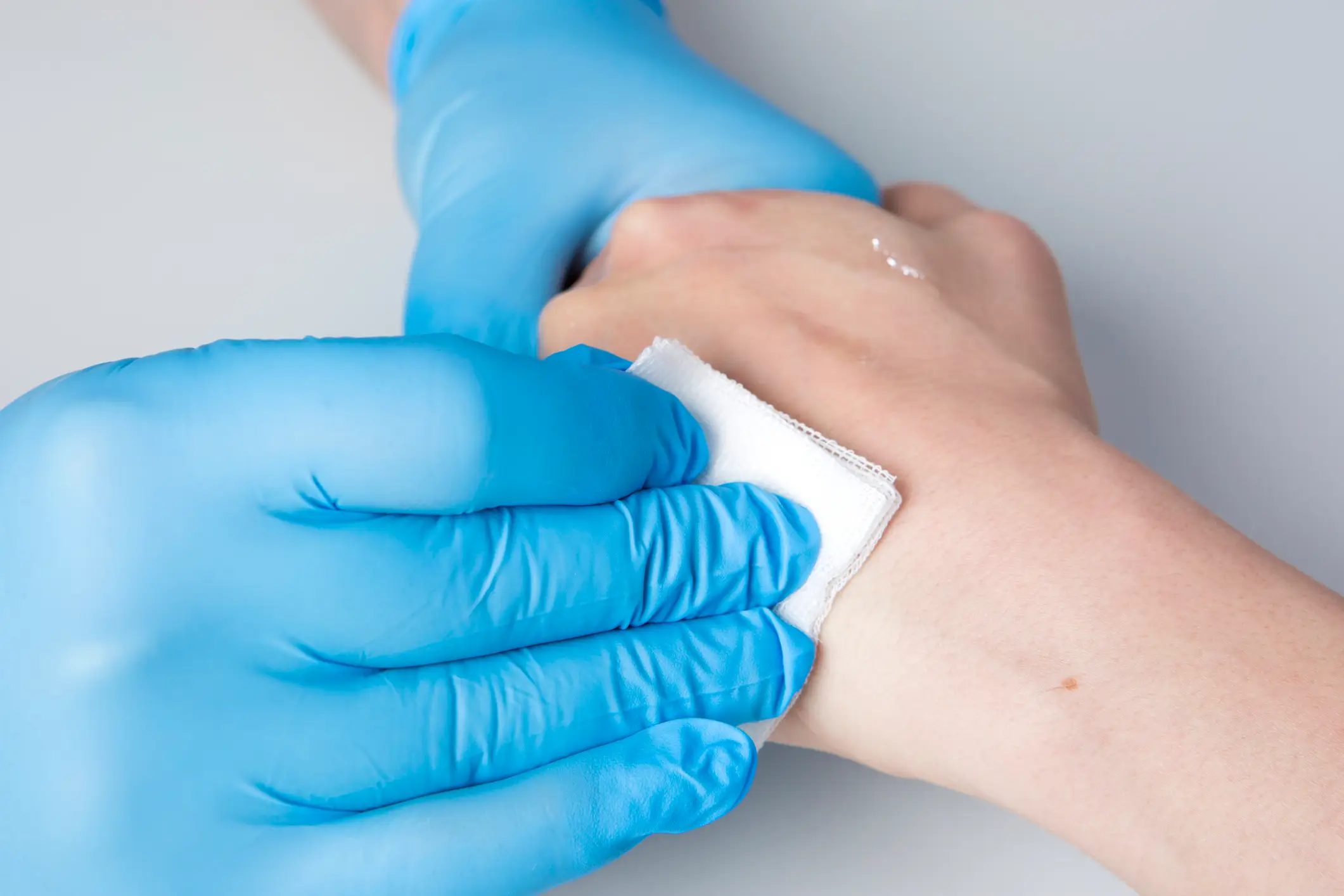
At least six deaths have reportedly been linked to the infected wipes (Getty Stock Image)

The UKSA explained that the affected products have been withdrawn from sale, but some that were bought previously may still be found in first aid kits or in people's homes.

These products are wipes that are not labelled as 'sterile,' with the health agency specifically advising people to check for these wipes in their home, including in first aid kits:


  • ValueAid Alcohol Free Cleansing Wipes
  • Microsafe Moist Wipe Alcohol Free
  • Steroplast Sterowipe Alcohol Free Cleansing Wipes
  • Reliwipe Alcohol Free Cleansing Wipes (testing revealed contamination with a Burkholderia strain not related to the outbreak cases)

Now, as we say, according to The Sun, an update has been issued suggesting that six people have allegedly died.

Reporting on the matter in the journal Eurosurveillance, UKHSA experts said: "As of February 2026, 59 confirmed cases and three probable cases have been identified.

"Five confirmed and one probable case died within 30 days of detection of B. stabilis. One death was attributed to their Burkholderia infection."
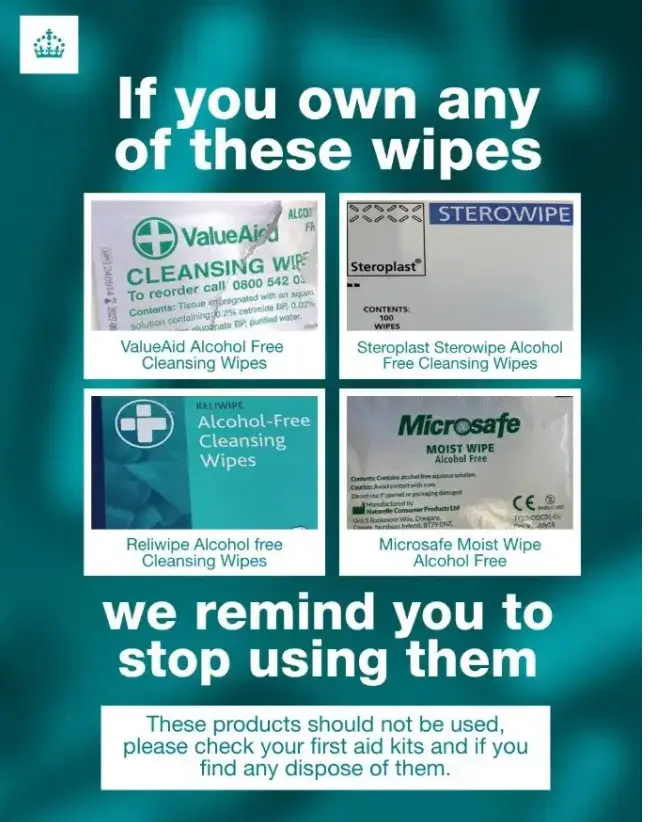
Four wipe brands have been identified (UK Health Security Agency)

Reportedly, the patients were aged between 0 and 93, and 15 of them were aged 19 or younger.

Of the 62 cases, in 39 people the bacteria were found in their blood, and in 16, it was found in a wound.

31 victims have been hospitalised, and more than half of those affected had weakened immune systems.

There were also three instances of cases sharing a common healthcare provider or services.
Almost 200 products were tested, and officials discovered the bacteria in the four brands of skin cleansing wipes, which 'originated from the same UK manufacturing site'.

They warned: “The B. stabilis outbreak is ongoing and associated with non-sterile alcohol-free skin cleansing wipes.”

The UKHSA previously said: "If you have any of these products, stop using them immediately and dispose of them in standard household waste.

"It is important to only use wipes marked as ‘sterile’ on broken skin such as wounds, scratches, or where you can see blood - this reduces the chances of germs getting into the body and causing infections."

Featured Image Credit: Getty Stock Image

Topics: News, Health, UK News, NHS

Madison Burgess
Madison Burgess

Madison is a Journalist at Tyla with a keen interest in lifestyle, entertainment and culture. She graduated from the University of Sheffield with a first-class degree in Journalism Studies, and has previously written for DMG Media as a Showbiz Reporter and Audience Writer.

Advert

Advert

Advert

Choose your content:

3 hours ago
4 hours ago
6 hours ago
  • Getty Stock Images
    3 hours ago

    Surprising yearly 'tax' only women pay every year without even realising

    It works out to the same price as a monthly utility bill

    News
  • DWS News
    4 hours ago

    Trump invites pastors from all over US to pray for his protection

    Dan Scavino, the White House Deputy Chief of Staff, claimed the group prayed for Trump in light of the ongoing Middle Eastern conflict

    News
  • Martin Meissner - WPA Pool/Getty Images
    6 hours ago

    Andrew Mountbatten-Windsor to keep prestigious honour despite Epstein controversy

    The former Duke of York received the honour back in 2012

    News
  • Davidoff Studios/Getty Images
    6 hours ago

    Missing Epstein files mentioning Trump released - here's what they reveal

    Karoline Leavitt slammed the accusations against Trump in the newly-released files as 'completely baseless'

    News
  • Warning signs woman, 59, had rabies after being scratched by dog on holiday
  • Wet wipes warning issued after several infected with life-threatening bacteria leaving one person dead
  • Holidaymakers in Mexico issued urgent warning after cartel boss killed
  • Doctors issue urgent warning over specific cough that could be more than a common cold