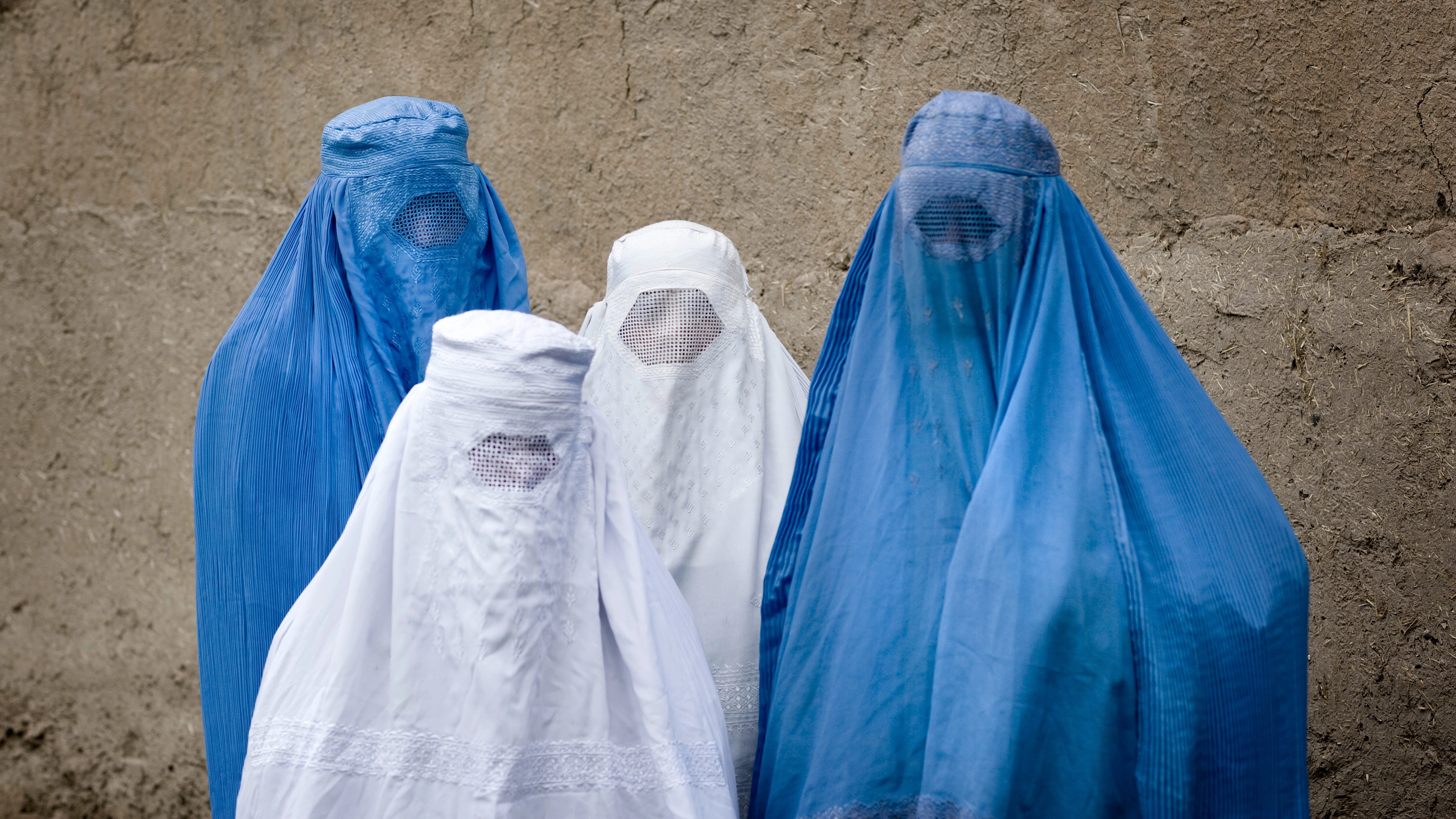
Afghanistan has just legalised domestic violence

Warning: This article contains discussion of domestic violence which some readers may find distressing
A new penal code has been published by Taliban leaders in Afghanistan, which will legalise acts of physical punishment against women.
The alarming news comes in light of Hibatullah Akhundzada - the Supreme Leader of the Islamist extreme group - signing a 90-page criminal code which outlines different degrees of legal penalisation depending on whether or not the recipient is 'free', or a 'slave'.
Citing Islamic scripture, the latest regime on punishment essentially implements a new system into Afghan society, whereby individuals will either be categorised as either upper or lower citizens.
Advert
The former group will largely be made up of religious leaders and mullahs.
As per the country's new rules - known officially as 'De Mahakumu Jazaai Osulnama', which have since been distributed nationwide - physical chastising against the latter group will generally be considered more acceptable.
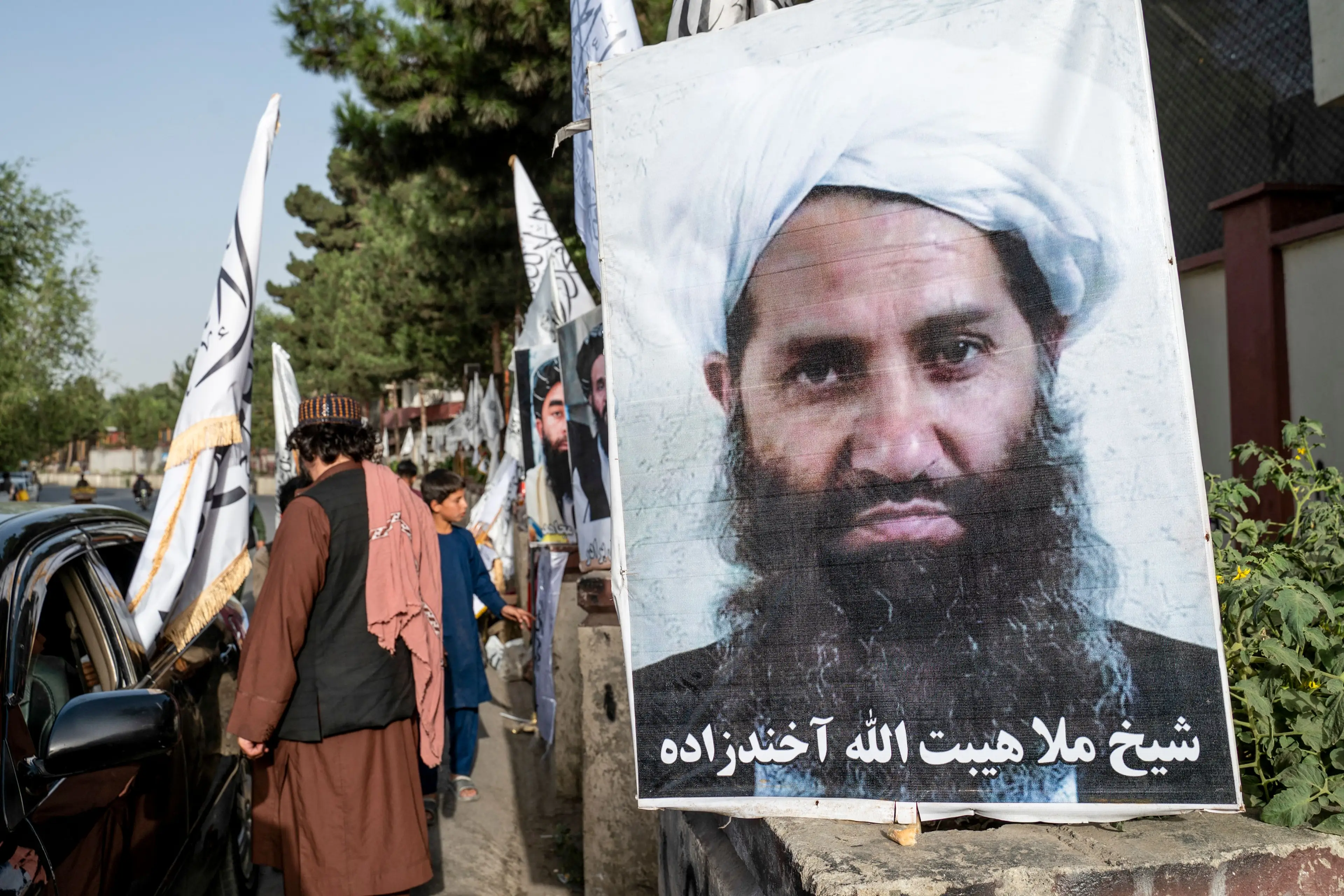
This is something political commentators predict will result in increasing violence being inflicted upon female citizens, given that the code effectively equates them to 'slaves', and their husbands, 'slave masters'.
Those at the top of the food chain responsible for such abuse, meanwhile, will avoid criminal prosecution, given their status.
Unsurprisingly, the new code has triggered horror across both Afghanistan and the wider world, with citizens also being warned by the Taliban that even a discussion on the matter would be considered an offence.
Punishment for serious crimes, including those committed against the government or its regime, will be handled by Islamic clerics, as opposed to correctional services.
Instances of less serious, personal wrongs will be dealt with using a "ta'zir", which describes a discretionary punishment that can be inflicted on a wife by her husband.
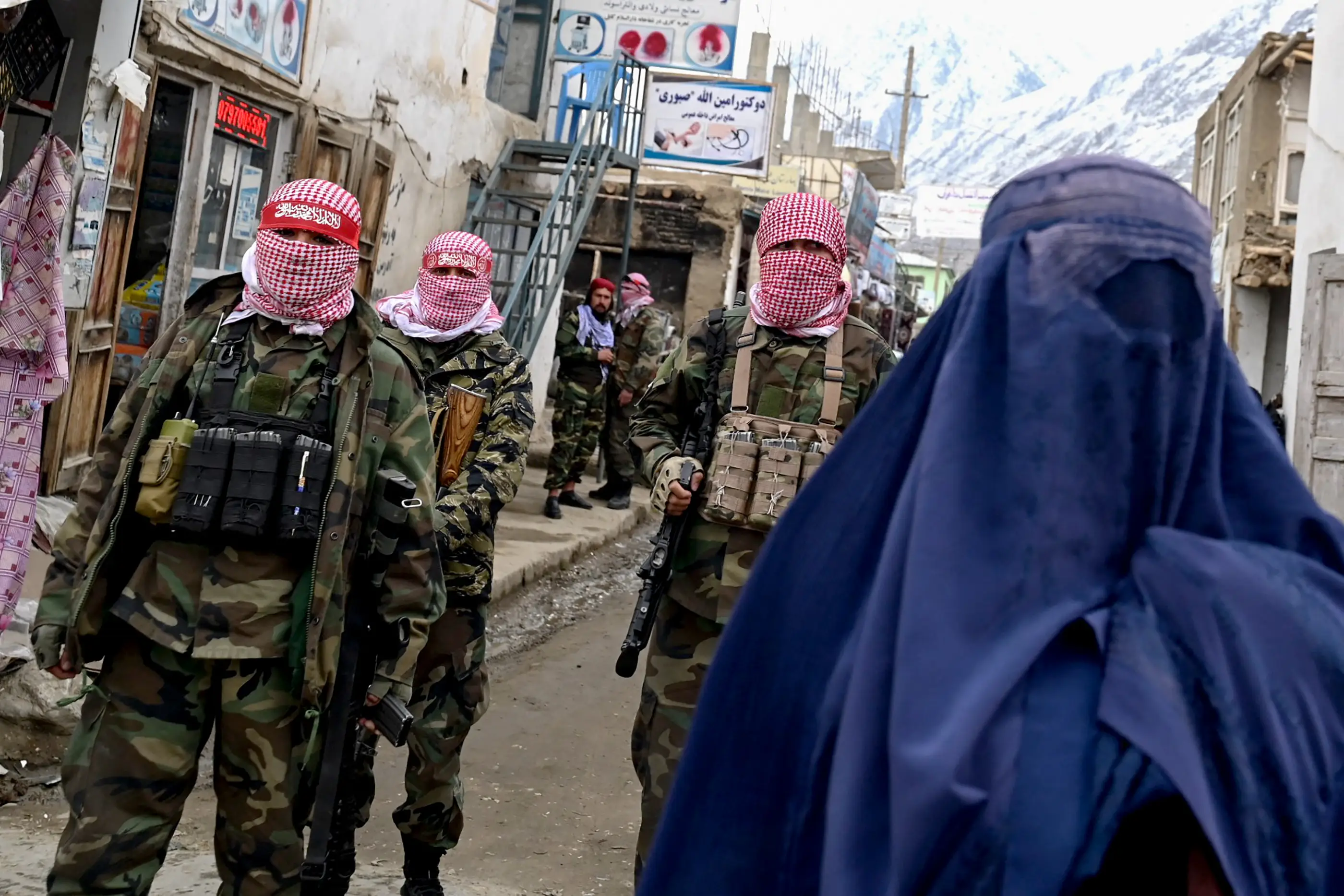
Justice in cases of women who endure physical abuse by their partners, however, is not something stipulated by the latest criminal code.
The sole source of refuge would involve the women showing proof of serious bodily harm to religious judges, whilst remaining fully covered by Muslim garments, in the presence of a male chaperone - in many cases, their husband.
This tragic impossibility has understandably prompted one anonymous female legal adviser working in Kabul to tell The Independent that Afghanistan's female citizens will now endure an 'extremely lengthy and difficult' process in a bid to achieve justice, in a society that already regarded women as second-class citizens.
The advisor cited one recent case which saw a woman beaten during a visit to her husband in prison for not having a chaperone present, given that her husband was behind bars.
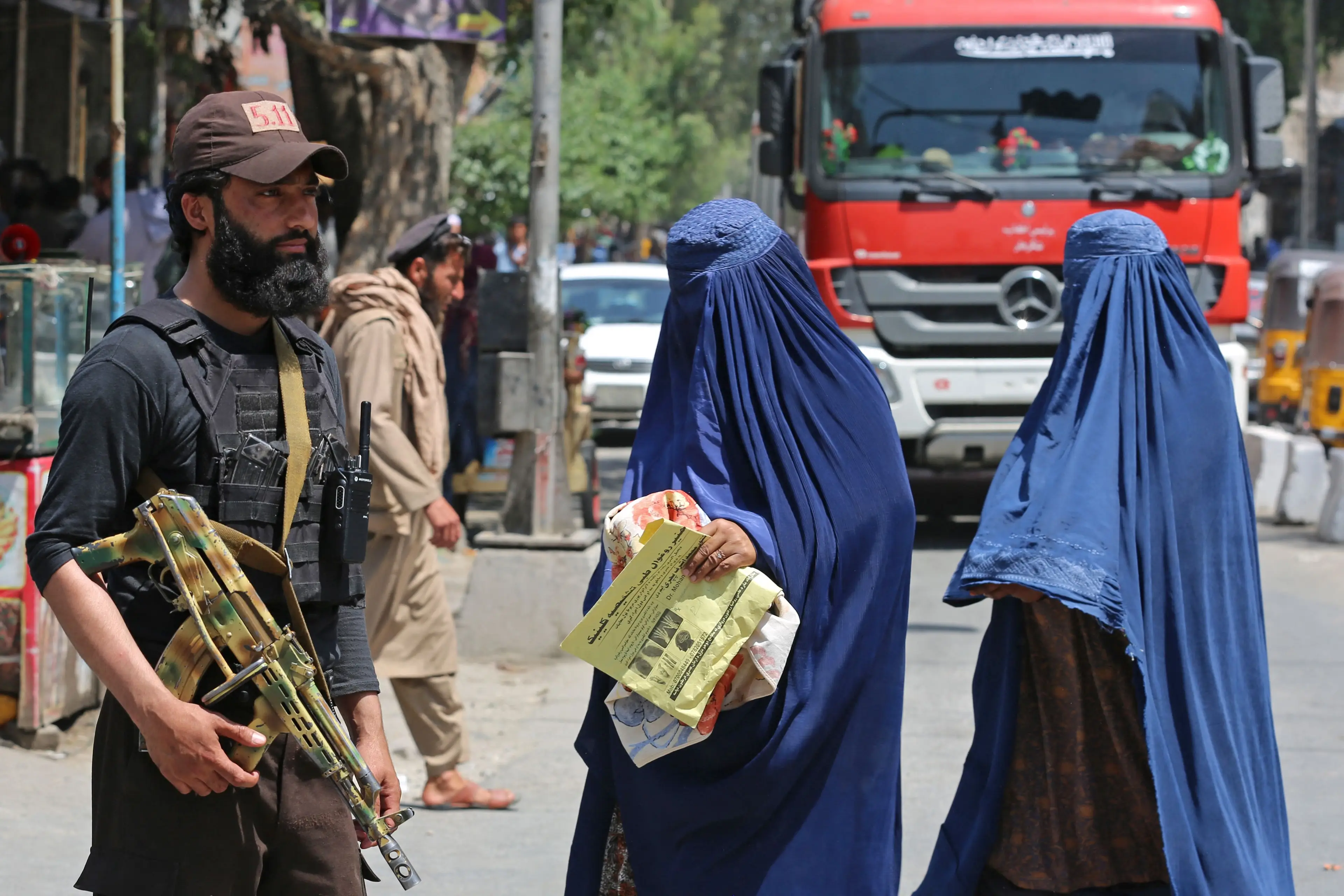
"She cried and shouted in the public that death is better [than the process she is going through]," the unnamed adviser explained. "It is impossible for women to get any justice for an assault that happens to them."
Arguably, the most tragic aspect of the new penal code is that even in the rarest occasions whereby a woman has been able to prove she's been the victim of extreme violence at the hands of her husband, the perpetrator can only face a minimum of 15 days in prison.
The Taliban resumed power in Afghanistan in 2021 following a rapid takeover that coincided with the withdrawal of US troops and NATO forces.
Before this, under the previous NATO-backed government, forced marriage, rape and gender-based violence in general were seen as criminal offences, with domestic violence against women saw attackers punished for between 3-12 months.
If you are experiencing domestic violence, please know that you are not alone. You can talk in confidence to the national domestic violence helpline Refuge on 0808 2000 247, available 24/7, or via live chat, available 10am-10pm, Monday to Friday.
Topics: World News, News, Politics
 Rhianna Benson