
‘Ozempic neck’ explained as weight loss jab users experience unexpected side effect

Weight loss injections have rapidly shifted from niche medical treatments to mainstream conversation, but the term ‘Ozempic neck’ is starting to become part of discussions more often, too.
Drugs such as Ozempic, Wegovy, and Mounjaro are now widely associated with dramatic physical transformations, regularly referenced in celebrity interviews, health discussions, and social media debates.
Ozempic is intended for the treatment of type 2 diabetes, but some patients use it off label to help with weight loss.
For many users, the focus has been on the obvious physical benefits, like reduced appetite, steady weight loss, and improvements in conditions linked to obesity.
Advert
However, those sudden changes in body composition can have visible effects elsewhere, particularly in areas where skin structure is more delicate.
Dermatologists and aesthetic doctors say patients are increasingly raising concerns about how certain parts of their appearance have changed since beginning treatment.
This is how Ozempic neck has indeed been steadily coming up in online discussions with other side effects like ‘Ozempic face’. While it’s frequently mentioned alongside other aesthetic buzzwords, its meaning (and why it occurs) has been less clearly understood.

As a whole, Ozempic neck refers to loose, sagging, or crepey skin around the neck and jawline that can appear following rapid weight loss associated with GLP-1 weight loss injections.
Experts stress that the drugs themselves are not damaging the skin. Instead, the changes are linked to the speed at which fat is lost and how the skin responds once that underlying support is reduced.
Aesthetic doctor Dr Emma Goulding explained to the Daily Mail: “The neck has much thinner skin, less oil production and less underlying support than the face, so when fat is lost quickly, especially in midlife and beyond, the skin often can’t bounce back as smoothly.”
She added: “Ozempic neck is really the skin reacting to rapid weight loss combined with age, which causes reduced elasticity.”
The neck is one of the first areas to show visible signs of ageing, and rapid fat loss can make this more pronounced.
While the effect is more common among older patients, cosmetic practitioners report that younger people are also seeking advice after being caught off guard by post-weight-loss skin laxity.
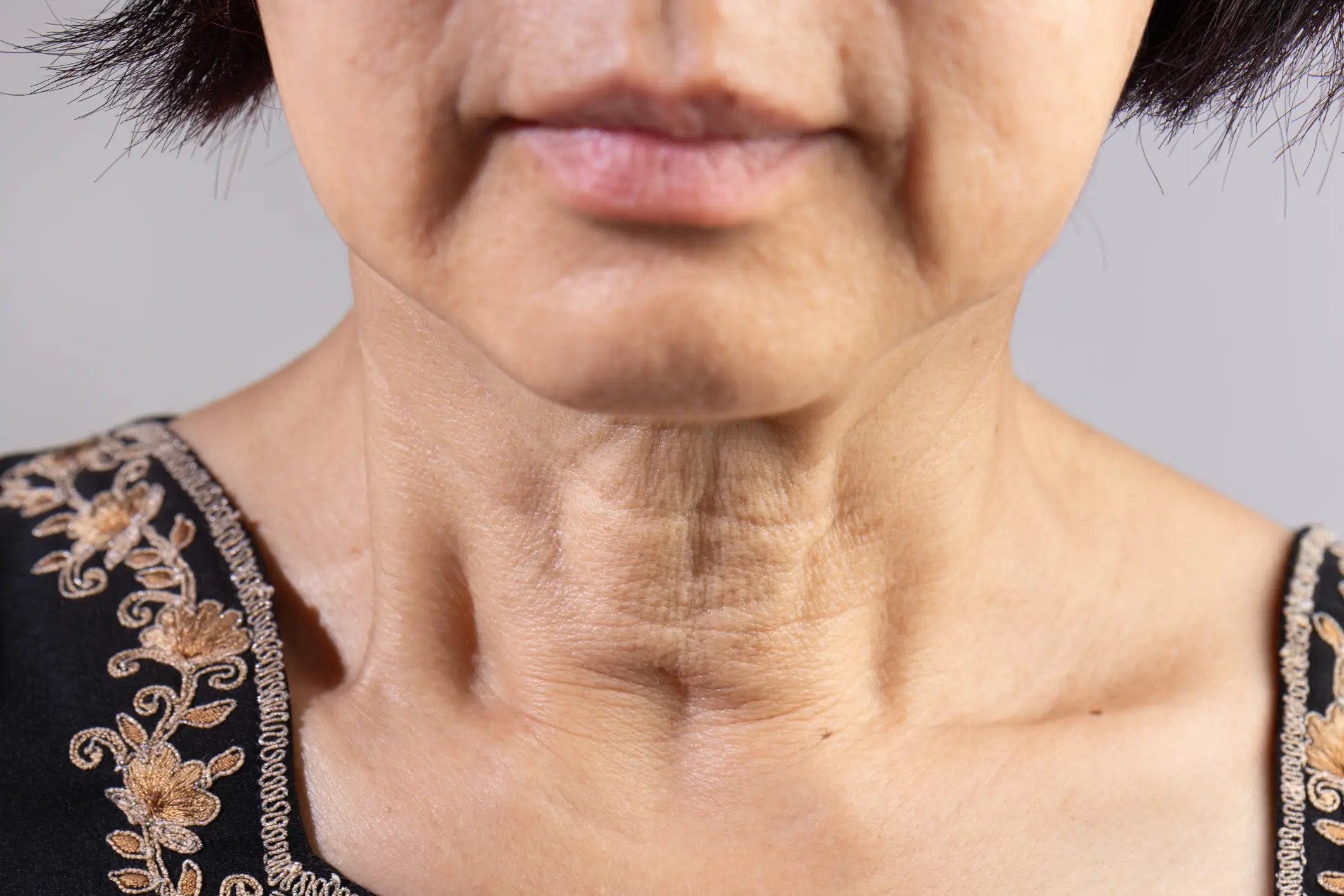
Cosmetic doctor Dr Victoria Manning notes that for some patients, the change is as much about perception as appearance: “What’s particularly interesting is that many people are discovering they actually have necks – not just ‘fnecks’ where the face morphs directly into the neck.”
When it comes to treatment, professionals are clear that topical skincare has limits. Procedures designed to stimulate collagen — including radiofrequency, ultrasound, and injectable bio-stimulators — may improve firmness and texture.
Others emphasise getting ahead of Ozempic neck prevention if you can, recommending slower weight loss where appropriate, sufficient dietary protein, and resistance training to help preserve muscle mass.
Novo Nordisk, the manufacturers of Ozempic, told LADbible Group in a statement: "Patient safety is of the utmost importance to Novo Nordisk. We continuously collect safety data on our marketed GLP-1 RA medicines and work closely with the authorities to ensure patient safety.
"We recommend patients take these medications for their approved indications and under the supervision of a healthcare professional.
"Treatment decisions should be made together with a healthcare provider who can evaluate the appropriateness of using a GLP-1 based on assessment of a patient’s individual medical profile.
"We recommend that any UK patient experiencing side effects while taking GLP-1 RA medications report them to their healthcare provider and via the MHRA Yellow Card scheme: https://yellowcard.mhra.gov.uk/."
 Ben Williams