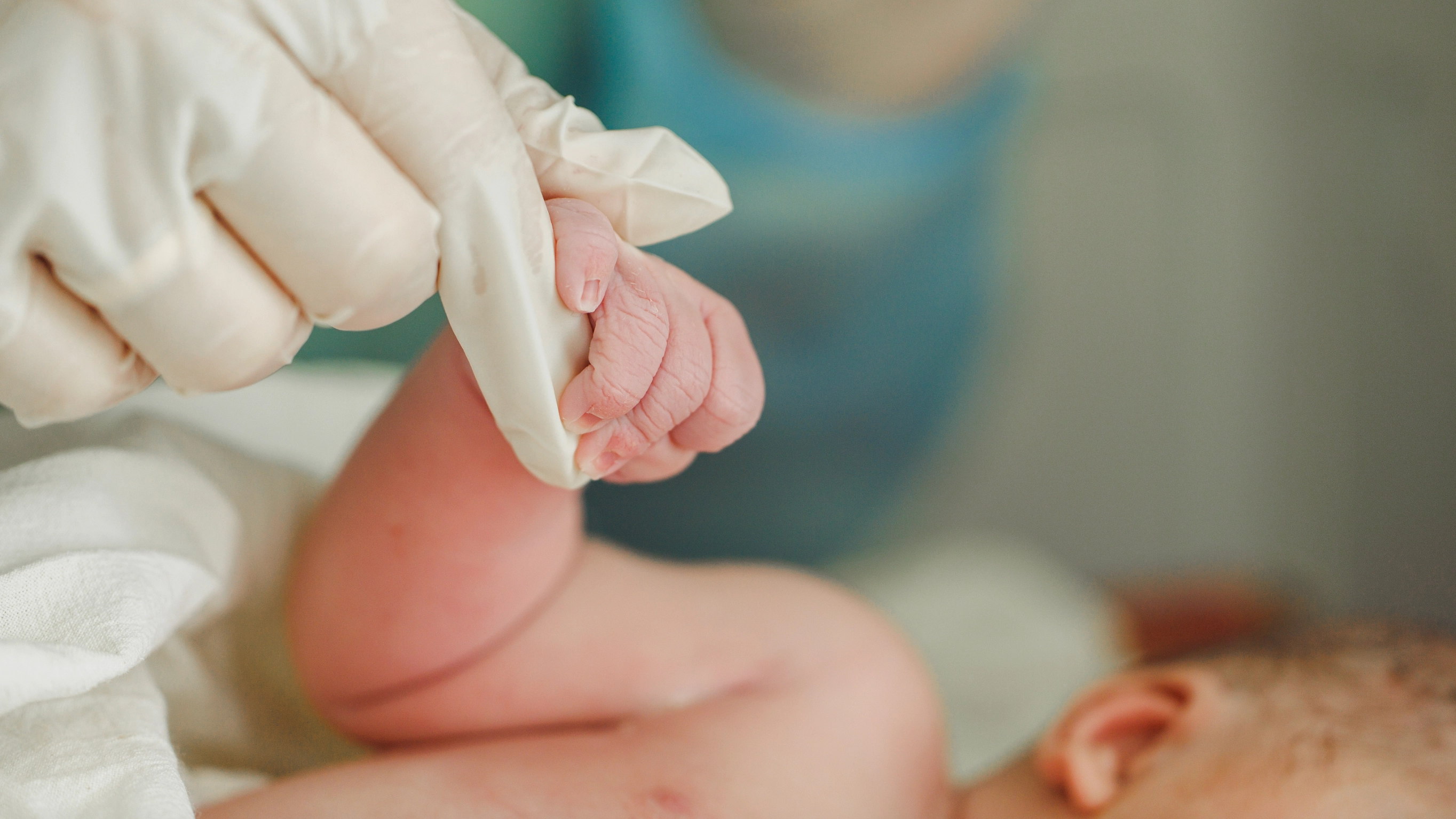
Doctors notice alarming trait in newborns hours after birth

A new scientific study has highlighted a characteristic in babies that could have an impact on their health later in life.
The new research, which was presented at the European Society of Clinical Microbiology and Infectious Diseases Global 2026 this week, revealed that antibiotic-resistant genes have been found in newborns within hours of their birth.
A newborn baby's makeup of gut bacteria, aka their microbiome, is believed to be almost sterile to begin with, but this doesn't last for long - it starts to form as soon as they are out of the womb, acquiring bacteria during birth and during breastfeeding to help protect against viral infections later in childhood.
Why is this gut bacteria in newborns so important?
The bacteria are crucial in developing a healthy immune system, populating the gut immediately after birth - however, the new findings suggest that babies' microbiomes may not be as sterile as we initially thought.
Researchers conducted a study and found that antibiotic-resistant genes (ARGs) were present within the first 72 hours of life - these are segments of DNA that help bacteria survive the effects of antibiotics.
Advert

Scientists analysed meconium samples from 105 infants who were admitted to a neonatal intensive care unit within the first 72 hours of life between July 2024 and July 2025.
They screened samples for 56 different resistance genes associated with commonly used antibiotics.
Results show that the most common genes detected were 'oqxA' and 'qnrS,' which were present in 98% and 96% of samples, respectively - both of which have been associated with resisting commonly used antibiotics.
What did the study find?
In short, the findings suggest that a newborn's gut microbiome may be exposed to bacteria during pregnancy, rather than after leaving the womb.
Argyro Ftergioti, lead author, Aristotle University of Thessaloniki, Greece, said: “This is the largest study of its kind exploring the effect of hospital environment on the collection of ARGs in the neonatal gut.
“We analysed meconium samples within the first 72 hours of life to capture the earliest snapshot of microbial and genetic exposure in newborns.
“At this stage, the collection of resistance genes is mainly shaped by maternal transmission, delivery mode, and very early hospital exposures.”
He explained that the groundbreaking findings suggest 'that a pattern of ARGs is already established at this stage'.

“The neonatal gut harbours a diverse resistome, and the presence of clinically important ARGs so early in life is concerning," he warned.
Adding: “Although some ARGs were expected, their high prevalence across the majority of samples was striking - particularly for clinically critical genes offering carbapenem resistance.”
A potential link between the resistance genes and several different maternal and neonatal environmental factors
For example, a higher number of resistance genes was associated with central venous catheter placement within the first 24 hours of life, which likely reflects exposure to healthcare-associated microbes in hospital settings.
And the presence of the 'msrA' gene was linked with maternal hospitalisation during pregnancy.
Ftergioti concluded: “While further research is needed to understand how early carriage of resistance genes affects microbiome development and infection risk, these findings highlight the importance of surveillance, infection prevention, and control in neonatal care."
 Madison Burgess