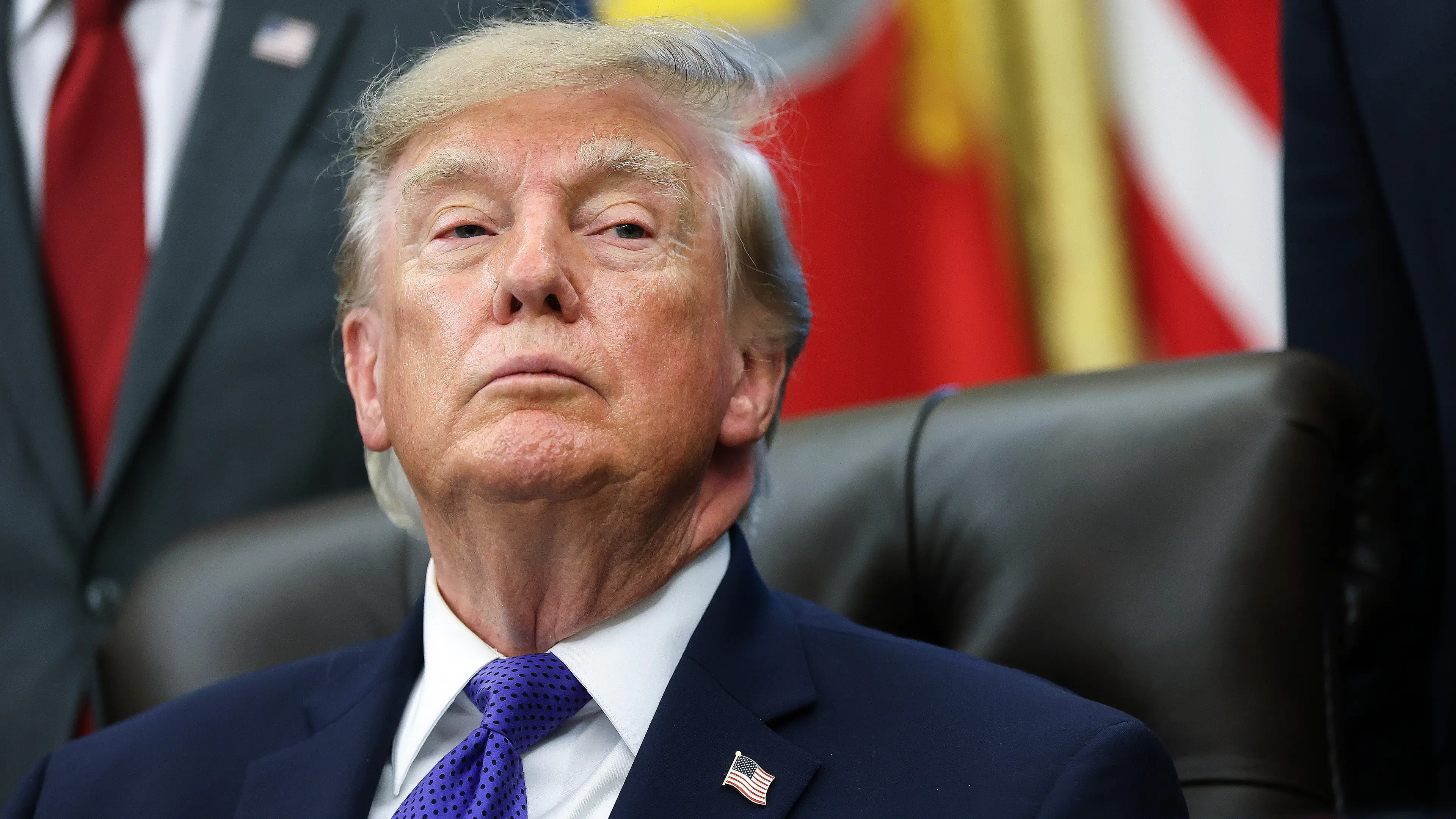
Trump plans to cut student loans for ‘unprofitable’ majors and women are raising the same concern

The Trump administration passed new education guidelines impacting those studying for arts degrees and to become social workers—and women particularly have a lot to say on the matter.
In July 2027, a framework called the Student Tuition and Transparency System and Earnings Accountability (STATS) is set to come into effect in the United States.
For students to gain loans, undergraduate programs must prove that their typical graduates earn more than working adults with a high school diploma.
Graduate programs will be required to demonstrate that their graduates earn more than the typical bachelor’s degree holder, as per the Department of Education.
Advert
Any program that fails to show ‘at least this modest financial return on investment for its graduates in two out of three consecutive award years’ will lose eligibility to participate in the federal Direct Loan program, a notice stated.

If consistently failing the earnings premium measure for three years or more, the Department could also ‘terminate eligibility for Title IV of the Higher Education Act (HEA), including Pell Grant eligibility, for all of an institution's low-earning outcome programs’.
Essentially, STATS’ aim is to hold institutions accountable for ‘programs of study they offer that don’t leave students financially better off than if they had never attended the program’, as per the National Association of Student Financial Aid Administrators.
“The Trump Administration is hitting the hard reset button on higher education and implementing commonsense reforms that will drive down the cost of higher education and hold all institutions, regardless of sector, accountable for low earnings outcomes,” announced Under Secretary of Education Nicholas Kent.
“If a program cannot show that it leaves its graduates financially better off than if they had never enrolled, it should not be underwritten by federal taxpayers.
The Department of Education estimates that 5 percent of college programs, including beauty schools, visual and performing arts, religious studies, art, music and more, will be impacted.
In a statement, officials said the department’s new framework was designed to prevent colleges from leaving students with heavy debts that often do not translate into ‘improved employment prospects’.
“Federal student loans are not a welfare program for failing college programs. American students deserve education and training pathways that prepare them for the workforce – and transparency about programs that will never pay off.”
News of Donald Trump’s cuts potentially impacting budding social workers has sparked the wrath of many women on social media.
According to data provided by the National Association of Social Workers (NASW), 62 percent of its specific active dues-paying members identify as women.
Moreover, the Bureau of Labour Statistics state the overall occupation is closer to 80+ percent female—meaning women are set to be most impacted by potentially defunded college courses.
One Instagram user questioned why it was ‘women-dominated professions’ that Trump and co. were targeting.
“I CHOOSE to major in social work not for the pay but because i am passionate about advocating for equality and inclusion FOR EVERYONE in my community… i hate this administration,” a second said.
A third remarked: “SOCIAL WORK??? WHY WOULD YOU CUT LOANS FOR SOCIAL WORKERS.”
Someone else typed: “I just became a licensed social worker and would not have been able to do that without taking out student loans.
“This action will push much-needed workers away from the field. People who already make money do not flock to this line of work. Hard working, empathetic, service-minded people come to this field knowing ALREADY that there will not be a lot of pay, but that there is fulfillment and opportunities to help the most in-need. Now there will only be less opportunities altogether and more suffering.”
A fifth added: “Funny that these are the rare positions that won’t be easily taken over by AI….”
Experts, including Michael Bryant, interim provost at the California Institute of the Arts, have argued that the administration should account for different job trajectories.
He told the Los Angeles Times that in the arts, a lot of workers are ‘essentially independent contractors, so it’s a slightly different trajectory than someone who goes to an engineering program’.
“It takes them a little bit longer to get themselves established,” he continued.
Meanwhile, Jonathan Gienapp, Stanford associate professor of history and law, said: “In certain fields of study, especially in the humanities, whether or not that program has been successful and has done a really good job in its educational mission, might not be all that directly tied to immediate earnings potential.”
Topics: US News, Donald Trump
 Ella Scott