New Covid strain 'Cicada' identified and it’s raising vaccine concerns

A new variant of Covid-19 has been detected and is catching the attention of health officials in the United States and around the world.
Nicknamed 'Cicada', the BA.3.2 strain, which is a descendant of Omicron, was first identified in a traveller arriving in America in June of last year.
Since then, it has remained largely underground and actually earned its name because of staying undetected for years, like the cryptic insect.
Now, though, the Centers for Disease Control and Prevention (CDC) has found evidence of the variant in wastewater samples across at least 25 states, such as California, Florida, Illinois, and New York.
Advert
As reported by Everyday Health, the 'Cicada' variant has as many as 75 mutations, which is a lot more than other strains, which could potentially make it especially contagious.

While levels are still low, health experts and bodies are keeping an eye on it and monitoring the situation.
The CDC shared a press release on 19 March, announcing that the strain has been detected in 23 countries, as well as the already mentioned 25 US states.
The new report details that as of 11 February, BA.3.2 has been detected in nasal swabs from four travellers, three plane wastewater samples, clinical samples from five patients, and 132 wastewater samples from the states.
However, because many countries have 'limited genomic detection and surveillance capacities', these detections likely underrepresent the actual geographic extent of spread.
It outlines that 'monitoring the spread of BA.3.2 provides valuable information about the potential for this new SARS-CoV-2 lineage to evade immunity from a previous infection or vaccination'.
The report also says that while the previously administered Covid-19 vaccines provide protection against the currently circulating predominant US variants, laboratory studies have shown that the recently emerged BA.3.2 strain 'efficiently evades antibodies, likely because of spike protein mutations'.
In simple terms, it means that the vaccines may not protect people from the new strain, and so this could potentially warrant updating the current jab in the future.
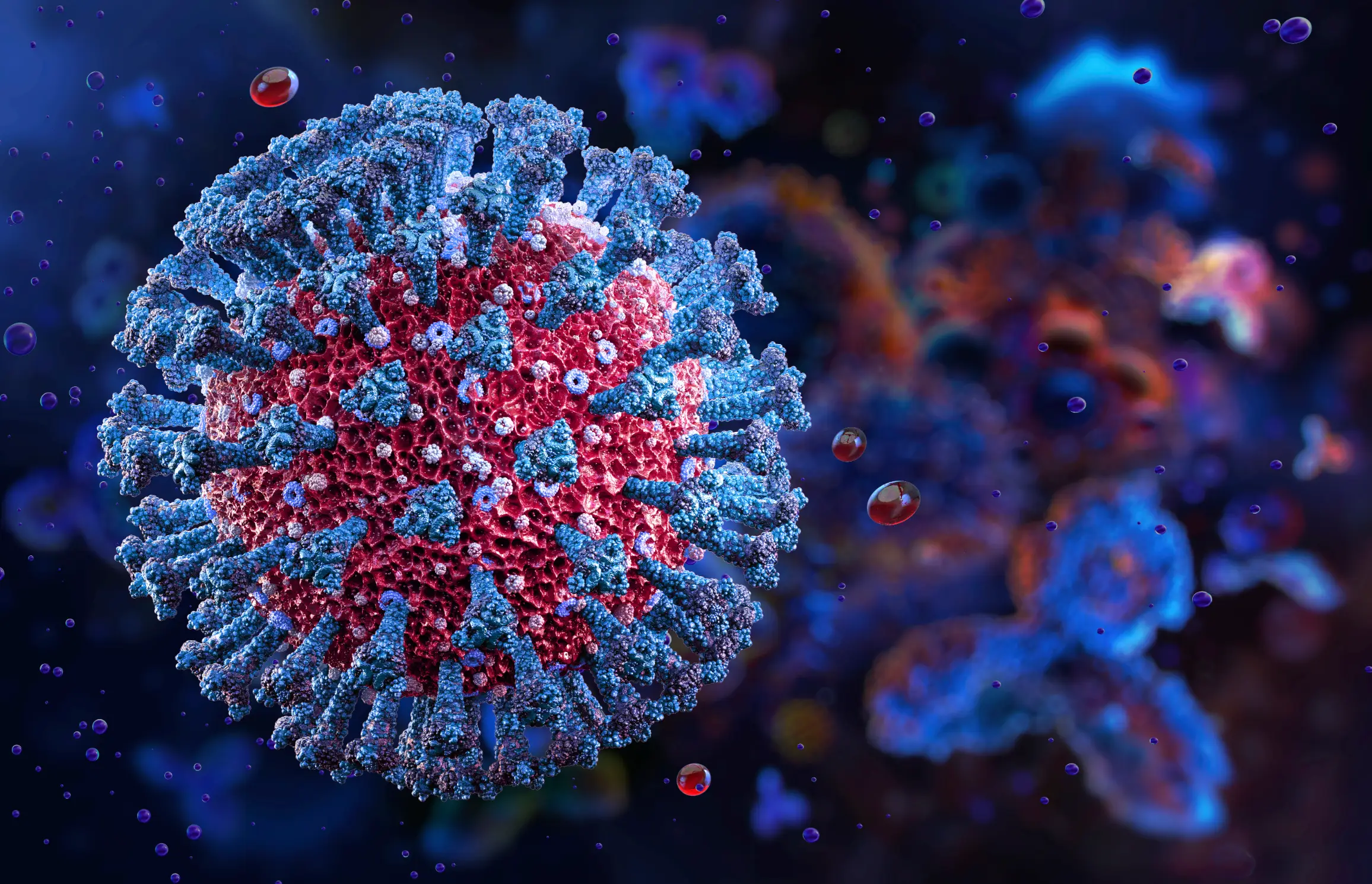
Researchers said: "The 2025–2026 LP.8.1-adapted mRNA Covid-19 vaccine demonstrates protection against currently predominant JN.1 strains but had the lowest antibody neutralization against BA.3.2 in a laboratory study of seven variants, potentially affecting vaccine-conferred protection."
Dr Robert H. Hopkins, Jr., medical director of the National Foundation for Infectious Diseases, told USA Today: "The number of mutations from JN.1 viruses makes it less likely that the current vaccines will be highly effective against Cicada, but we need more data to better answer this question.
"It is possible we will see Cicada become the dominant strain in the US, but that is by no means certain. I have heard some concern raised about the possibility that it could drive a US summer surge."
He added: "Low vaccination rates and little to no public health effort toward stopping COVID infections and spread leaves us vulnerable."
Which states have the 'Cicada' variant been found in?
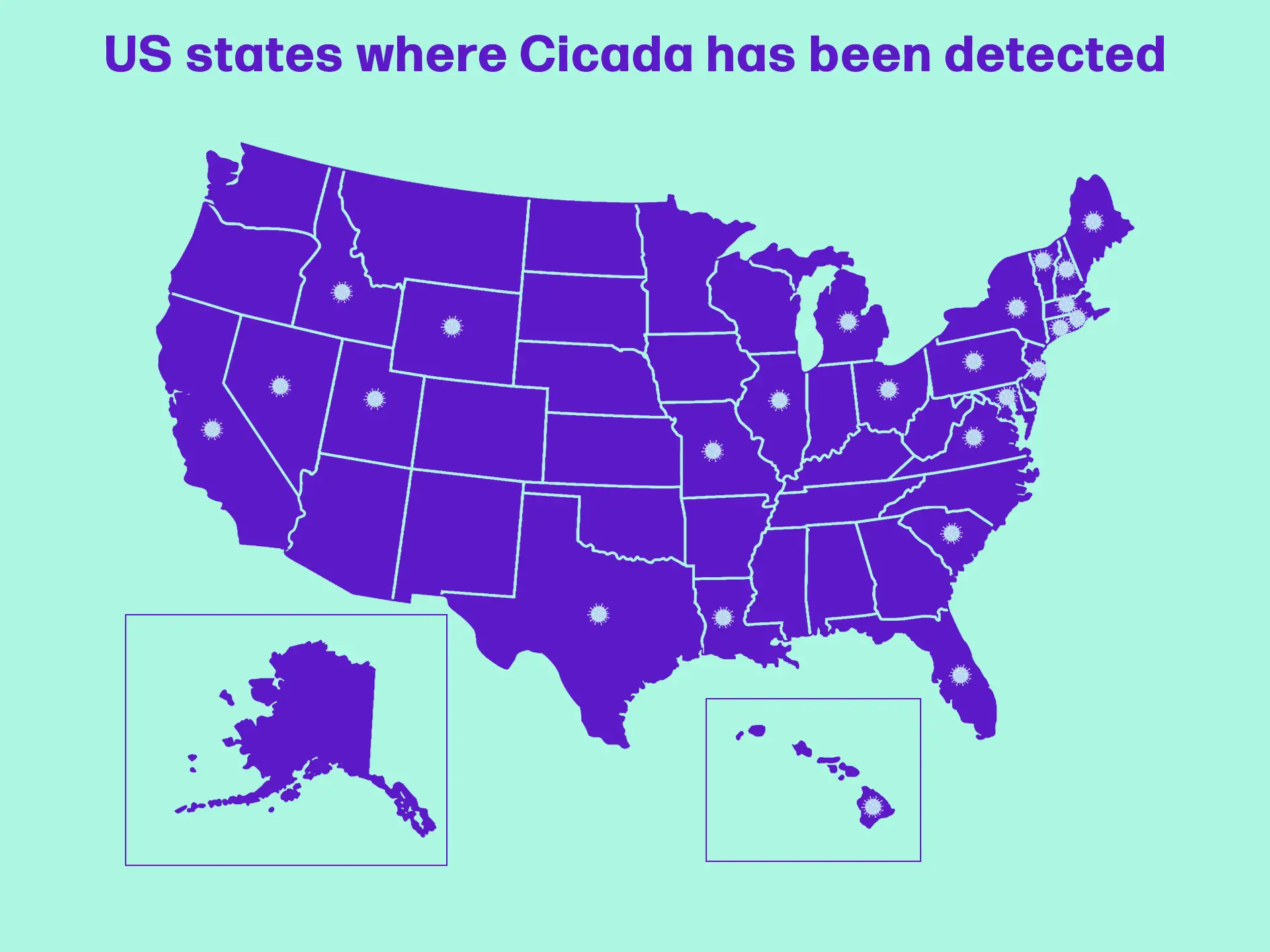
- California
- Connecticut
- Florida
- Hawaii
- Idaho
- Illinois
- Louisiana
- Maine
- Maryland
- Massachusetts
- Michigan
- Missouri
- New Hampshire
- New Jersey
- New York
- Nevada
- Ohio
- Pennsylvania
- Rhode Island
- South Carolina
- Texas
- Utah
- Vermont
- Virginia
- Wyoming
Topics: Covid-19, Health, News, World News, US News
 Madison Burgess