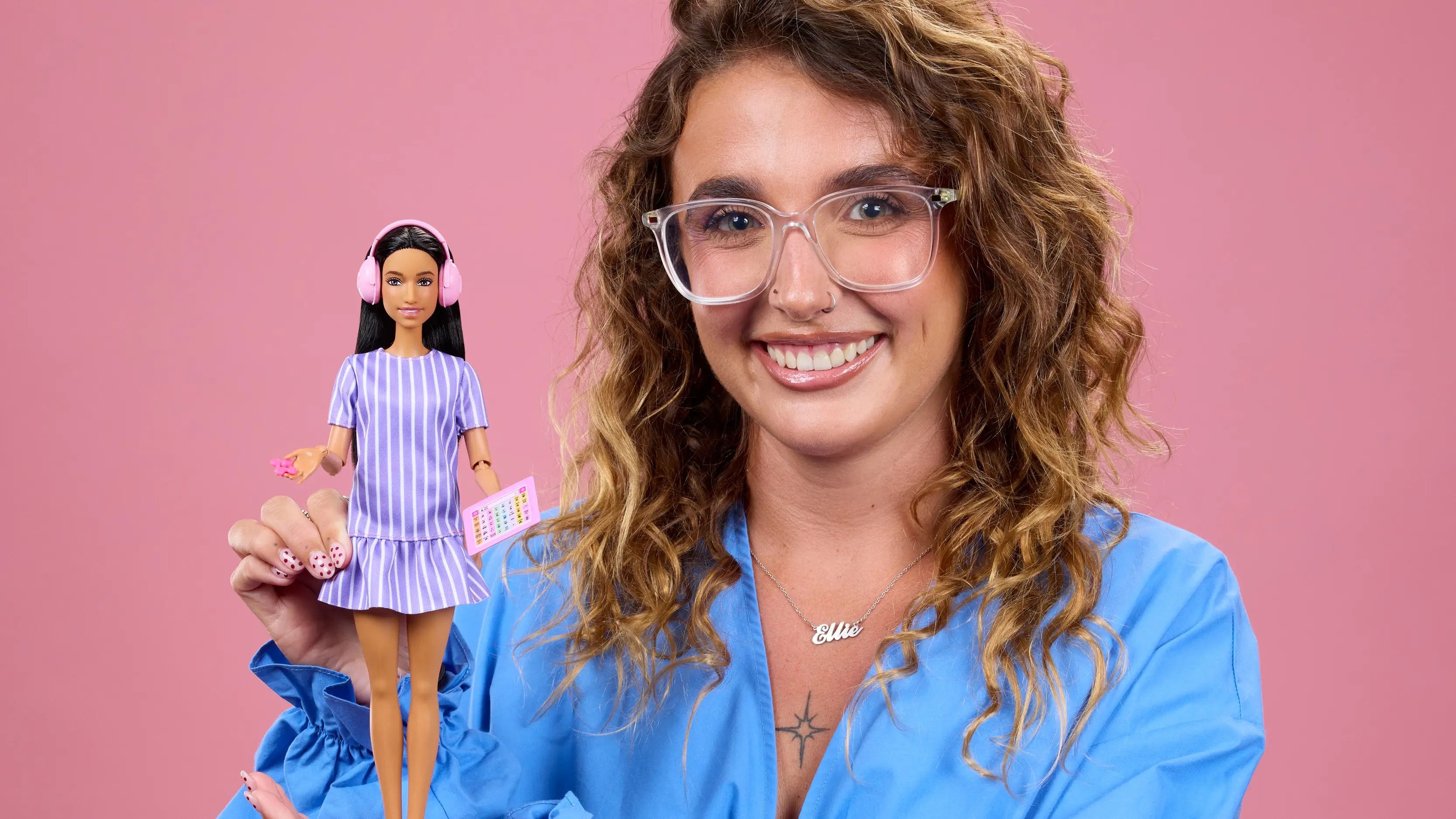
Here’s what makes Mattel’s new Barbie ‘autistic’

Mattel has announced the launch of its first-ever autistic Barbie doll to represent neurodivergent children around the world.
Creator Mattel said the doll 'invites more children to see themselves represented in Barbie' and the finished product was created with input from the Autistic Self Advocacy Network (ASAN) in an effort to hear first-hand from the autistic community on the kinds of features the doll should have.
The network described the new doll as a 'milestone' in representation and said it was 'thrilled' to help with the design, adding: "It is so important for young autistic people to see authentic, joyful representations of themselves, and that’s exactly what this doll is."
It comes as the latest of Mattel's efforts to create a more inclusive reflection of the children who play with its products. The company has previously created diabetic and blind Barbies, as well as a doll with Down's syndrome.
Advert
So, what features does the new Barbie have? Here's everything you need to know.
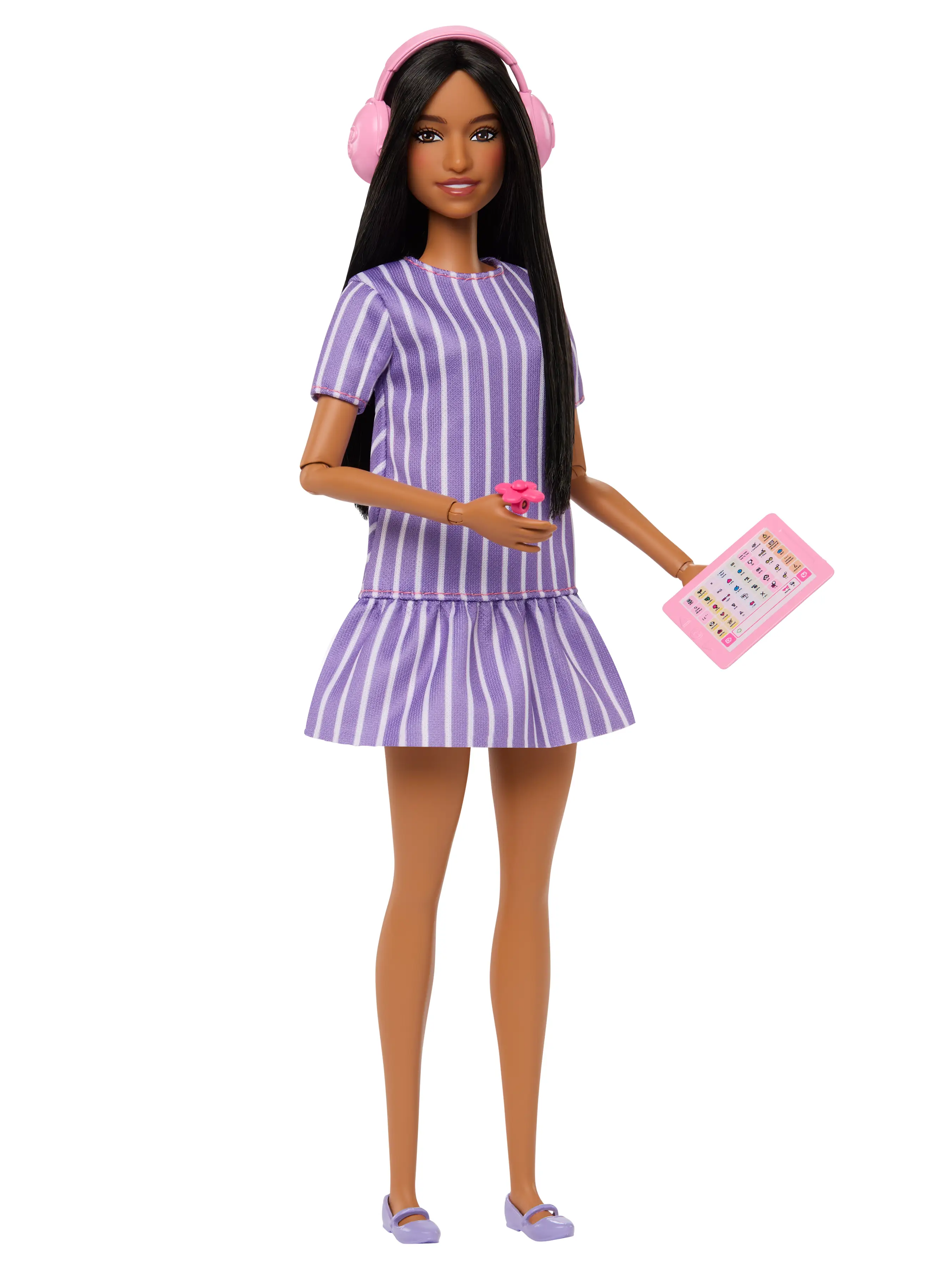
Clothing
The new Barbie doll features loose-fitting clothing to ensure less fabric-to-skin contact.
She's wearing a fashionable purple and white striped dress, paired with some cute pastel purple ballet flats.
Autistic people can be especially sensitive to how different types of clothing feel and often prefer loose clothing due to sensory issues, where textures, seams, tags, or tightness can feel intensely uncomfortable.
According to Autism Toolkit, for autistic people and others with sensory sensitivities, adaptive clothing often uses soft fabrics, seamless construction, and tag-free labels to reduce irritation.
Eye gaze
The doll's eye gaze is slightly to the side to represent the way some autistic people might avoid direct eye contact.
This is because, in social interactions, making direct eye contact can contribute to sensory overwhelm for some autistic individuals.
For some people with autism, maintaining eye contact can take up a lot of mental energy, distracting from the cognitive processing needed to focus on a conversation, as explained by The Autism Service.
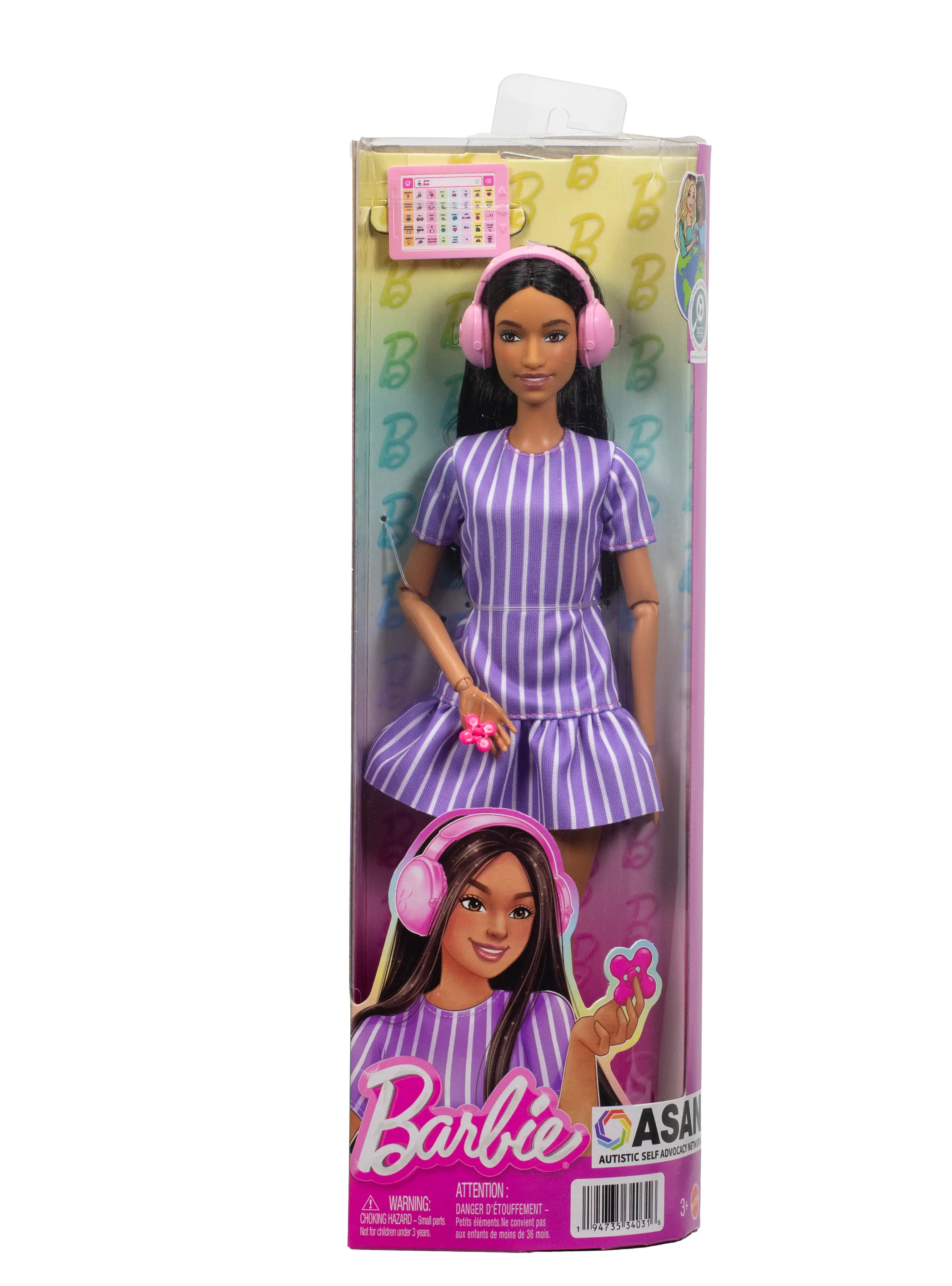
A fidget spinner
Each doll also comes with a pink fidget spinner to reduce stress and improve focus.
Although they might seem like a toy, fidget spinners are actually versatile tools often used to support self-regulation and focus for a lot of autistic people.
They provide a sensory outlet that allows individuals to filter out extraneous sensory information that might otherwise be distracting.
Noise-cancelling headphones
You'll also notice that the new Barbie doll is sporting a pair of pink noise-cancelling headphones.
These are to block out background sounds and, therefore, limit sensory overload.
A lot of autistic people use headphones as a way to cope with their sensory sensitivities and navigate their environment more comfortably.
Sensory overload can be triggered by loud, unexpected, or overwhelming sounds, and many autistic individuals experience hypersensitivity to audio input, which can lead to distress or discomfort.
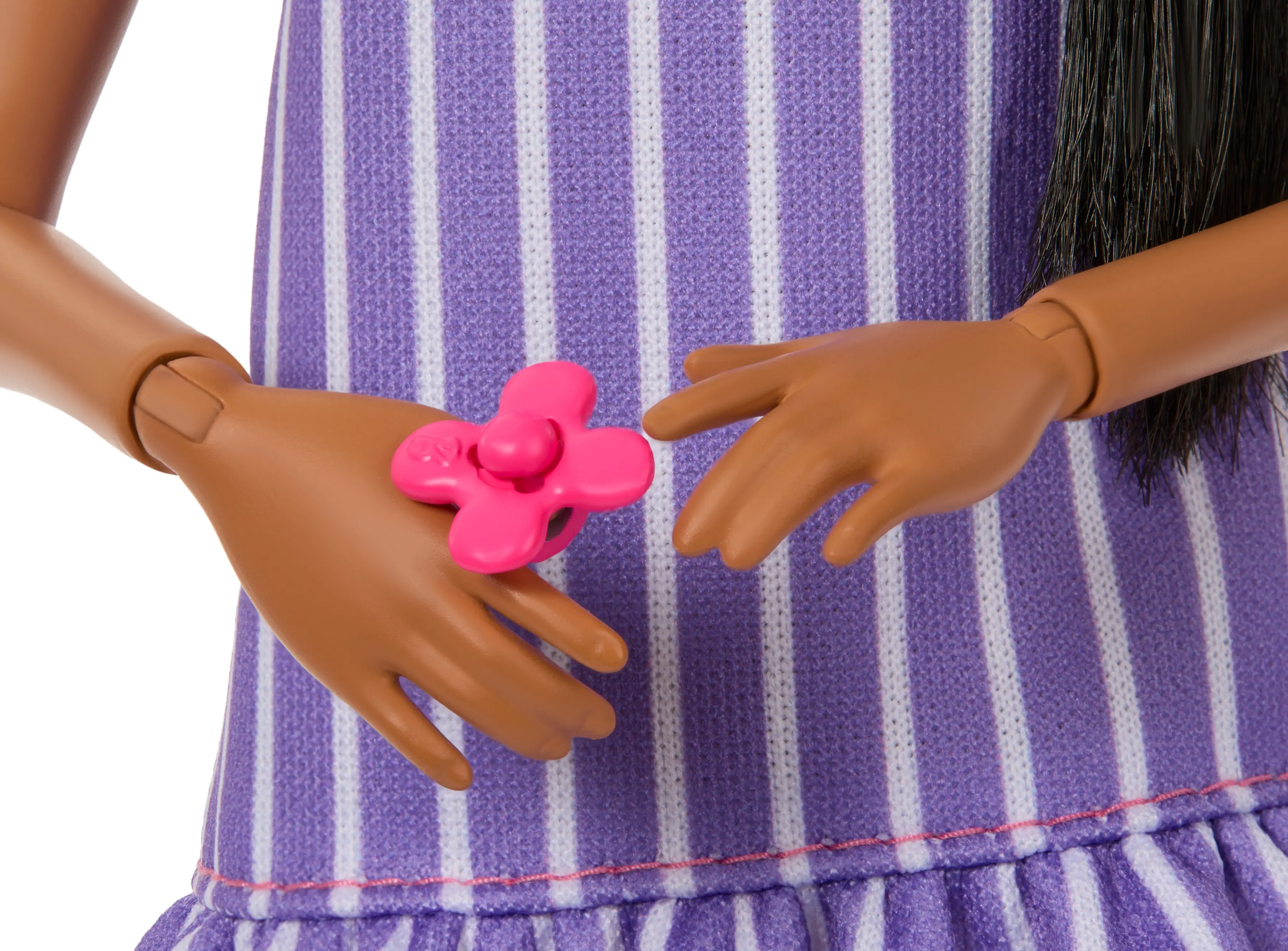
A pink tablet
Another accessory the doll is holding is a pink tablet symbolising the way some people might use digital tools to help with their everyday communication.
Symbol-based Augmentative and Alternative Communication apps (AAC) are used by some autistic people as a tool to help communicate.
Tablets are also popular for self-regulation and blocking sensory overload with familiar content.
Moveable elbows and wrists
Finally, Mattel has outlined how the doll has moveable elbows and wrists.
This is to allow gestures which creators said might be used by some autistic people to process sensory information or express excitement.
The elbow and wrist articulation enables stimming, hand flapping, and other hand gestures that some members of the autistic community use.
Topics: Barbie, Life, Real Life, True Life, Entertainment, News, World News, Parenting
 Madison Burgess