
'Heartbeat law' explained as emotional update given on baby of brain dead woman kept alive to deliver him

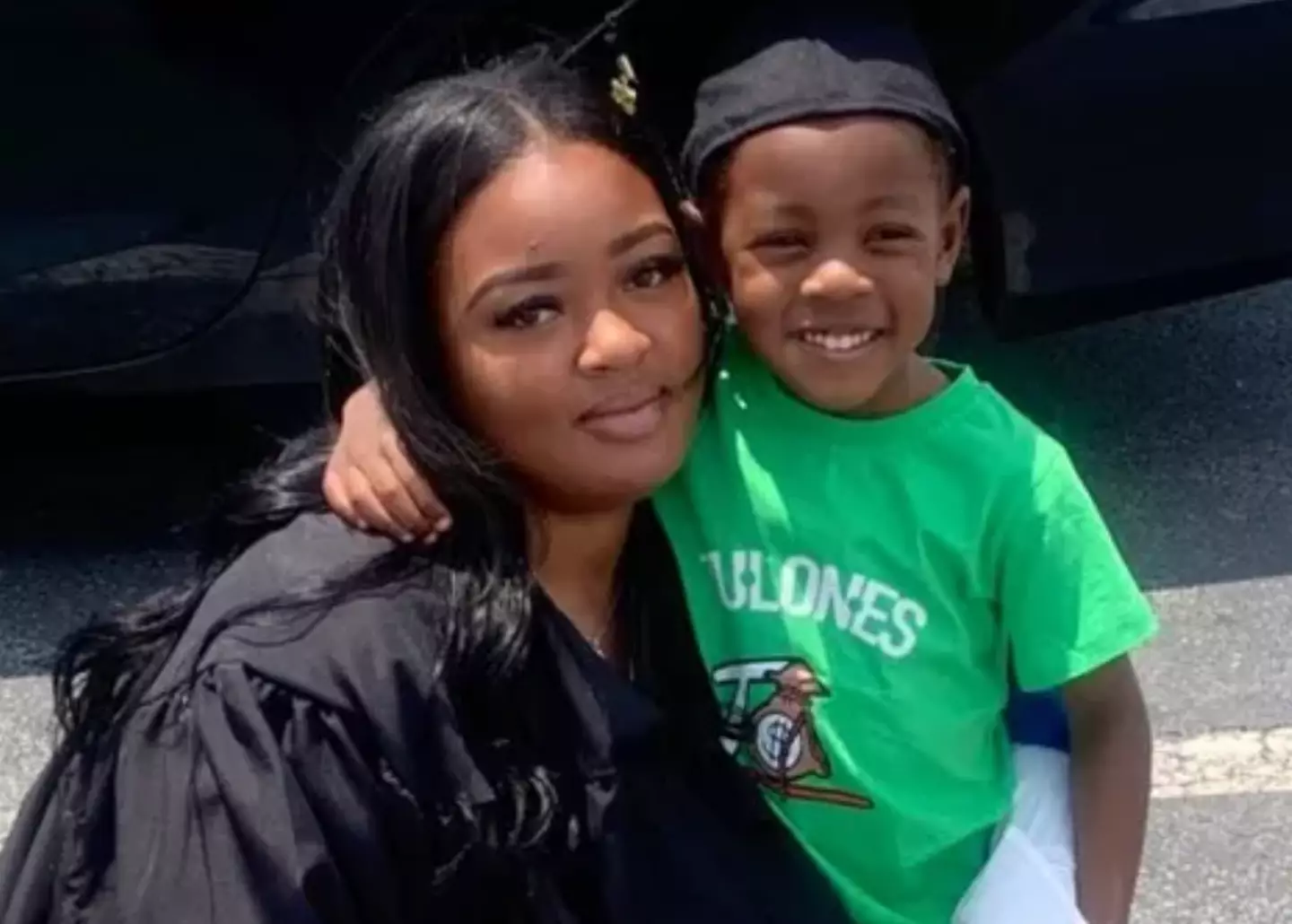
The case of Adriana Smith, the woman who was declared brain dead and forcibly kept alive before doctors delivered her baby via C-section, has sparked a huge debate across the United States and beyond.
In May of this year, 31-year-old Smith was pronounced brain dead and after her baby was delivered by doctors prematurely in June, she was taken off life support in June, and her funeral was held later that month.
Her newborn son, named Chance, was kept in the neonatal intensive care unit after weighing just 1lb 13oz (0.8kg) at birth.
The mother of the mum and nurse, who hailed from Atlanta, Georgia, began having headaches in February, around nine weeks into her pregnancy. She went for medical advice, was given medication and sent home.
Advert
By the next morning, her boyfriend heard her making gurgling sounds and struggling for breath. He rushed her to hospital, where a CT scan showed several blood clots in her brain.
Doctors confirmed there was no chance of recovery and declared her brain dead. She remained on a ventilator and was kept alive via machines.
However, as we say, Smith was kept on life support due to a very specific law which has since triggered major backlash.
What is the 'heartbeat law'?

Georgia's extremely controversial law dubbed the 'heartbeat law' prohibits the termination of any pregnancy after six weeks of gestation following the 2022 overturn of Roe v. Wade.
The legislation effectively declares that no abortion can be carried out if there is a 'detectable human heartbeat' except in the event of a 'medical emergency or medically futile pregnancy'.
Termination of the pregnancy can only be performed 'to save the pregnant person's life', to 'preserve' the woman's 'physical health' and 'if the foetus is not expected to survive the pregnancy'.
Smith's case has also since revived interest in, and concern over, something known as the 'fetal personhood' laws - statutes or constitutional amendments that define a foetus, at times from the moment of conception, as a legal person with rights equal to or similar to those of a born human being.
In legally declaring a fetus to be a 'person', these laws can make abortion legally equivalent to homicide or manslaughter, depending on how they’re enforced.
US states, including Alabama and Georgia, have passed laws or constitutional amendments explicitly recognising fetal personhood.
Meanwhile, other states have variations through criminal statutes such as fetal homicide laws for violent crimes against pregnant women.
Concerns regarding the 'fetal personhood' law
Such laws raise immense concern as they directly conflict with established abortion rights under Roe v. Wade, which was overturned in 2022 by the Dobbs v. Jackson Women's Health Organisation, and may criminalise women for pregnancy outcomes like miscarriages or stillbirths.
Additionally, these laws can affect IVF, contraception, and medical care for pregnant people, because legal rights of the fetus can come into conflict with the rights and health decisions of the pregnant individual.

Smith's family response
Smith's mother, April Newark, previously told WXIA that doctors didn't do any tests on her daughter when she first visited doctors, who sent her off with medication for the headaches.
"If they had done that or kept her overnight, they would have caught it," she claimed. "It could have been prevented."
Smith’s situation makes it clear that there is a lot of legal and ethical grey area within the divisive law.
"I think every woman should have the right to make their own decision, and if not, then their partner or their parents," Newkirk said.
"I’m not saying we would have chosen to terminate her pregnancy, but what I’m saying is we should have had a choice."
She added: "It’s torture for me. I come here, and I see my daughter breathing on a ventilator, but she’s not there."
At the time, before Smith was taken off life support, Newkirk worried for her grandchild's health in such extreme circumstances.
"She’s pregnant with my grandson, but my grandson may be blind, may not be able to walk, wheelchair bound," she said.
"We don’t know if he’ll live once she has him. It should have been left up to the family."
Latest update
Since her passing, Newkirk has launched a fundraiser, titled 'Help Adriana's Family During This Heartbreaking Journey', which has since raised $546,085 of the $600K.
The latest update in the case, which Newkirk shared last month (24 November), saw the grieving mother share how little Chance was faring.
She wrote: "It's holiday season and I'm very down.
"Chance is 11 pounds still in the NIC unit and will not be coming home soon. He going to be moved to a different hospital for more help with his health and I want everyone to know that I'm very grateful for your prayers and help. Continue to pray because God has the final say so."
You can donate to Smith's fundraiser here.
Topics: Explained, Health, News, Pregnancy, Real Life, True Life, US News, Women's Health
 Rhiannon Ingle