
It might be the end of men according to science

According to science, a group of people that make up a whopping half of the human race could be on the way out in the next few million years.
Now, after a particularly bad Hinge date or brutal break-up, we might find ourselves saying we hate men, but realistically, we don't really want them to disappear from humanity.
But as reported by BBC Science Focus, a world without men could potentially be on the cards in the very distant future - yes, really.
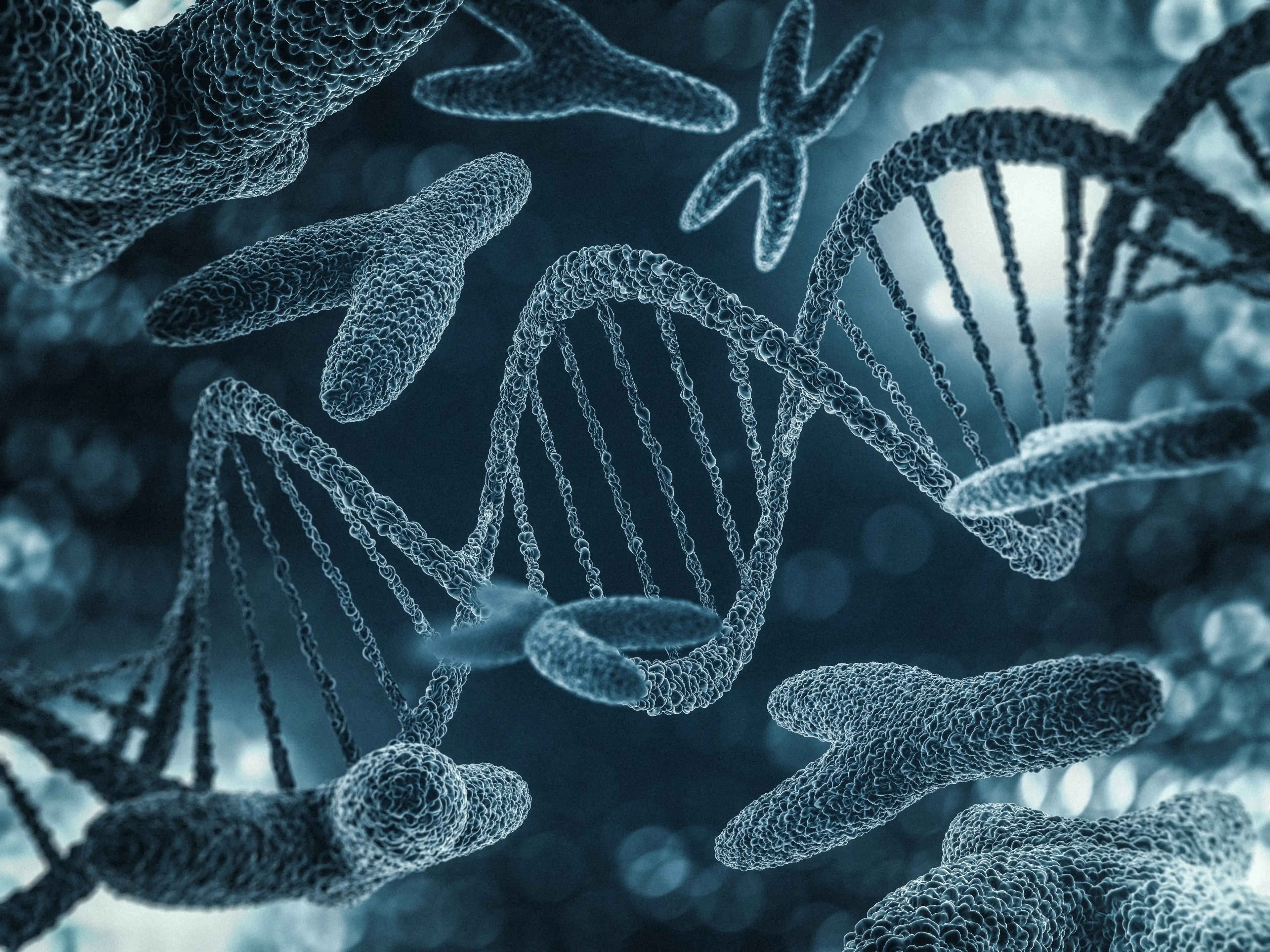
Essentially, the Y chromosome, which is responsible for male sex determination and is the crucial factor that determines whether someone is male, is beginning to fail.
Advert
If you're unfamiliar with the science behind chromosomes in humans, as well as in some other mammals, biological females have two X chromosomes, while biological males have one X and one Y.
As you may have worked out, these chromosomes determine sex at birth.
Jenny Graves, an Australian geneticist and leading expert on the Y chromosome, told the publication: "Chromosomes come in pairs, but the sex pair is unusual for its difference in males and females. While females have two Xs, which is a very large chromosome, men have an X and Y.
"In comparison to the X, the Y is tiny. There are only 45 genes on the Y chromosome, and it is just one of these that makes you male. A few others help make sperm, but for the others, we don’t quite know why they are there.
"We just can’t really get rid of them. That's compared to between 900 and 1400 in the X."
To start with, the Y chromosome was similar to the X and had over 900 genes, but now just 45 are left. And to make matters worse, because the sex chromosomes evolved from normal chromosomes that were identical and had nothing to do with sex, a lot of what is left is 'useless'.
So why is this happening?
Graves explained: "The reason for this loss seems to be two-fold. One is that the Y chromosome by definition is always in a testicle, never an ovary. It turns out that the testicle is a dangerous place to be partly because there is a lot of mutation going on."
The expert added: "For making sperm, a lot of cell divisions are needed and each cell division is a chance for mutation. This can have quite an effect on the chromosome. It’s also just not very good at fixing itself up because there is only one in the cell."
The publication reports that now, compared to its original state, the human Y chromosome has lost roughly 97 per cent of its ancestral genes - but don't panic yet.
If the Y chromosome does disappear for good, it won't be for millions of years, so don't worry - men aren't going to start suddenly disappearing.
“When I say rapidly, I’m talking in the evolutionary sense. Sex chromosomes evolved in mammals roughly 180 million years ago. It has taken that long for the Y chromosome to erode to this level," Graves explained.
“It’s funny that people get so upset about the loss of the Y chromosome. My rough calculations are that we’ve got another six or seven million years until the chromosome is completely gone."
Who knows what the future holds? The generations to come could even see an entirely new sex forming...
Topics: Science, News, World News, Health, Life
 Madison Burgess