
Bacterial vaginosis isn't recognised as an STI despite affecting millions of women - doctors are calling for change

If asked to list the most common STIs, we imagine the likes of chlamydia, gonorrhoea, syphilis and HPV might spring to mind.
Apparently, however, there's another intimate infection that affects the nether-regions of over one billion women around the world every single year, despite not technically falling under the umbrella of an STI.
In the UK alone, this unpleasant ailment impacts the health and well-being of over a third of the female population at least once in their lifetime.
It's a super-common condition caused by a change in the natural balance of the bacteria that live inside women's vaginas.
Advert
We are, of course, talking about bacterial vaginosis.
In many cases, BV is simply a risk that comes with a sexually active lifestyle or changing sexual partners.
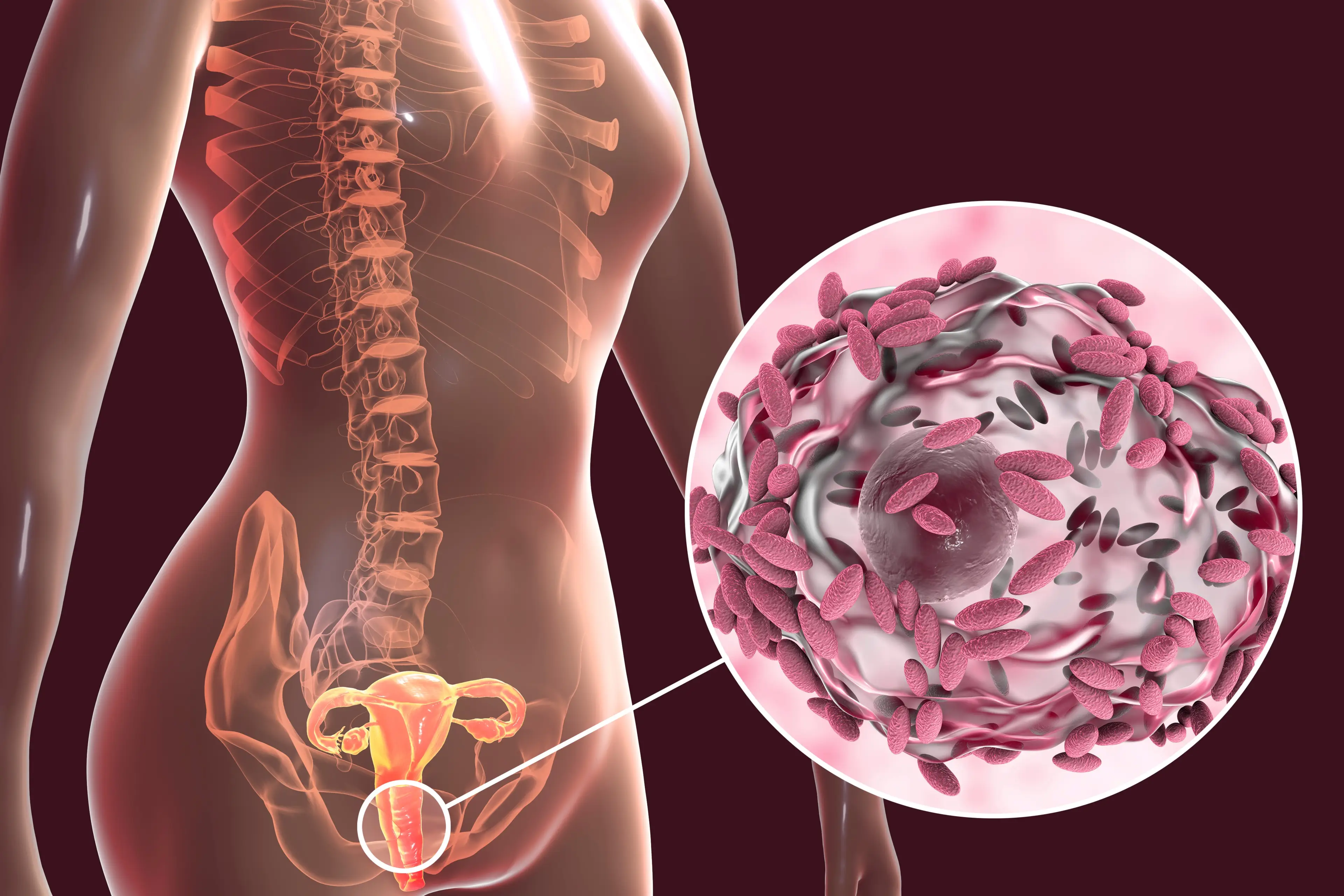
This doesn't mean its symptoms should be brushed off, however, which commonly include an unusual discharge from the vagina, a strong fishy odour from the genital region, itching or irritation 'downstairs', and burning during urination.
There's also the fact that bacteria that cause BV in women can be carried around by men, despite them not themselves having vaginas.
Given the physical and mental heartache that bacterial vaginosis can inflict on patients, and the fact that it stems from sexual intercourse in many cases, some sexual health campaigners are pushing for it to be classified as an STI.
Amongst them is Valentina Milanova, a gynaecologist and the founder of the gynaecological-health brand, Daye.
Speaking to Metro, she emphasised the importance of British health and education leaders updating guidance surrounding BV, so that it is considered a sexually transmitted infection.

"The traditional argument against calling bacterial vaginosis an STI is that it stems from an overgrowth of endogenous flora rather than a single external pathogen, but this is becoming increasingly difficult to defend," she explained.
Milanova also cited a trial undertaken by the 2025 New England Journal of Medicine, which found that, when male partners were treated for BV alongside their female partner, cure rates improved dramatically.
"This provides the strongest evidence to date that BV is sexually transmissible and that reinfection is a primary driver of its notoriously high recurrence rate, which can reach up to 50% within six months," she continued.
Bacterial vaginosis is already categorised as an STI across the pond, as well as in Canada and Australia. Such is also the case within the World Health Organisation, so why the UK's hesitation?

Well, to put it simply, there isn't one. It's just been 14 years since the British Association for Sexual Health and HIV’s guidelines on bacterial vaginosis were last updated.
"As a result, clinicians are not routinely treating partners, notifying contacts, or screening systematically — leaving many women stuck in a cycle of recurrence which impacts women’s holistic wellbeing," Milanova added.
Defending the current stance, however, GP and medical advisor Dr Giuseppe Aragona told the news outlet, potential reclassification depends on 'how strictly you define' STIs.
"While there’s growing evidence of sexual transmission dynamics and partner involvement in recurrence, it still doesn’t behave like a classic STI in terms of a single causative organism or straightforward transmission pattern," he explained.
In Dr Aragona's view, the most apt classification for BV is a 'sexually associated dysbiosis', referring to the bacterial imbalance that defines the condition.
"But, I can understand why some clinicians argue that recognising its sexual transmissibility more explicitly could improve prevention strategies and partner management," he continued.
Topics: Health, Sex and Relationships, Women's Health, Advice, UK News
 Rhianna Benson