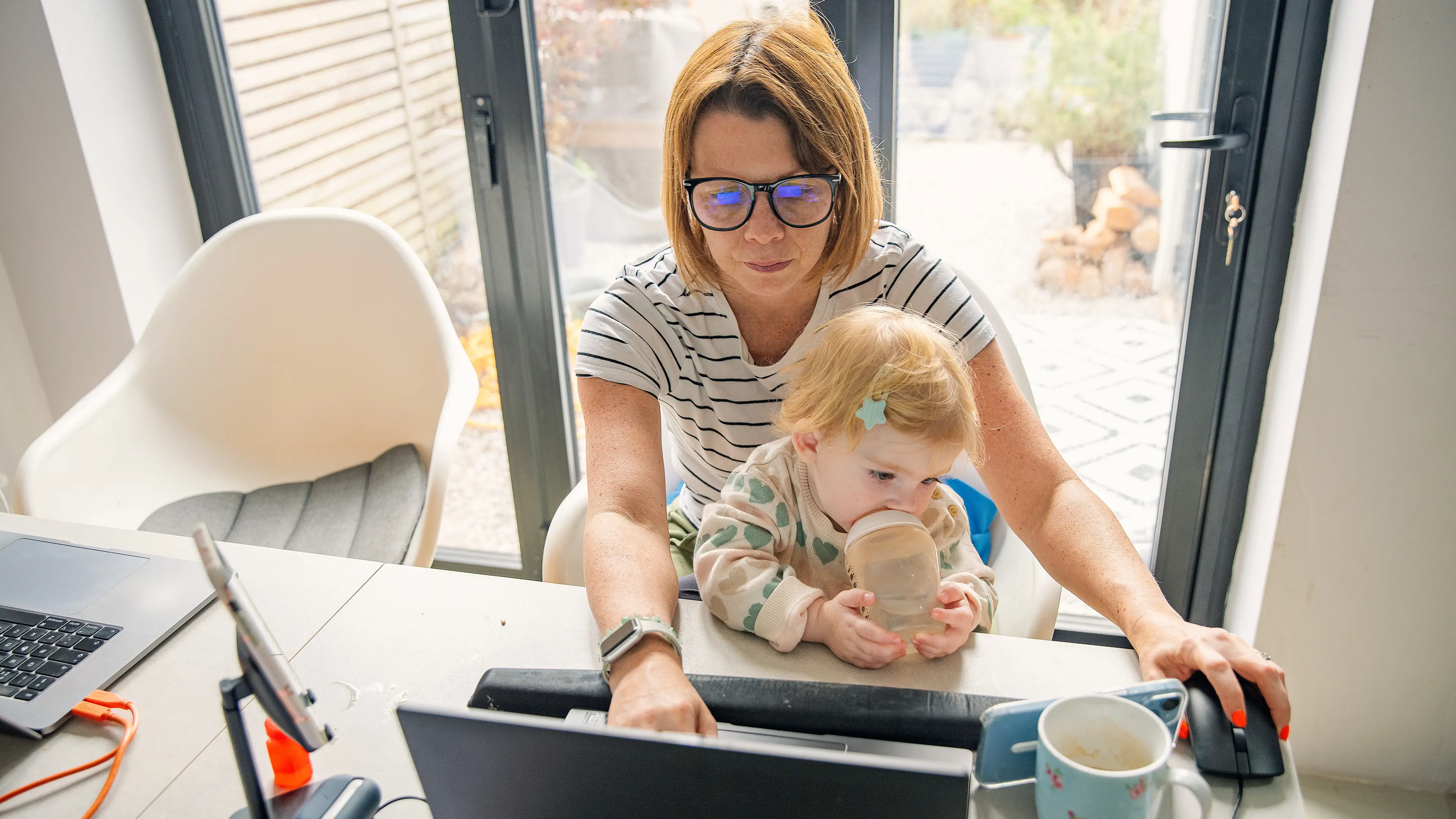
Hidden ‘motherhood penalty’ costs women thousands - while men get ‘fatherhood bonus’

Everybody knows parenting is expensive, but new research has found that mothers pay more than fathers do.
Not only do women have to contend with the gender pay gap, but the financial inequality seemingly doesn't stop when it comes to parenthood.
The Office for National Statistics (ONS) has found a so-called 'motherhood penalty' that can impact a woman's financial security once they decides to have children, and it only seemingly increases with each child.
The drop in income has been described as a 'substantial and long-lasting reduction' in their pay following childbirth, with the data suggesting that women are less likely to stay in full-time paid employment after having children.
Advert
According to the UK government’s website, statutory maternity leave is paid for up to 39 weeks, with the mother receiving 90 per cent of her average weekly earnings before tax for the first six weeks, which could continue for the remaining 33 weeks, or £187.18, whichever is lower.

According to ONS, mothers lose an estimated £65,618 in pay by the time their first child turns five, and their average monthly earnings fell by 42 per cent, or £1,051 per month, in the five years after the birth of their first child.
That's compared to the money they were earning a year before having children. This whopping loss amounts to a drop of £65,618 over five years.
Not only that, but if they have a second child, they stand to lose an additional £26,317, while a third child will cost £32,456.
In contrast, full-time working fathers receive a 'wage bonus', according to a 2016 study.
TUC found that dads experienced a 21 per cent increase in wages, while those with more than two kids saw an even larger increase of 9 per cent. They theorise that this is because working fathers tend to work longer and put in greater effort than childless men.
However, TUC also detailed the dire situation faced by working mothers, who they said often suffered a 15 per cent 'pay penalty' after having children, and they may work shorter hours in comparison to female colleagues without children.
They also found that CVs from mothers were marked down compared to those from childless women, whereas fathers' CVs were viewed more positively.
Rachel Grocott, the chief executive of the charity Pregnant Then Screwed, told The Guardian that it is tantamount to 'punishment' for working mothers, adding that these mothers are 'punished for caring, sidelined at work, and expected to just absorb the cost'.

“And the more children you have, the deeper the drop. It’s not a gentle decline – it’s a financial freefall resulting in financial loss of over £100,000 for a mother of three children,” she said.
Meanwhile, Alice Martin, from Lancaster University’s think tank the Work Foundation, said the data reflects the unfair expectations placed on working mothers.
"Addressing the motherhood penalty requires bringing parental leave policies into the 21st century, ensuring both mothers and fathers get ample paid time off when they become parents – we should properly accommodate parenthood alongside work, not in spite of it," she said.
A government spokesperson said: "Many employers understand that when women succeed, so does their business. But we need to ensure that every organisation is harnessing the talent, creativity and brilliance of women in their workforce.
“That is why we are going further and faster to close the gender pay gap once and for all. As part of the employment rights bill, we will require employers to publish action plans alongside their figures; detailing the steps they are taking to narrow their gaps. These are likely to include actions to support parents, and the careers of mothers.”
 Jen Thomas