
Women will ‘stop being paid’ from this week in the UK

Women will 'stop being paid' from now on in the United Kingdom.
Quite a shocking statement, that, but it's true as the UK gender pay gap means that working women will effectively be unpaid for the last five weeks of the year.
Data from the Office for National Statistics has shown that the 2025 pay gap in Old Blighty currently sits at 10.9%, but progress has stalled over the last five years.
Equal Pay Day, which is the symbolic day dedicated to raising awareness of the gender pay gap, fell on Saturday (22 November) and aptly symbolises how far into the year the median woman must work in order to have earned what the median man had earned the entire previous year.
Advert
The Fawcett Society, the UK's leading feminist charity, has explained that the gender pay gap isn’t about women earning less because they work less. It’s about systemic inequality built into our economy.

The charity notes that, due to the gender pay gap, women lose out on thousands of pounds a year and the effects last a lifetime.
That’s money not going into homes, communities, or local economies. And, for Black and minoritised women, disabled women and mothers, the gap is even wider.
And, not that you should need another reason to be outraged over the systematic inequality, as it's not just women who are affected, as the whole UK is missing out on growth, with the charity noting that closing the gap would add £55 billion to women’s earnings each year.
After catching light of the shocking figures, people rushed to social media to share their thoughts.
One Instagram user penned: "Not surprised. What a shame."
"How is this still a thing!" questioned a second, while a third chimed in: "Insane."

Another lamented: "The world is not enraged enough about how society fails women and, I will never stop screaming about it until I die."
And a final Instagram user outlined: "THIS is how it needs to be said for there to be an understanding."
Unfortunately, this appears to be exactly the case, given many men and, shockingly, many women's totally uninformed stance that the 'gender pay gap' is some kind of conspiracy theory we 'crazy feminists' have concocted.
Yep, to any 'sceptics' out there who, despite reading the literal statistics, still have some major issue with women rightly so voicing issues which financially affect them on the grounds of misogynist thinking and sexist attitudes - the gap is a seriously complex issue stemming from a number of systemic inequalities.
And, no, it is not the same as 'equal pay', which means men and women are paid the same for the same job.
It does not mean that women don't earn money, rather, it shows the difference between the average earnings of men and women.
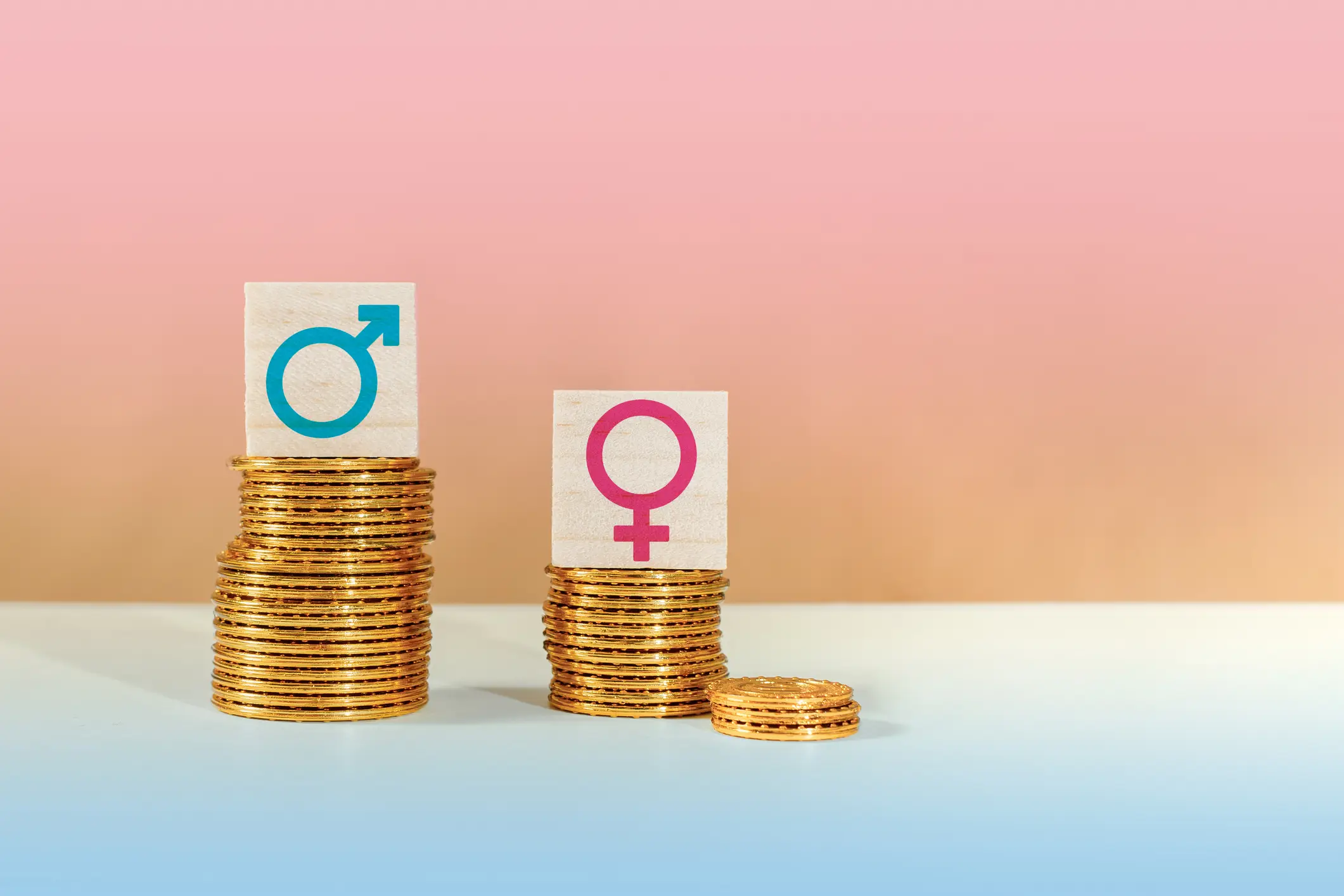
Just a handful of factors contributing to the gap include systemic inequality within the economy and workforce as a whole, rather than individual choices alone.
There are also career breaks as women are more likely than men to take time out of their careers for family care, which can impact future earning potential. And the reason for this? Well, simply put, women are still deemed to be the 'natural caregivers' in a heterosexual relationship due to archaic gender roles.
So, when their male counterparts' careers flourish with age and experience, theirs are more likely to be put on the back-burner while they deliver their partner's children, raise them and do all the emotional, mental and domestic labour that such a decision necessitates.
Women are also more likely to be caregivers for elderly members in their family and local community.
Given this, a higher proportion of women work part-time, and part-time jobs often have lower hourly pay.
And, lastly, there's occupational segregation.
Women may be underrepresented in some higher-paying fields and overrepresented in others, and this can be influenced by societal and educational norms. Male-dominated industries may not be particularly accommodating for the needs of women, or just downright an unsafe space to work in if you are a woman altogether.
You can find out exactly how much you're being shortchanged because of the gender pay gap using The Fawcett Society's calculator here.
Topics: Explained, Jobs, Life, Money, Social Media, UK News, Politics
 Rhiannon Ingle