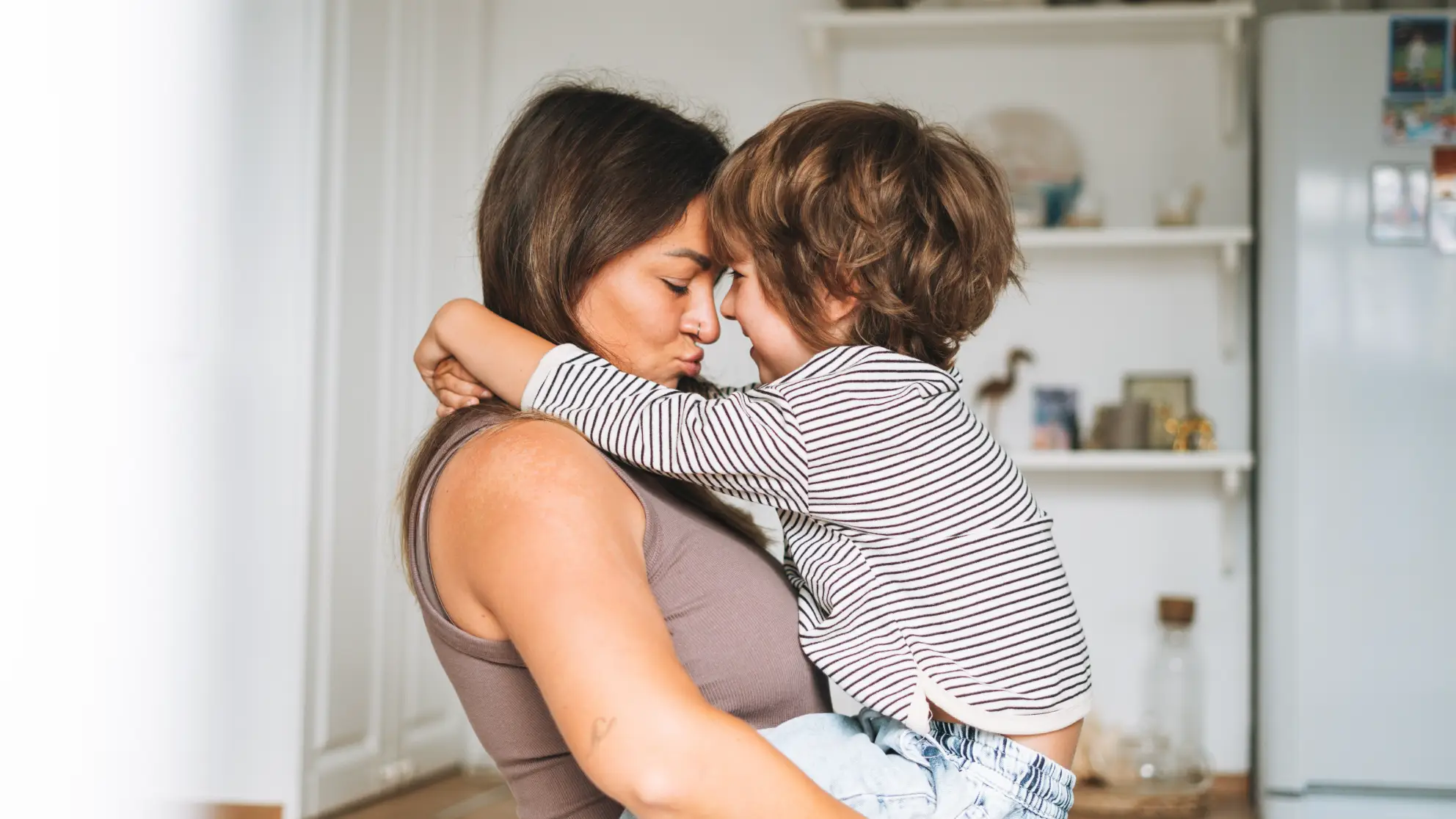
'Boy mums' explained as psychologist breaks down controversial parenting trend

If you've been scrolling on social media over the past few months, you may have come across what is known as the 'boy mum' phenomenon.
Now, a 'boy mum' has become somewhat of a negative character archetype often recognised on the internet, with the term itself referring to a specific kind of parent who is perceived as being overly fixated on their male children, often to the detriment of other female children or people in their lives.
In short, at least in this context, a 'boy mum' is a mum whose identity is inextricably linked to her male children. On the surface, such '#boymum' videos appear to be celebrations of a unique mother/son bond, framing boys as inherently more messy, wild, or lovable than their female counterparts.
However, what begins as lighthearted content often reveals a more insidious undercurrent that normalises emotional overattachment and sidelines daughters in the process.
Advert
Discourse online has since called mums for being over-protective and coddling their sons, deciding they can do no wrong, even when they're grown adults, as well as mums who treat their sons like their romantic partners, acting as if they're in competition with daughters-in-law and future dates or referring to their sons growing up and leaving home as a 'break-up'.
Alongside this, mums sharing how they don't love their girl children as much as their boys and mums who centre their lives around being a mum to a boy, often to the point of annoying others in everyday conversation, also falls under the trend.

However, it's a tad more complex than simply what it says on the tin, and that's why Tyla sat down with psychologist Dannielle Haig as well as therapist and wellness specialist Shelly Dar and Dr Bradley Powell, a chartered clinical psychologist and co-founder of Regal Private Therapy Practice, to get their verdicts on the trend popping off on TikTok, Instagram and just about every other internet platform out there.
'Boy mums' explained
According to Haig, the 'boy mum' trend began as mothers sharing the joys and realities of raising boys, namely the energy, the humour, the messiness.
She explained: "Online, especially on TikTok, it has grown into a cultural identity for mothers celebrating their bond with sons, often through playful or exaggerated tropes. Most of it is light-hearted and rooted in real developmental differences many parents notice.
"The challenge is that social media often amplifies stereotypes, for example, boys being portrayed as chaotic, unemotional, or 'mini men'. These are catchy narratives, but they don’t reflect the full emotional and psychological complexity of boys as individuals."
Dar adds: "The term has evolved to describe a specific brand of motherhood where sons are treated less like children and more like mini partners or best friends. It’s not uncommon to see creators post videos claiming their son is: the only man who’ll never hurt me.
"This romanticisation of the mother-son dynamic often manifests as a preemptive jealousy toward future daughters-in-law or, more damagingly, an open admission of loving sons more than daughters."
Powell explains that 'while much of this content is intended to be humorous, it can subtly reinforce outdated gender stereotypes'.
"As a psychologist, what concerns me with this trend is that it normalises lower emotional expectations for boys while elevating mothers into a role of indulgent protector. Over time, this can reduce opportunities for boys to learn emotional regulation, accountability, and empathy, skills strongly linked to healthier adult relationships and mental well-being," he says.
How do you know if you’re ‘being a boy mum’?
Dar notes the importance of identifying the warning signs.
She says that healthy affection is vital, but the 'boy mum' phenomenon crosses into concerning territory when certain behaviours become public performances:
• Competitive Parenting: Publicly mocking or resenting the women who may eventually date or marry the son.
• Double Standards: Excusing a son’s boundary-crossing while holding daughters to a much stricter moral or behavioural standard.
• Public Validation: Using the child to fill a void of loneliness or romantic lack, then broadcasting that dynamic online for likes and comments.
Haig says that, in everyday life, being a 'boy mum' simply means you’re raising a son. Full stop.
She continued: "On social media, the label usually describes mothers who: celebrate the high-energy, physical, or adventurous side of their sons, use affectionate humour about the chaos of raising boys and connect with other mums who are having similar experiences."
The psychologist states that 'none of this is inherently negative', adding: "The only time it becomes worth reflecting on is when gender is seen as the sole explanation for everything, for example, assuming boys 'don’t need emotional support' or can’t be sensitive.
"Those assumptions can unintentionally limit a child’s emotional development."
Dar agrees, adding: "The harm in this dynamic lies in the blurring of essential boundaries. When a mother turns to her child for the validation and emotional support usually reserved for a partner, a concept known as emotional enmeshment, the child is burdened with meeting the mother’s therapeutic needs."
What about a 'girl dad' or 'girl mum' phenomenon?
Haig tells us that equivalent labels 'absolutely' exist.
"But they tend to land differently culturally," she says, noting that 'girl dad' is usually framed positively, often highlighting emotional closeness and softer parenting moments.
"Criticism tends to focus more heavily on the 'boy mum' trend because some online portrayals lean into comparisons ('girls are too dramatic' or 'boys are easier'), which can unintentionally reinforce gender stereotypes."
The expert resolves: "It’s less about mothers doing anything wrong and more about the way social media amplifies simple narratives over nuanced ones."
Final thoughts
"The healthiest approach is to parent the child in front of you, not the gender stereotype behind them," says Powell. "Boys don’t need softer rules or lower standards. They need emotional coaching, consistency, and permission to be vulnerable."
Dar echoes: "Moving away from this trend requires a shift in how we view our children. Instead of treating a son as a gendered mascot, experts suggest focusing on the child as a unique individual. While affection is the bedrock of parenting, it must be balanced with limits, privacy, and accountability.
"The goal is to model a home where expectations are equal regardless of gender, and where a mother’s emotional well-being is supported by an adult community, leaving the child free to simply be a child."
Ultimately, raising emotionally healthy boys isn’t about rejecting affection, it’s about combining warmth with structure. When boys are taught that emotions are acceptable and boundaries are non-negotiable, they grow into men who are resilient, respectful, and relationally secure.
Rounding off, Haig shared with Tyla a few helpful reflections that include:
- Boys benefit hugely from emotional literacy.
- Even though boys and girls can develop differently, all children thrive when parents encourage emotional expression, curiosity, and connection.
- Gender differences are real, but they’re not the whole story.
- Biological factors influence development, but individual personalities vary enormously. It’s helpful to notice patterns without assuming they define your child.
- Trends are not the same as parenting.
- The online 'boy mum' persona is often exaggerated for humour and relatability. Real-life parenting is far more nuanced, gentle, and personal.
- Your relationship with your son doesn’t need a label.
- Celebrate him as a whole person, not a stereotype. The healthiest mother–son bonds balance warmth with boundaries and affection with autonomy.
Topics: Parenting, Tyla Exclusive, Life, TikTok, Instagram, Social Media, Explained
 Rhiannon Ingle