
Neuroscientists think they finally know what you see when you die

Death comes for all of us, so it’s no surprise the human race has been interested in the death process since the beginning.
But as you need to die to truly know what’s going on, seldom does a person get to experience death only to come out of the other side to tell everyone about it.
So what goes on in our minds at the point of dying?
There have been so many theories, but it would be hard to know what’s real and what’s not unless we could somehow study someone as they die.
Advert
Oddly, this is something that’s happened only once, and completely by chance.
This is now how we may have a small idea of what we might see as we transition from alive to dead.

There might be something to the theory that our life flashes through your eyes during near-death experiences.
This is what is known as ‘life recall’.
Neuroscientists once recorded the brain activity of someone as they died, by chance, and then saw exactly what parts of the brain had activity during this time.
The study, published in the Frontiers in Aging Neuroscience in 2023, found that the brain had a ‘transition to death’, and activated a ‘programmed’ ending to life.
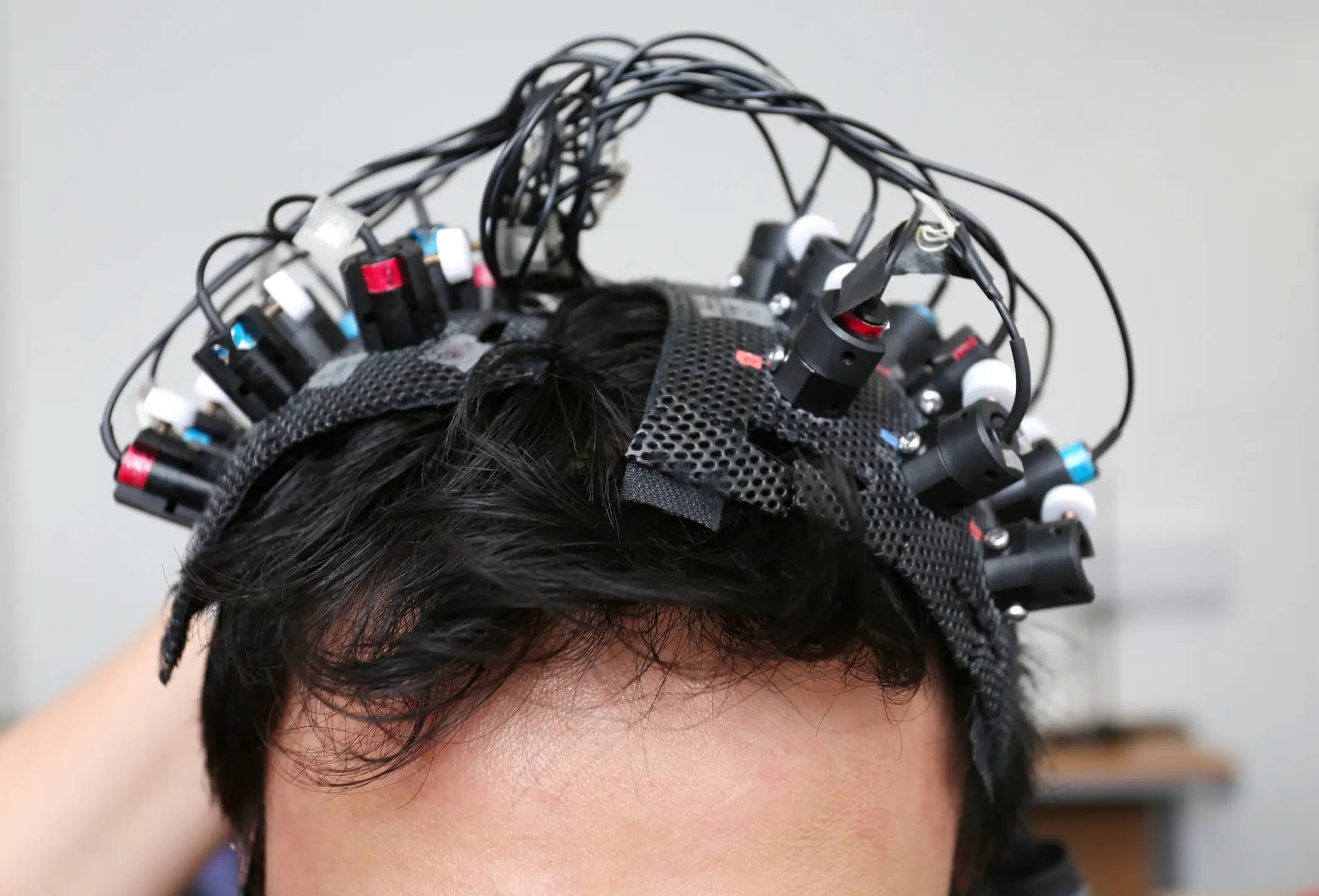
It was revealed after an 87-year-old epilepsy patient came in for studying with an EEG so that they could detect the seizures.
Sadly, at the time the EEG was mapping their brain activity, they had a heart attack and passed away, giving the scientists a look into the 30 seconds after death.
There, they found that the brain underwent a similar experience that we do when we recall memories, dreams, and meditate.
This is because most of the brainwaves impacted are those found in the area of the brain for dreaming, information processing, and memories.
Ultimately, they believe we see a flashback of life events as we die.
Dr Ajmal Zemmar, a neurosurgeon at the University of Louisville, US, who led the study, told Frontiers: “We saw changes in a specific band of neural oscillations, so-called gamma oscillations, but also in others such as delta, theta, alpha, and beta oscillations.
“The brain may be playing a last recall of important life events just before we die, similar to the ones reported in near-death experiences."
He added: “These findings challenge our understanding of when exactly life ends and generate important subsequent questions, such as those related to the timing of organ donation.
“Although our loved ones have their eyes closed and are ready to leave us to rest, their brains may be replaying some of the nicest moments they experienced in their lives."
However, the study has since been questioned.
There has been a commentary added to the Frontiers site, which notes that some of what was noted in the brain has actually been found to occur 'in association with a wide variety of brain circumstances' such as things like 'ongoing tonic pain to preparation for and execution of movements'.
It explained that the study author said himself that there were 'several reasons not to place too much importance on this one patient's EEG', including anti-seizure drugs and anaesthetic he'd been given.
Additionally, there has been uncertainty about whether the gamma waves recorded in the EEG were actually the proper reflected brain activity or were at least in part measuring muscle contractions instead.
So, it's best to take it with a pinch of salt.
 Britt Jones