
• News
  • Life
  • TV & Film
  • Beauty
  • Style
  • Home
  • News
    • Celebrity
    • Entertainment
    • Politics
    • Royal Family
  • Life
    • Animals
    • Food & Drink
    • Women's Health
    • Mental Health
    • Sex & Relationships
    • Travel
    • Real Life
  • TV & Film
    • True Crime
    • Documentaries
    • Netflix
    • BBC
    • ITV
    • Tyla Recommends
  • Beauty
    • Hair
    • Make-up
    • Skincare
  • Style
    • Home
    • Fashion
    • Shopping
  • Advertise
  • Terms
  • Privacy & Cookies
  • LADbible Group
  • LADbible
  • UNILAD
  • SPORTbible
  • GAMINGbible
  • UNILAD Tech
  • FOODbible
  • License Our Content
  • About Us & Contact
  • Jobs
  • Latest
  • Topics A-Z
  • Authors
Facebook
Instagram
X
Threads
TikTok
Submit Your Content
Experts reveal the maximum amount of money you should keep in your bank account

Home> Life> Money

Published 16:58 24 Nov 2025 GMT

Experts reveal the maximum amount of money you should keep in your bank account

Financial expert Derek Sprawling says that as anyone with less £10,000 in their current account should take heed of his warning

Rhianna Benson

Rhianna Benson

google discoverFollow us on Google Discover

When it comes to saving up, I'm sure most of us were under the impression that the most amount of money they can pile into a bank account, the better.

Apparently, however, this tactic could actually see us losing the value of our cash.

According to a financial analyst, there's a maximum amount of money that should be held in a current account - and anything above that could prove harmful to your long-term goals.

New statistics show that, in the UK alone, around 6.4 million current accounts contain over £10,000. The issue is, however, that these funds aren't earning any interest. That isn't to say that £10,000 is the golden figure, though, as anyone with less than this amount should also be taking heed.

Advert
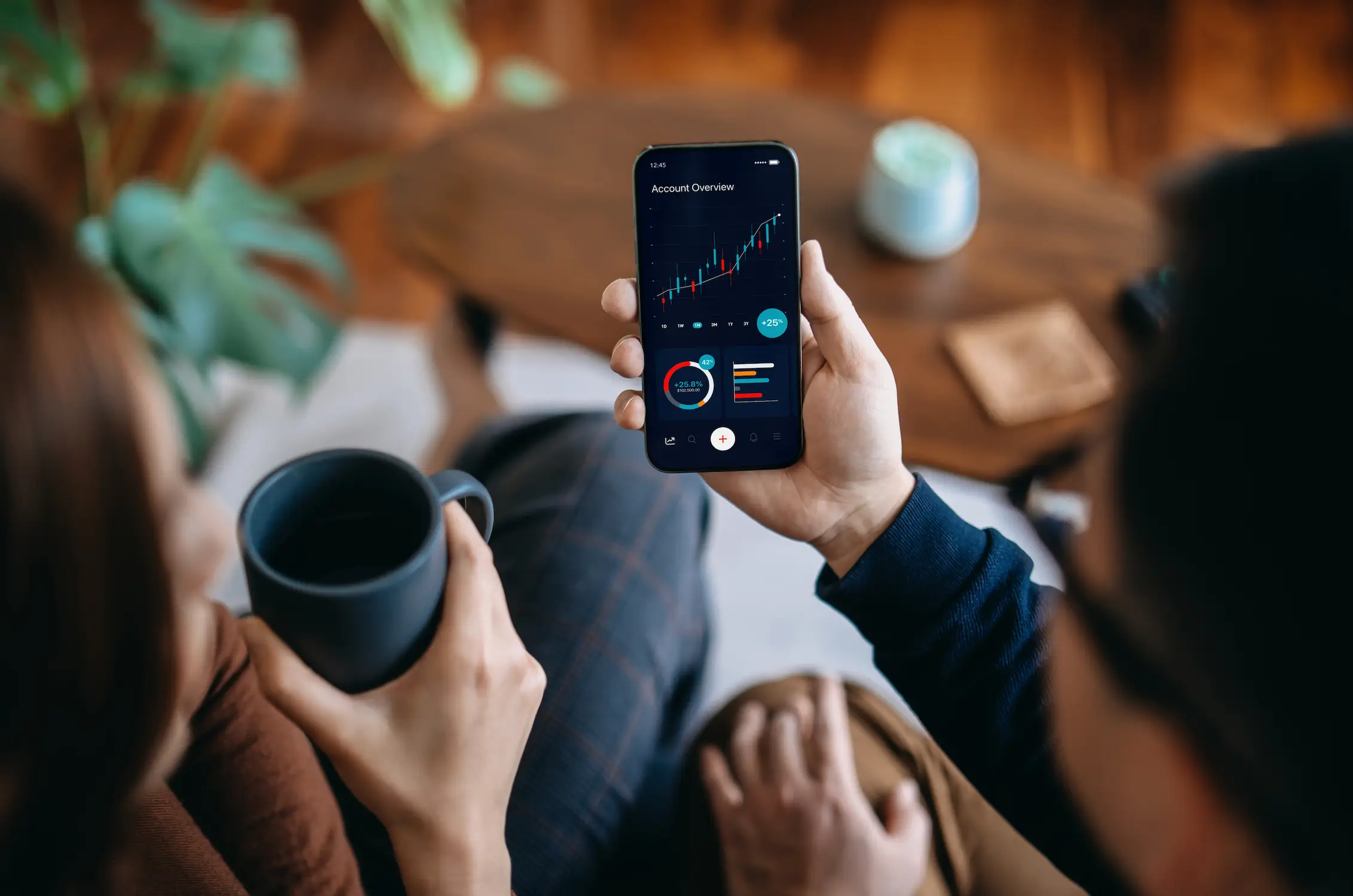
A financial expert has spoken out (Getty Stock Images)

In fact, if you're someone with anything between £1k and £10k in your current account, experts say you're losing money.

This is because only 0.04 per cent of current accounts are able to take on inflation by earning four per cent or over, whilst the majority do nothing at all, meaning the value of your money steadily declines.

Speaking to Metro, Derek Sprawling - who works as head of money at Spring - advised: "A current account should be seen as a tool for everyday spending, not a place to store large sums of money long-term.

"Think of your current account as your digital wallet – designed for convenience, not storage. You wouldn’t carry £2,500 in cash to the supermarket, so why leave it idle in a current account?"

Sprawling continued: "Treat it as a flow-through space for your money, not a destination."

Inflation is reducing the value of cash in current accounts (Getty Stock Image)

As such, he believes it best to only keep anything from £500 to £1,000 in your current account, to cover things like bills and act as a buffer for any unexpected expenses.

"Anything beyond that could be working harder for you elsewhere," he continued. "With interest rates on many current accounts sitting well below inflation, excess funds are losing value in real terms."

If you're still not quite getting what he's saying, worry not. It took me a hot minute, too.

Basically, if you're holding £10,000 in a current account with no interest right now, given that inflation is currently at 3.8 per cent, in 12 months time, you'd have lost £380,000 in monetary value, simply due to how expensive everything has become.

"That’s the hidden cost of inaction," Sprawling added. "If your money isn’t earning at least the rate of inflation, it’s effectively shrinking.

Bankers should be considering current or saving accounts with interest (Getty Stock Image)

"Switching to accounts offering higher returns is key to preserving purchasing power."

This isn't to say, however, that customers should just jump at the first interest savings account they can find. It's best to shop around to figure out the best rate for you.

"If you want an account that enables you to access your funds within minutes, not days, do your research and check the Terms and Conditions of different accounts," the financial expert explained. "Not all 'easy access' is as easy as you might presume."

Featured Image Credit: Getty Stock Images

Topics: Advice, Cost of Living, Life, Money, Real Life, UK News

Rhianna Benson
Rhianna Benson

Rhianna is an Entertainment Journalist at LADbible Group, working across LADbible, UNILAD and Tyla. She has a Masters in News Journalism from the University of Salford and a Masters in Ancient History from the University of Edinburgh. She previously worked as a Celebrity Reporter for OK! and New Magazines, and as a TV Writer for Reach PLC.

X

@rhiannaBjourno

Advert

Advert

Advert

Choose your content:

20 hours ago
22 hours ago
a day ago
  • Getty Stock Images
    20 hours ago

    'Sploshing' bedroom trend explained as sitophilia becomes increasingly popular

    People are getting creative in the bedroom, but it's messy work

    Life
  • Getty Stock Images
    22 hours ago

    ‘Bacterial constipation’ might be the reason you’re struggling to poo

    Japanese researchers found out what causes this type of constipation and how to solve it

    Life
  • Getty Images/Bettmann
    a day ago

    NASA left concerned after astronaut described sight he’d ‘never seen before’ during space trip

    John Glenn became the first American to orbit Earth on 20 February 1962

    Life
  • Getty Stock Image
    a day ago

    Dermatologist explains how to identify keratosis pilaris on your arms and legs

    Keratosis pilaris, sometimes referred to as 'chicken skin,' is a harmless skin condition that causes tiny bumps

    Life
  • Medical experts warn of foods you should avoid if you're thinking of trying sitophilia
  • New rule coming into place for anyone with less than £120,000 in UK bank account
  • New rule introduced for any couples who have joint bank account
  • Health experts reveal matcha actually has unexpected effect on your body and health