Doctor reveals simple hand test that could help ‘identify’ MS or other serious illnesses

A doctor has revealed a simple hand test that could help you 'identify' a serious condition if you aren't able to do it.
In case you weren't scared enough by the warning given to those who sleep with a fan on in the summer or by the six subtle signs that you might have an underlying heart condition that you definitely should not ignore, I've got another one for you... yay to health anxiety!
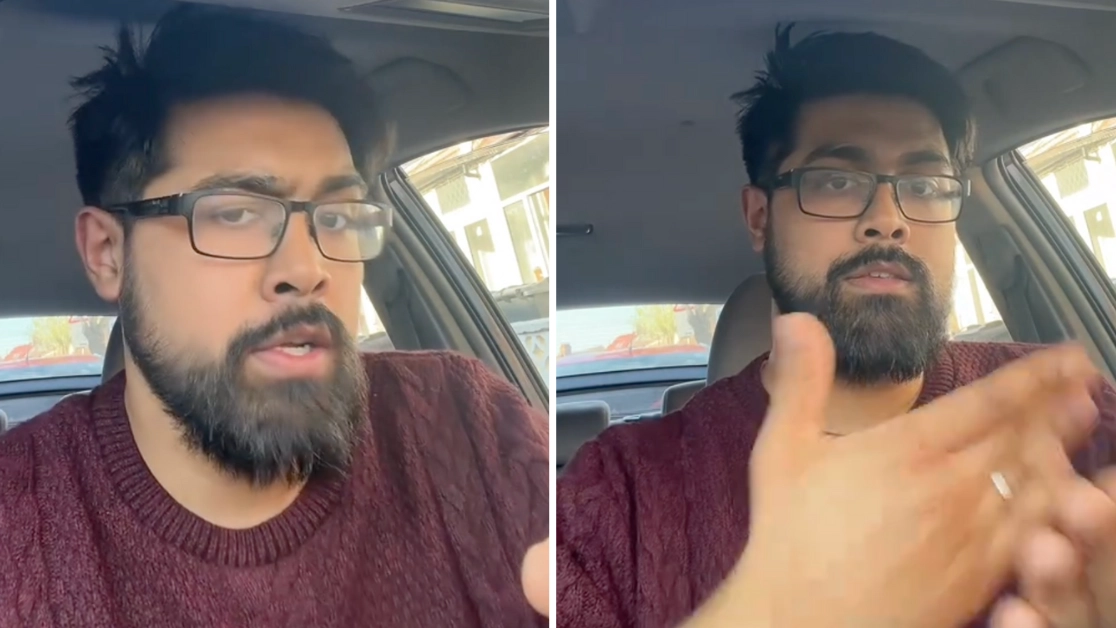
A London-based doctor on TikTok - who goes by @medifectious on the platform - has posted a video about a simple hand mobility test those of us with hands and who don't have a serious illness should be able to complete.
He started the clip by saying: "If you can do this, and you can do this, then it's all good. If you can't do this, you might want to get yourself checked."
Advert
By this he means slapping your hand with your other hand in alternating directions at a brisk pace - as if you were playing 'pat a cake, pat a cake' by yourself.
Doesn't exactly sound medically groundbreaking, does it?
The doctor goes on to explain: "So, what is this? This is something called Dysdiadochokinesis, this is the inability to do rapid alternating movements that we check when someone has a lesion in the cerebellum."
What is Dysdiadochokinesis?
"Dysdiadochokinesia or Dysdiadochokinesis (DDK) is the medical term used to describe difficulty performing quick and alternating movements, usually by opposing muscle groups," Healthline reports.
Why this happens is something medifectious also covered, as he explained: "Now this could be due to toxins, so sometimes alcohol, people who have a severe amount of alcohol can sometimes show Dysdiadochokinesis, but usually it's some people with multiple sclerosis.
"We see it with something called Friedreich's ataxia (FA) and the other thing that we see it with is something called, is essentially a cerebellum lesion itself."
Multiple sclerosis or MS is a neurological condition that effects the spinal cord as well as the brain, so you can see how this could affect a person's ability to perform rapid hand movements.
The doctor continued: "So we start to see those sort of things, especially in the elderly population, it is like subtle signs that you know, this person might be having a stroke."
"So have a go, just do this you should be able to do it, everyone should be able to do it. If it's abnormal they will look like this," he said as he demonstrated a slower, more stiff hand movement that doesn't show flexibility or ease when carrying out the motion.
"For some people, one side they can do this, and the other side they can do this," the former being the regular motion and the latter being the stunted one.
'So now you know,' he rounded off his video saying.
This isn't the only hand movement you can try as the National Institute for Health explains: "These can be quick and synchronous and can include pronation/supination, fast finger tapping, opening and closing of the fists, and foot tapping."
So, if you tend to struggle with any of these movements, it's best to talk to a professional.
And for the sake of the health anxious, don't panic and assume the worse, maybe just check in with your GP if you're concerned.
Topics: Health, TikTok, Mental Health
 Saskia Calliste