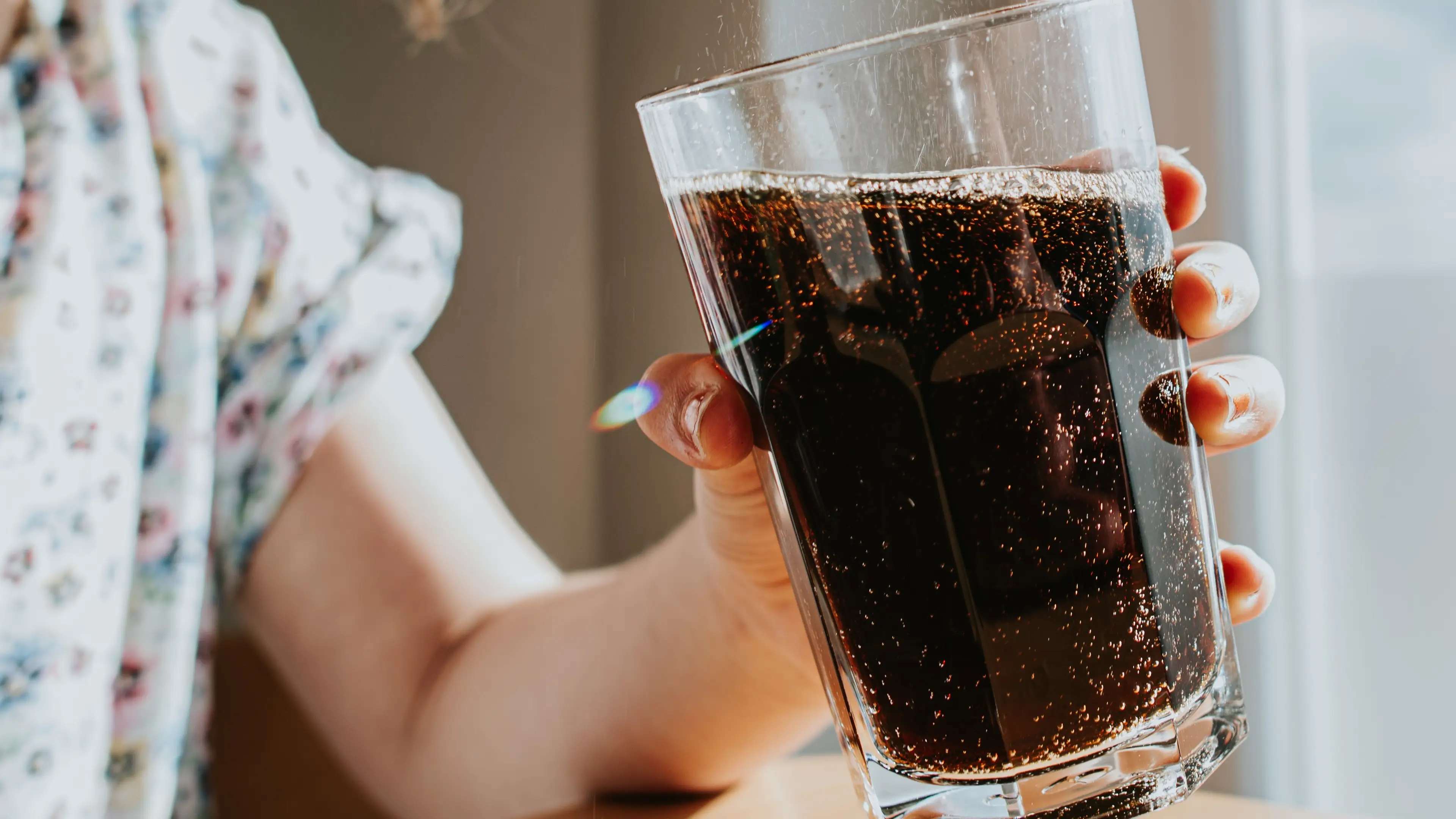
Everything that happens to your body if you stop drinking diet fizzy drinks

It's no secret that drinking too many fizzy drinks isn't great for your health.
Diet or loaded with sugar, neither are the healthiest option, thanks to high sugar and sweetener content and their acidic nature which can lead to erosion, bloating and reflux.
While drinking fizzy drinks in moderation shouldn't cause concern, having too many can in some cases lead to health issues.
So what exactly happens if you stop drinking fizzy drinks? According to Prevention, you might notice some significant changes in your body.
Advert
Let's get into it.

Headaches
After quitting fizzy drinks, some people notice an increase in headaches and migraines as a result of caffeine withdrawal. Drugs.com explain that caffeine withdrawal headaches can begin within 12 hours and often peak after the first day. They should, however, resolve after around nine days.
In fizzy drinks, the chemicals in aspartame can also lead to headaches, which you might notice generally improve after quitting. For example, in an animal study from 2013, rats that consumed diet drinks were found to have damaged cells in the cerebellum, which can impact cognitive function.
Weight loss
Despite being called 'diet', many sugar-free fizzy drinks can actually have the opposite effect on weight loss.
A number of studies have investigated whether artificial sweeteners found in diet drinks can actually increase appetite, meanwhile other research found that those who regularly drink diet drinks were found to have a greater waist circumference than those who did not.
Healthline explains that in one study of 749 adults, the waist circumference of those who consumed diet drinks daily was almost four times greater than those who did not.
Taste
Many people report that they are more sensitive to taste after giving up diet drinks. This is largely because artificial sweeteners are much sweeter than sugar and are believed to alter receptors in the brain.
"We often see patients change snack choices when they give up diet soda," Heather Bainbridge, RD, from Columbia University Medical Center Weight Control Center told Prevention.
"Rather than needing sugary treats or something really salty like pretzels and chips, they reach for an apple and a piece of cheese. And, when they try diet soda again, they find it intolerably sweet."
Stronger bones
Although it's not currently clear why, it's widely believed that ditching sodas can improve bone strength and function.
In one study of 17,000 adults, researchers found that soft drinks consumption is 'directly associated with the risk of fracture'. The study explains: "Reducing soft drinks consumption should be considered as an important strategy for individual and population levels to maintain bone health."

Better choices
Bainbridge explained that when patients give up diet sodas, they often make better lifestyle decisions elsewhere.
"Sometimes those poor choices are built up habits," she said.
"You're conditioned to have soda with chips, fries, or something sweet. When you eliminate the soft drink, you also break the junk food habit."
Alcohol tolerance
You might notice that you handle your booze better after ditching fizzy drinks.
Surely explains: "Carbonation affects alcohol by temporarily moving the alcohol into your bloodstream faster than normal. That rate of alcohol absorption means you might feel the effects of bubbly alcoholic beverages faster compared to flat drinks."
Meanwhile, a study in 2007 found that out of 21 participants, two thirds absorbed the alcohol more quickly when it was mixed with a carbonated drink.
Risk of diabetes decreases
Diabetes UK explains that research indicates that the risk of type 2 diabetes could be higher for those that 'regularly consume diet soft drinks than people that consume sugary versions'.
They add: "The researchers note that information on the participants’ diets could not be closely monitored and it is therefore not possible to conclude that diet soft drinks were a cause of type 2 diabetes."
Meanwhile, Patient explains: "In 2009, a study showed that people who drank at least one diet fizzy drink a day were 36% more likely to develop a condition we used to call 'metabolic syndrome', linked to type 2 diabetes, and 67% more likely to develop type 2 diabetes.
"In 2014, scientists suggested artificial sweeteners could change the 'friendly' bacteria in the gut, leading to glucose intolerance, part of the chain in type 2 diabetes."
Improved kidney function
According to the National Kidney Foundation, one piece of research by the Nurses' Health Study revealed that kidney health declined in women who drank multiple diet sodas every day.
In fact, over a 20-year period, kidney function reduced by 30 percent in those who drank several sodas a day compared to those who did not.
The good news is that quitting fizzy drinks, or reducing the amount you have every day, can help improve kidney function.
Topics: Food and Drink, Health, Science, Life
 Lucy Devine