
Most unpredictable sepsis symptom as NASCAR's Kyle Busch cause of death confirmed by family

Kyle Busch’s cause of death has been confirmed as severe pneumonia that progressed into sepsis, following his tragic, sudden passing at the age of 41.
The news broke that the NASCAR champion had died suddenly on Thursday (21 May) after what his family had described as a ‘severe illness’.
The motorsports star had been in the middle of his 22nd season in the top division at the time of his death and is survived by his wife, Samantha, and their two children, who are 11 and four.
An official joint statement made by NASCAR, the Busch family, and Richard Childress Racing read: "We are devastated to announce the sudden and tragic passing of Kyle Busch.
Advert
"Our entire NASCAR family is heartbroken by the loss of Kyle Busch. A future Hall of Famer, Kyle was a rare talent, one who comes along once in a generation. He was fierce, he was passionate, he was immensely skilled, and he cared deeply about the sport and fans."

Now, a follow-up statement from Busch’s family has been released, as per USA Today, which reads: "The medical evaluation provided to the Busch Family concluded that severe pneumonia progressed into sepsis, resulting in rapid and overwhelming associated complications.
“The family asks for continued understanding and privacy during this difficult time."
What is sepsis?
As outlined by the Cleveland Clinic, pneumonia is inflammation and fluid in your lungs caused by a bacterial, viral, or fungal infection, while sepsis is a serious reaction to an infection that can be life-threatening.
It develops very quickly, causes your immune system to harm healthy tissues and organs, and needs urgent treatment in hospital.
Sepsis is unpredictable, and it’s not always easy to tell if you’re developing it as its early symptoms mimic those of the common cold and flu, making it difficult to identify and get the help that’s needed before the person’s condition deteriorates.

Fatigue, muscle aches, fever, and a general sense of weakness are both signs of early sepsis and standard flu symptoms.
However, sepsis develops rapidly from a seemingly mild infection to a life-threatening emergency in just a few hours, with the possibility of becoming fatal in as little as 12 hours.
This is why it’s important to know the signs that differ from the flu and to get medical help immediately if you believe you have sepsis.
As sepsis develops, red flags like a racing heart, cold hands and feet, slurred speech, and shortness of breath are likely to emerge, as well as telltale signs that aren’t associated with the flu.
Symptoms of sepsis in babies and children

- Difficulty breathing or breathing very fast
- Having a fit (seizure)
- A high or low temperature – feeling very hot or cold when you touch them
- Blue, grey, pale or blotchy skin, lips or tongue – on black or brown skin, this may be easier to see on the palms of the hands or soles of the feet
- A rash that does not fade when you press it – this type of rash is rare in sepsis, but it may be a symptom of meningitis
- Being sleepier than normal or difficult to wake
- Not peeing in the last 12 hours (for babies and children under five years), or not peeing all day (for children five years and over) – you can check a baby's nappy to see if it's dry
Symptoms of sepsis in adults
- Confusion or slurred speech
- Uncontrollable shivering
- Muscle pain
- Difficulty breathing
- Blue, pale, grey or blotchy skin, lips or tongue – on black or brown skin, this may be easier to see on the palms of the hands or soles of the feet
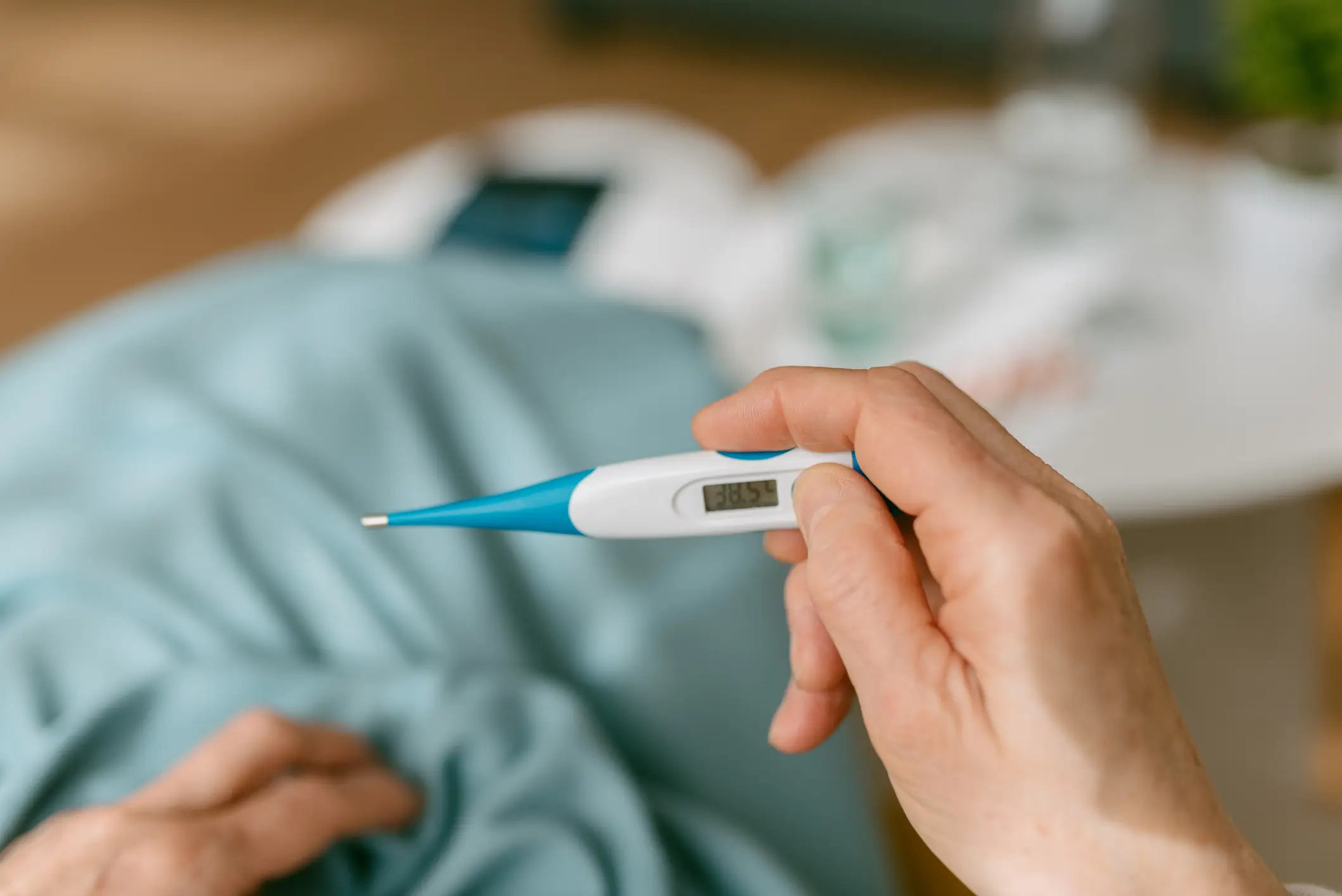
- A high or low temperature – a high temperature is less common in older adults
- Not peeing all day or peeing very little in the past 18 hours
The NHS advises that you should trust your instincts, as a child or adult with sepsis might not have every symptom listed.
You should get immediate medical help if you or your child is unwell and you think there's something seriously wrong.
 Madison Burgess