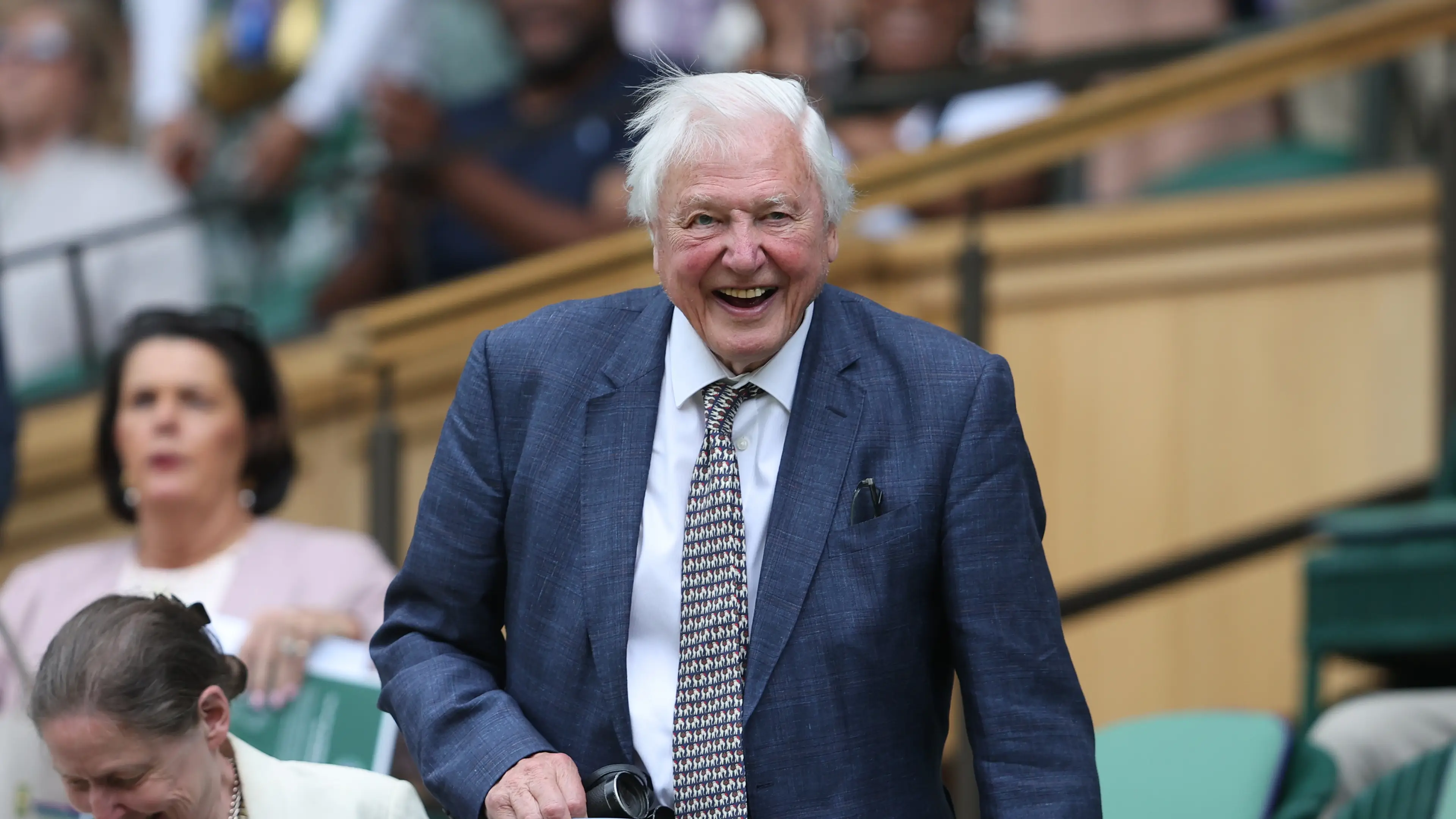
David Attenborough celebrates 100th birthday by reflecting on 'most extraordinary moment' of his life

In four days' time, Britain's favourite wildlife conservationist and nature presenter will celebrate his 100th birthday.
Ahead of his centenary, Sir David Attenborough has reflected on his 99 laps around the sun, revealing that one particularly poignant moment from his illustrious career stands out more than most.
In the years prior, the Cambridge University zoology graduate began his on-screen career as a presenter on the BBC’s Zoo Quest in 1954.
The series proved revolutionary at the time, combining live studio segments with footage shot on location of animals enjoying their natural habitats, and setting the standard for modern-day wildlife documentaries.
Advert
Attenborough moved into a leadership position at BBC Two in the mid-60s, where he partly introduced colour television to Europe through hits like Monty Python's Flying Circus, before being drawn back to nature.
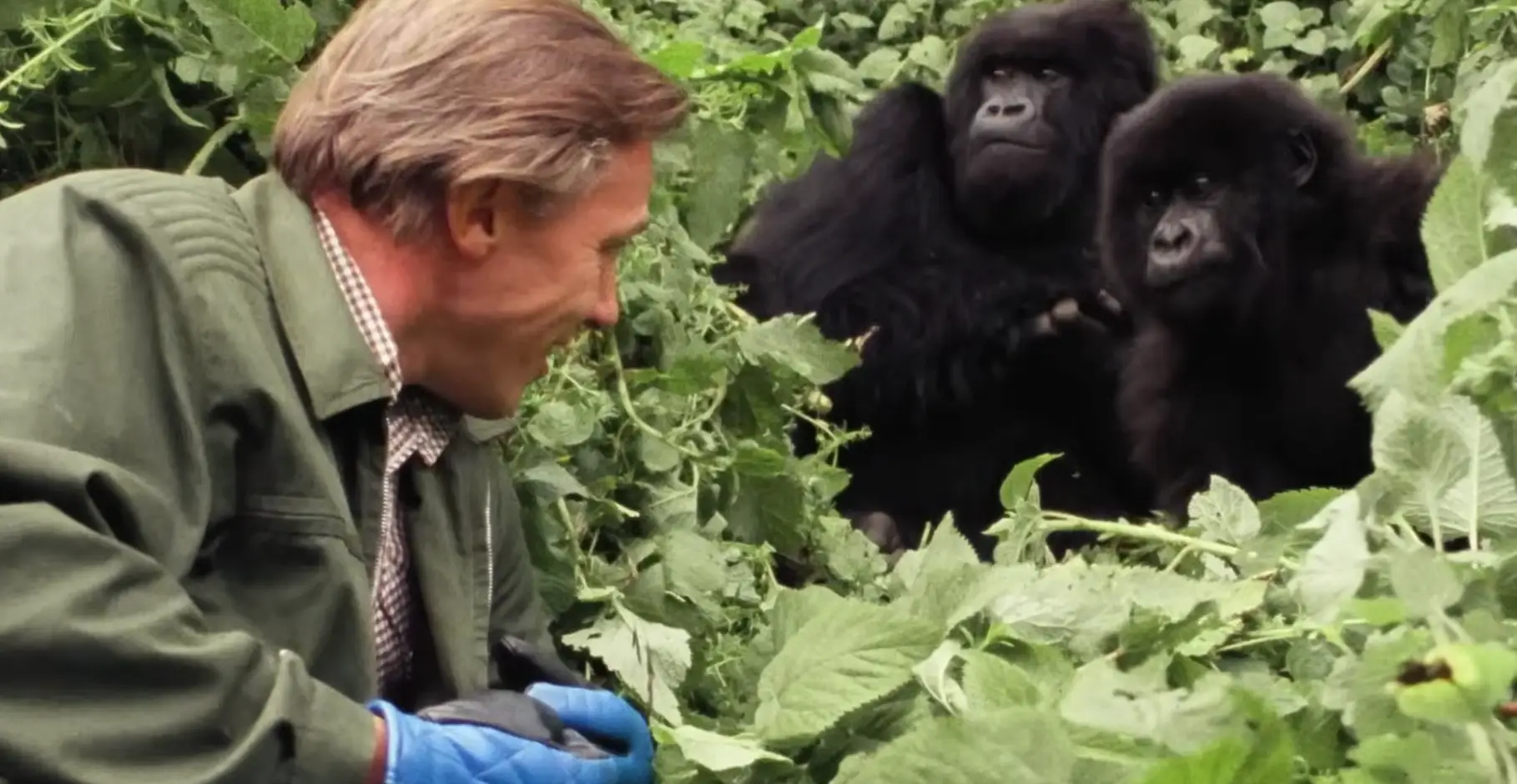
In 1978, filming began on a landmark series titled Life on Earth, where he embarked on his most exciting adventure yet.
With a small team of cameramen, Attenborough flew out to Rwanda, where, deep in the Virunga Mountains, an unscripted encounter with a troop of gorillas was caught on camera for the very first time. He'd intended to discuss the biology of the creatures, but immediately took on a role as the playmate of several young primates, smiling happily as they groomed him.
"There is more meaning and mutual understanding in exchanging a glance with a gorilla than any other animal I know," Attenborough told viewers from the jungle. "It seems really, very unfair that man should have chosen the gorilla to symbolise all that is aggressive and violent, when that's the one thing that the gorilla is not, and that we are."
The footage knocked the socks off TV producers across the globe at the time and became the most memorable moment of Attenborough's career.
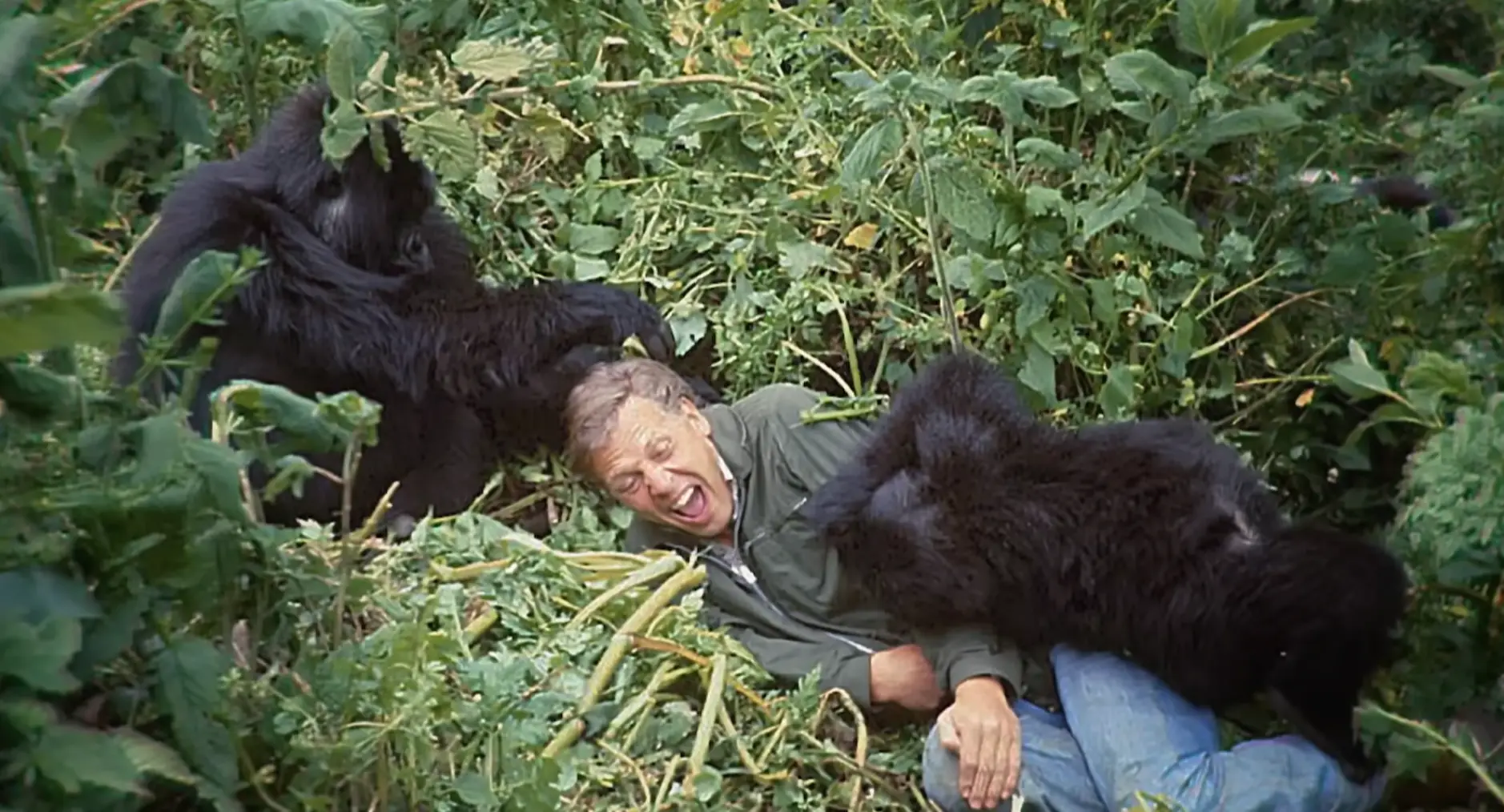
"You don't stare at a gorilla, that's a challenging thing to do," he said this week, looking back for a special reflective documentary. "So, you keep your head down, and you make these belch vocalisations - that's a sort of conversational acknowledgement that you're in their presence."
Attenborough went on to add to his interaction with the troop: "I honestly don't know how long it was. I suspect it was about 10 minutes, or even a quarter of an hour.
"I was just about to start talking about the opposition of the thumb and the forefinger, when I felt a hand come out on my head, and it was this adult female. She twisted my head so she could look straight in my eyes, and looked inside my mouth and put a finger in my mouth.
"She made this belch vocalisation, so I did my best to respond. I left, crawled back through the undergrowth, and I said, 'That was one of the most extraordinary moments of my life'."
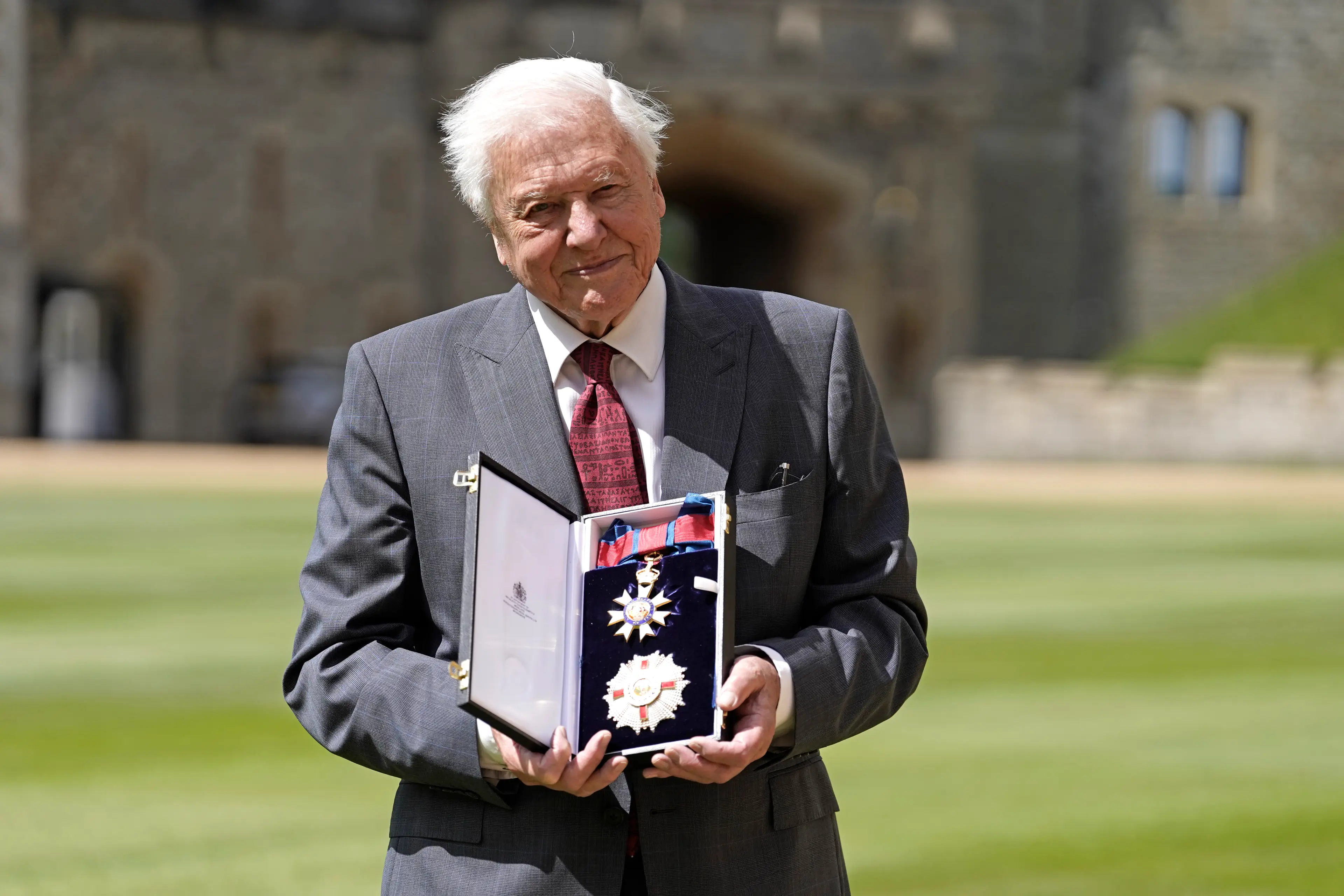
Following his interaction with the gorillas, Attenborough spent the next several decades narrating and producing his Life collection, including The Living Planet and The Private Life of Plants.
His 2000s hits, The Blue Planet and Planet Earth, also used 4K and 3D cinematic visuals to capture the imagination of new audiences.
Attenborough also shifted his role towards advocacy, becoming a leading voice at global summits like COP26, where he used his decades of credibility to urge world leaders to fight climate change, and during his 2020 film, A Life on Our Planet, which served as his witness statement regarding the decline of biodiversity.
Topics: Sir David Attenborough, Celebrity, UK News, Animals, Documentaries
 Rhianna Benson