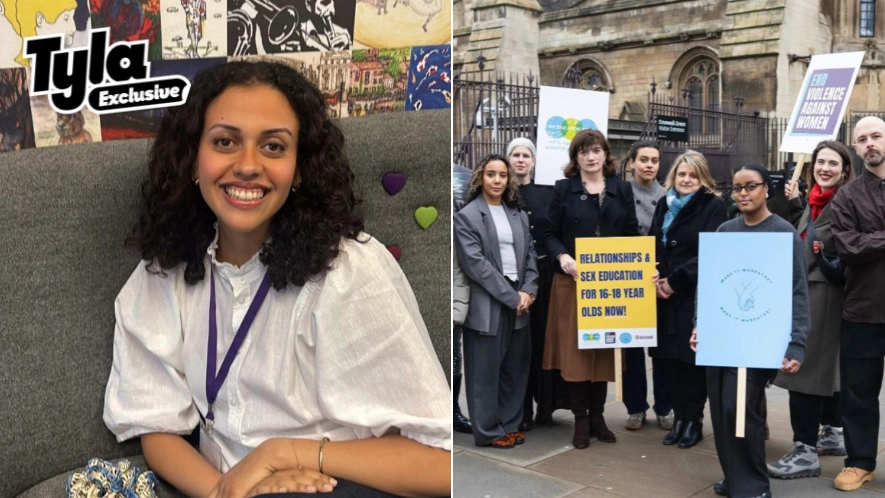
'After surviving an abusive relationship at 16, I spent six years fighting to make sure other girls don’t go through the same'

Faustine Petron was just a teenager when she found herself trapped in an abusive relationship.
Now, after years campaigning for better sex and relationships education in schools, she's taking her fight to Parliament - and has a powerful message for the next generation.
At 16, you should be figuring out who you are, enjoying your independence and learning what it means to fall in love. You shouldn't have to learn how to survive an abusive relationship.
But that was the reality for Petron, who was just 16 when she found herself stuck in a coercive relationship with a fellow college student.
Advert
And one of the things that has stayed with her is the feeling that she didn't have the words to understand what was happening to her. The warning signs were there, but without being taught what coercive control looked like, it was difficult to recognise that behaviour for what it was.
It was only later, when she went to university and began reflecting on what had happened, that she started questioning why she had never been taught how to identify an abusive relationship.
Speaking exclusively to Tyla, the founder of Make It Mandatory has opened up about the experience that changed her life, and why she believes teaching young people about abuse could help prevent it before it starts.
"I wondered whether, if I’d had education or extra information while at school, my life would look different, whether it wouldn’t have happened to me," she explained.

'Kids need to recognise the difference between care and control'
"So I Googled something like 'domestic abuse education for kids', and found a loophole in the law that no one was talking about that meant this type of education ends at 16."
Petron continued: "16-year-olds think they know everything there is to know about adult life, but actually, they’re being sent into the adult world with no education about healthy relationships. To me, it was insane."
That discovery became the starting point for Make It Mandatory, the campaign Petron founded to push for Relationships and Sex Education (RSE) to remain compulsory for young people aged 16 to 18.
Currently, mandatory RSE ends at 16 in the UK, meaning young people in further education are not guaranteed the same lessons about relationships, consent and abuse.
For Petron, the gap makes little sense - especially when older teenagers are beginning to navigate some of their first serious relationships. And she says she knows first-hand how difficult it can be to understand that someone’s behaviour is abusive when it is disguised as affection.
"I’ve always said that this education would give people a language to describe what’s happening to them," she told us.
"A lot of kids don’t know what coercive control describes, but it’s not about scaring them or warning them off getting too close to boys in class.
"It’s more about, if they know what abusive relationships look like and what the difference is between love and care, and control and manipulation - even if it’s styled as care - it could keep them safe. 'Love bombing', for example, could feel like a good thing, but we can teach them the difference."
'The onus is always on women - can we actually live?'
One example Petron gives is a partner constantly checking where she was. At the time, she interpreted it as concern, a sign that someone cared. Now, she sees this behaviour very differently.
It is that distinction - between love and control - that she wants teenagers to be able to recognise before they find themselves in a situation they don't know how to leave.
That said, however, Petron is clear that the responsibility cannot simply fall on girls to spot danger or change their behaviour to avoid it.
"It makes me so mad," she confessed. "The onus is always on us as women. 'Don’t go out at this time', 'Don’t wear that'. Can we actually live? Can I do anything? If I modify my behaviour or routine any further, will I have anything left of my essence?
"That’s why I started this campaign. We need to nail education and teach girls and boys what is appropriate behaviour. It’s not just about preventing girls from ending up in abusive relationships - it’s about stopping boys from becoming perpetrators. We want positive masculinity, not toxic."
Her concerns extend beyond the classroom, too, with Petron convinced young people are increasingly exposed to harmful messages about women and relationships online, including misogynistic content and the manosphere.
She says teenage girls have contacted her about boys in their lives watching toxic online content, while teachers have also shared their concerns about the attitudes they are seeing in classrooms.

'The government is already behind on the manosphere and toxic masculinity'
"First of all, I don’t think that relationships and sex education that is already mandatory for under 16s is keeping up with the times," she continued. "It doesn’t discuss the other dangerous things that kids are increasingly exposed to, like AI, deepfakes, and image-based abuse.
"But I also think that the booming industry that is the manosphere is something that the government is quite far behind on. I don’t think they understand how mainstream these communities have become."
For Petron, better education has to involve boys as well as girls. That means teaching about consent, respect, healthy relationships and the consequences of misogyny, not just telling young women how to protect themselves.
It is a message at the heart of her campaign, which has now attracted more than 100,000 petition signatures. And the scale of what began as a personal project still feels surreal to her.
"I always say to my mum and sister, it’s just so weird," she said of her campaign's progression. "It doesn’t feel real. I am - not to be self-deprecating - but I’m just a random girl from Oxford that did this in my uni bedroom.
"I’m not a charity, I’m just a student. I didn’t think this would go anywhere. For the first few months, no one was signing the petition. I just kept writing, speaking and posting about it, and eventually, I woke up one morning and saw that 70,000 people had signed."
She added: "When you’ve been through an abusive relationship at 16, that experience can make you feel as though your voice isn’t important. You’re told that what you have to say doesn’t matter, and that no one wants to listen to you.
'It's empowering that an MP is backing the Bill'
"So, it’s definitely been empowering to know that the over 100,000 people that have signed my petition think that it is an issue. They believe my story and experience, and they see the need for the campaign."
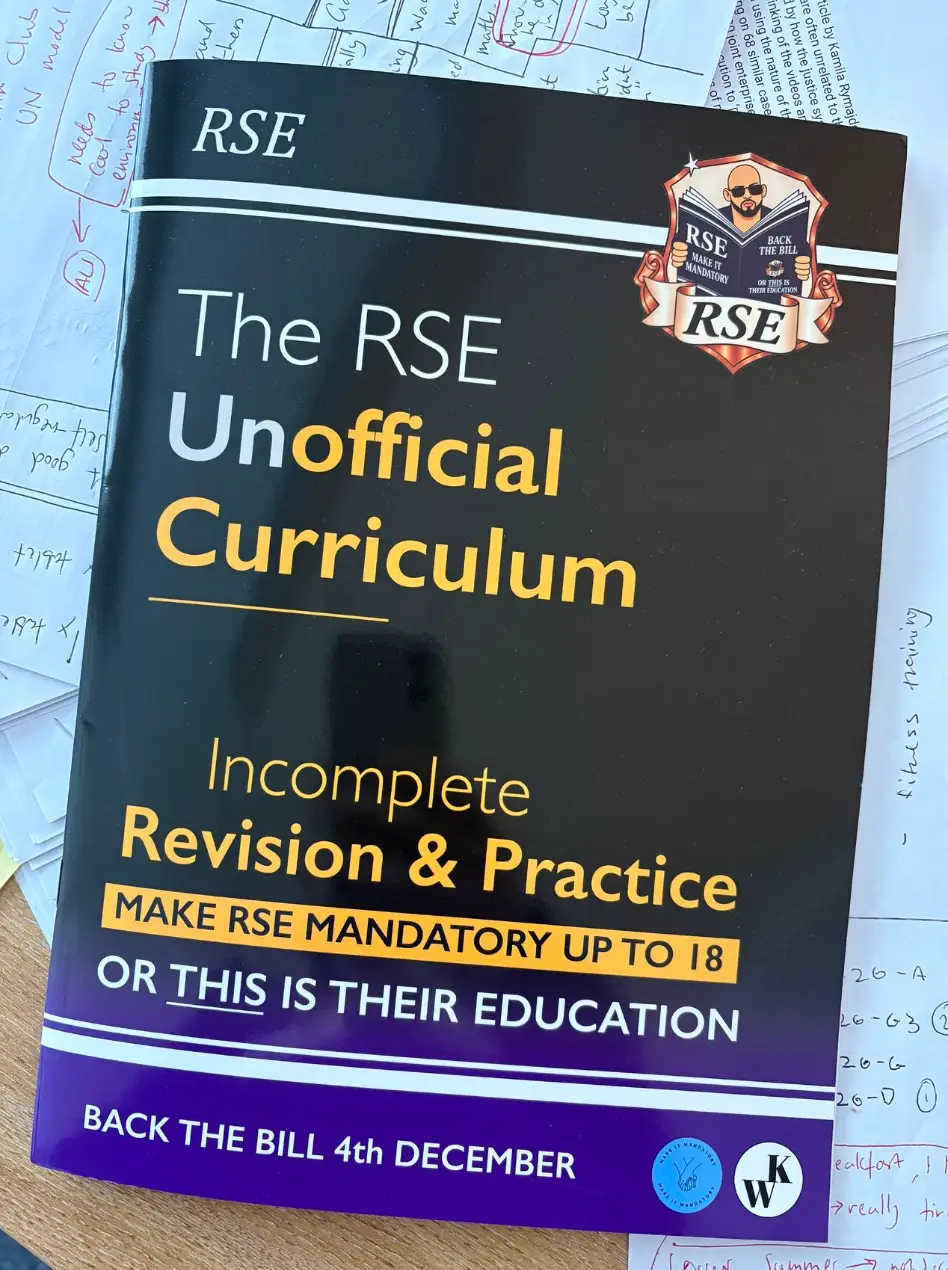
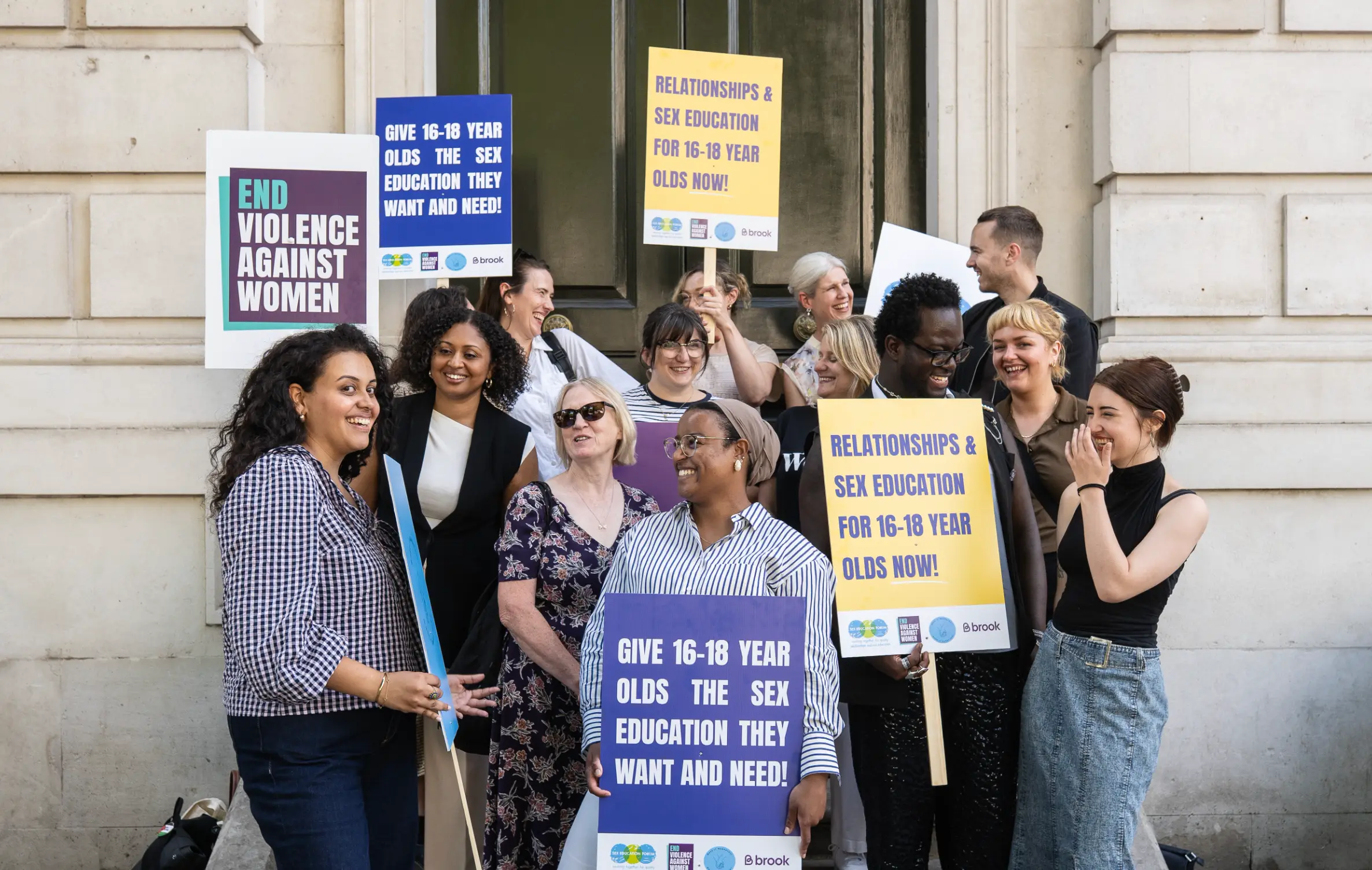
The campaign is now backed by organisations including the End Violence Against Women Coalition, Brook, the Sex Education Forum and Killed Women, they have secured a Private Member’s Bill sponsored by MP Alistair Strathern, which would make RSE mandatory for young people up to the age of 18.
The Bill is due to have its second reading on 4 December 2026, a crucial moment for campaigners who want the change written into law, rather than left as a promise.
As part of LADbible Media Group's For F**k's Sake campaign, which aims to encourage more honest conversations about sex and relationships, Tyla is supporting calls for young people to be better equipped to navigate real-life relationships.
The campaign is also shining a light on the gap between what young people are exposed to online and the education they receive about consent, respect and healthy relationships.
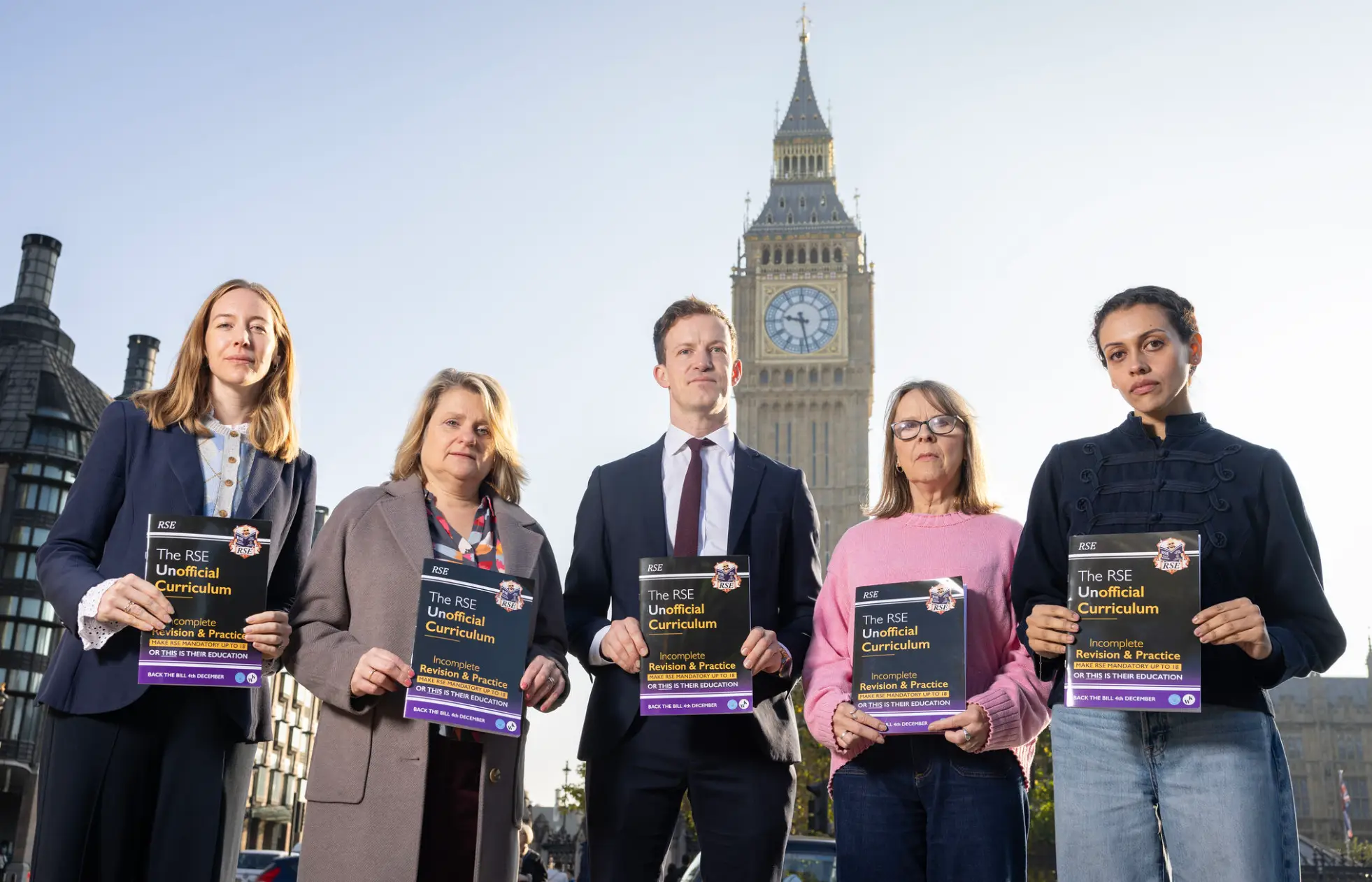
Petron is taking that message directly to Parliament on Wednesday (25 November), where hordes of young people and campaigners are calling on MPs to back the vital Bill.
TV personality and campaigner Georgia Harrison is also lending her support, standing alongside those demanding better education and stronger protections for the next generation.
'They just need to do the right thing and vote'
For Petron, the need for change is not theoretical, and she believes wholeheartedly that the consequences of leaving young people without the right information are already being felt.
She is particularly concerned about the number of teenagers experiencing forms of abuse that can be difficult to identify, including economic control.
Research carried out for the campaign's Unofficial Curriculum project highlighted the scale of the issue, with Petron saying she was shocked to discover how many teenage girls had experienced financial control from a partner.
"I found that one in five teenage girls in England has experienced being economically controlled by a partner - that could involve having access to her bank account, taking over her PINS, taking out Klarna payments in her name, racking up debt," she recalled. "That was shocking for me."
She also worries about young people turning to AI chatbots for relationship advice, rather than speaking to teachers or trusted adults.
It's why Petron believes education must evolve alongside the pressures young people face, and why she is so determined that the Bill does not get delayed.
"I’ve been doing this for six years, and I’ve given them so many chances to change the law and make amendments to bills, and they’ve not taken it, or they’ve said no," she continued. "Are you actually committed if you’re turning down every opportunity to legislate?
"They say, 'We want to eliminate violence against women and girls', but every time they’re presented with the opportunity, they don’t take it. I’m sceptical.
"This bill is a once-in-a-lifetime opportunity. I’ve done all the hard work alongside everyone behind the research involved in this campaign, and I’m giving it to lawmakers on a silver platter. They just need to do the right thing and vote."
'They've lost their daughters forever; they're never coming back'
Petron is also conscious of the families who have campaigned alongside her, including those who have lost teenage daughters to violence.
"The more they delay, or say they want to wait to implement a different bill, the bigger the cost," she said. "A lot of the people who’ve campaigned alongside me are bereaved families - families whose teenage daughters have been murdered by boys at their school.
"They’ve lost their daughters forever; they’re never coming back. Those stories remind us of the cost of delayed action. It’s so painful to think of there being other priorities for lawmakers."
For Petron, the Bill is about more than adding two years of lessons to the timetable. It is about giving young people the tools to recognise harmful behaviour, understand what a healthy relationship should look like and know where to turn if something feels wrong.
She wants boys to understand the risks of toxic masculinity and misogyny, and to see positive role models instead of being drawn towards creators who promote harmful attitudes.
"We haven’t been divisive with our campaign," she emphasised. "This is common sense. This education already exists. We’re not asking for a huge funding package or to create a huge, expensive new law. This education exists for children in primary schools up to 16; we’re just asking the Government to add two more years.
"If you’re giving it to a seven-year-old, why are you not giving it to a 17-year-old? A 17-year-old might actually be having sex, or trapped in an abusive relationship with no idea. It doesn’t add up."
'This gap in the law is negligent'
Despite the years of campaigning, Petron admits that the possibility of the Bill passing still feels difficult to imagine.
"I’d be in disbelief, which is awful to say, because I should be really confident," she said. "But in politics, you just don’t know which way something is going to go."
With years of campaigning behind her, Petron claims that if the Bill does pass this week, the biggest feeling would be relief.
"Right now, it feels like this gap in the law is negligent of the Government; I think it’s dangerous," she admitted. "I don’t just think it’s an oversight. It’s putting a lot of young women and girls at risk."
And after everything she has experienced, there is one message she wants to reach the teenagers who might be reading this and quietly recognising parts of their own relationship in her story.
Petron says abuse often thrives on shame - something she remembers feeling herself when she was younger.
"Even me, when I was younger, I felt embarrassed and ashamed about what I was going through," she remembered. "I think a lot of abusers try to use that to make women and girls silent.
"I’d try to encourage other teenage girls who feel they may be trapped in an abusive situation not to feel embarrassed about what they’re going through, because the person who should feel ashamed is the perpetrator.
"I’d also encourage them to talk to someone. My life changed when I told someone what was going on, and then thankfully, I was able to get justice and move on. It can be life-changing to share that burden with someone else, rather than carrying it on your own shoulders."
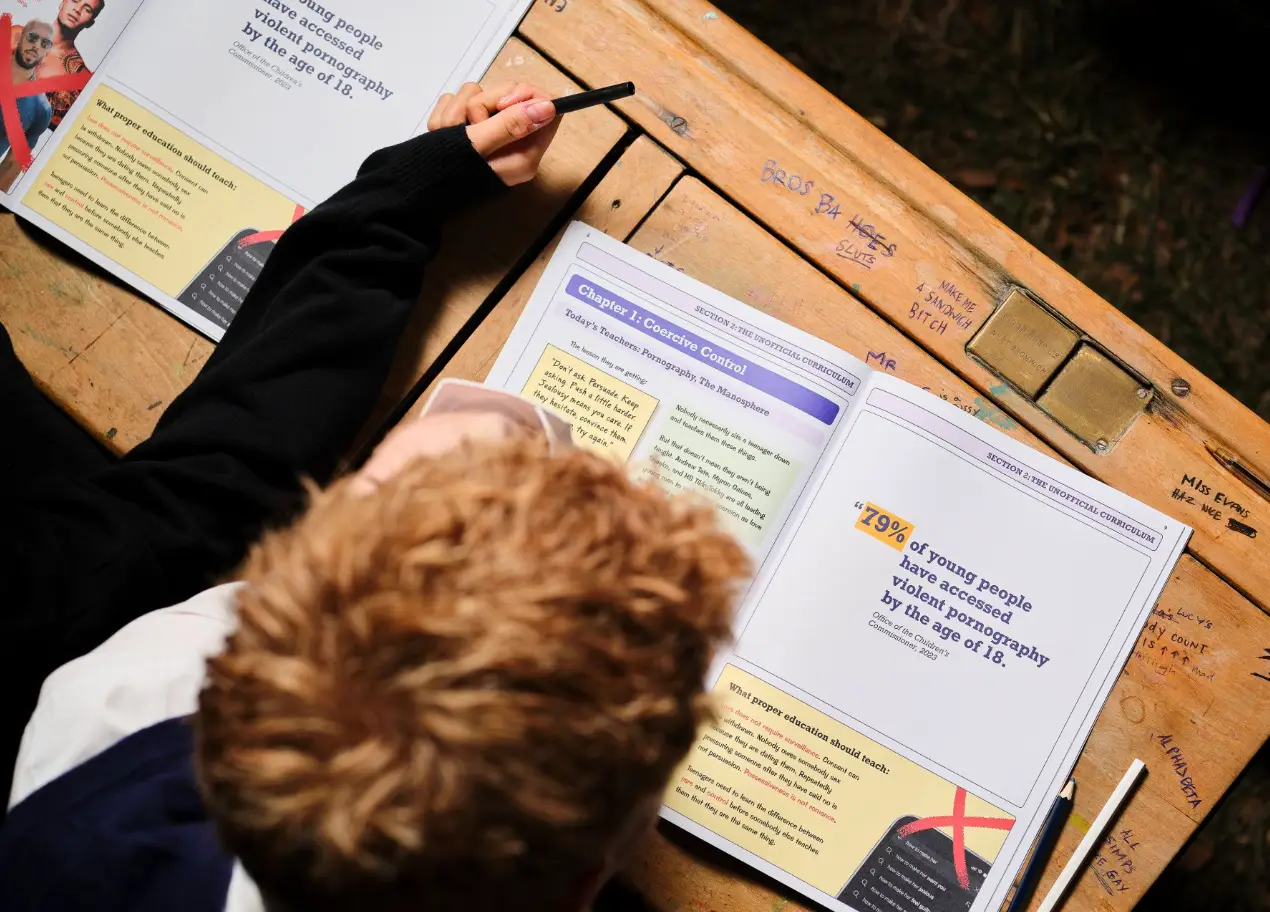
Six years ago, Petron began campaigning because she wondered whether her own life might have been different if someone had taught her how to recognise abuse.
Now, with more than 100,000 people behind her and a Bill heading to Parliament, she is fighting for the next 16-year-old who might otherwise be left trying to work it out alone.
LADbible’s FFS! campaign is calling on the public to email their MP here: https://actionnetwork.org/letters/make-it-mandatory ahead of 4 December and back the push for compulsory, age-appropriate RSE through age 18 in post-16 education.
Topics: News, Sex and Relationships, UK News, Crime, Real Life
 Rhianna Benson