
GTA VI's 'simp' backlash exposes a disturbing new trend amongst men, say experts

If you thought we'd reached a point where men could do the bare minimum in a relationship without expecting a medal, apparently not.
Because in the world of Grand Theft Auto VI, even picking up a few groceries and making your home a little more welcoming can apparently be enough to get you branded a 'simp'.
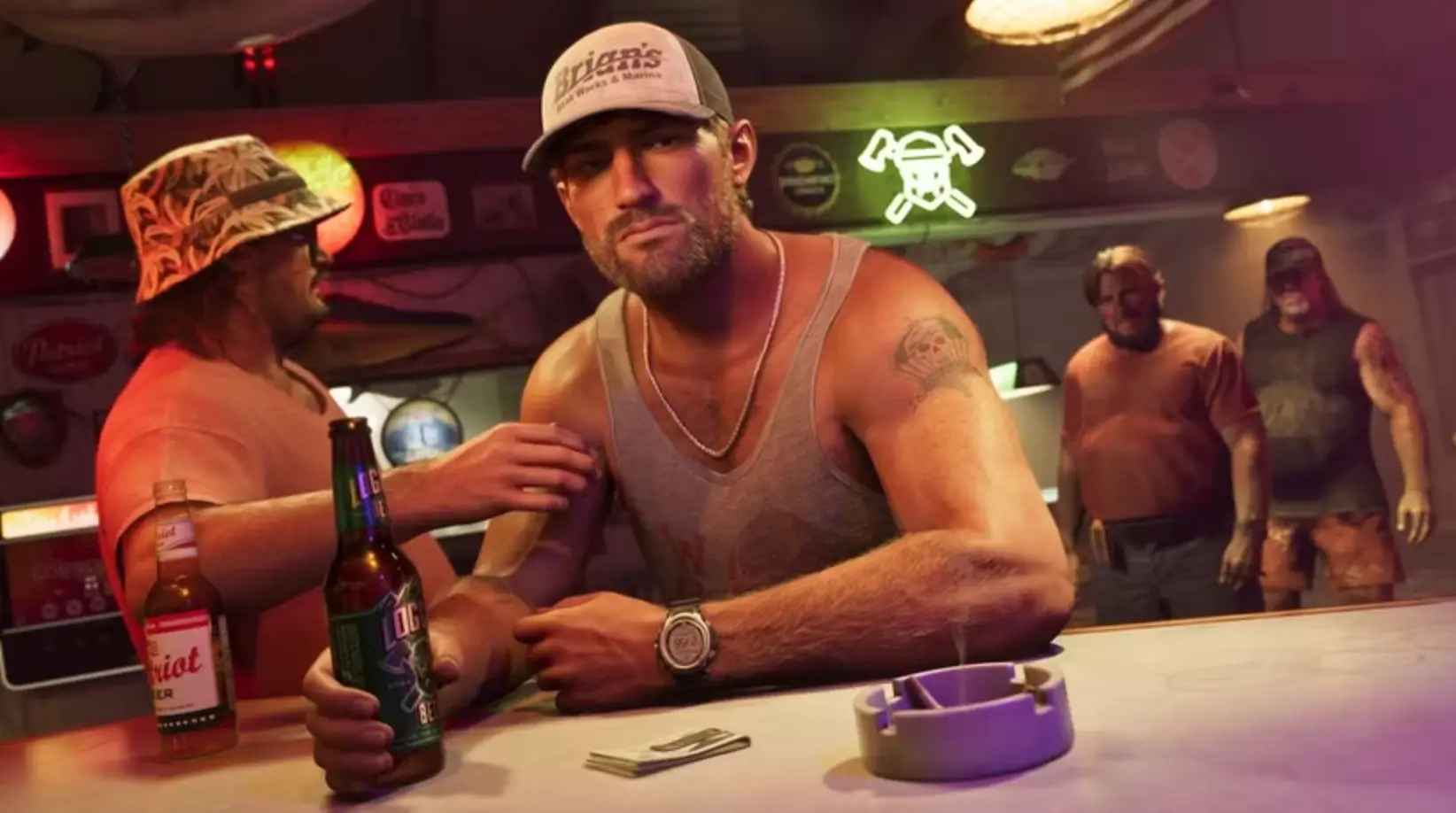
Yes, really. The latest instalment of Rockstar's hugely popular GTA franchise has sparked an unexpected debate online, with some players taking issue with protagonist Jason Duval's apparent willingness to do everyday domestic tasks and show affection towards his girlfriend, Lucia.
And while you might think that having a man who actually contributes around the house would be a welcome change from the usual video game macho-man stereotype, some corners of the internet are seemingly not impressed.
Advert
In fact, the backlash has become so noticeable that it has caught the attention of several media outlets, which reported on gamers accusing the game of becoming too soft, with one online personality even dubbing its fictional Vice City 'Simp City'.
Comedian and online personality Patrick Cutler told TMZ over the weekend that he hadn't signed up to run errands or dote on a virtual girlfriend, complaining that the game had become bogged down with storylines he found uninteresting.
Several other reports highlighted the criticism directed at Jason for staying loyal to Lucia, with some players complaining about having to buy groceries, complete chores and play the devoted boyfriend rather than simply causing chaos.

But the scandal has left a number of spectators feeling stumped over why exactly a man showing care for his partner being interpreted as a sign of weakness. And, more importantly, critics have been left wondering what that tells us about the way some men are being taught to view relationships.
A video game character has become the internet's latest 'simp'
For anyone unfamiliar with the franchise, GTA VI follows Jason and Lucia, a criminal couple navigating life together in the fictional state of Leonida, with Vice City at its centre.
The game combines the familiar Grand Theft Auto formula of crime, chaos and open-world exploration with a relationship at the heart of its story.
But it is some of the quieter moments that have seemingly ruffled feathers.
According to reports, players have taken issue with Jason doing things like shopping and carrying out domestic tasks for Lucia. Importantly, these activities are optional rather than compulsory parts of the main story.
Still, that hasn't stopped some online commenters from interpreting his behaviour as evidence that he's somehow less masculine.
In a Reddit discussion titled 'I love the game, but it's time to accept that our protagonist is a dull simp', one player questioned Jason's priorities, writing that his character's life goal seemed to be doing the weekly shop for Lucia rather than climbing the criminal hierarchy.
Other commenters pushed back, with one describing Jason as a good man, while another joked that apparently having a girlfriend was enough to make him a terrible character.

And while not every criticism of Jason is necessarily rooted in misogyny (players are perfectly entitled to dislike a character or find a storyline boring), the reaction raises a bigger question about why domestic responsibility and affection are being treated as inherently 'unmasculine'.
Because buying food for someone you love isn't exactly a radical act - neither is making sure your shared home is somewhere they feel comfortable.
Yet, according to experts, the fact that these ordinary gestures have become a talking point is revealing.
Why is looking after your partner being treated as weakness?
Gemma Nice, a certified sex and relationship coach and resident sex and relationship expert at Erobella, believes Jason's actions are actually a pretty good example of what a healthy relationship should look like.
" A healthy partnership is built on mutual respect, teamwork, and the three core pillars of communication, trust, and intimacy," she told Tyla.
"Watching my husband play GTA 6, it's clear that fixing up the house and picking up groceries before Lucia comes home isn't even a compulsory part of the main story. Jason is doing all of those kind things purely out of love and care to build up his connection with her."
And, according to Nice, that's precisely the point.
"Far from being 'weak,' showing up for your partner through everyday acts of service makes them feel seen, safe, and desired," she continued.
Shahem Mclaurin, a trauma therapist, public educator and founder of Freedom Collective Therapy, agrees that looking after a home should never be viewed as a favour a man does for a woman.

"Healthy partnership is two people sharing the work of a life together, not one person performing care and the other receiving it," Mclaurin explained.
"That includes the invisible stuff: remembering the groceries, noticing the leaky sink, checking in when someone’s stressed. Care isn't a favour you do for your partner. It's part of being an adult in a relationship."
It's a pretty simple concept, really. Being in a relationship means being part of a team, not expecting your partner to take care of everything while you sit back and reap the benefits.
Esther Lapite-Garrett, a licensed psychologist and founder of Alafiora, also stresses that healthy relationships are built around mutual respect, boundaries and consent.
"For me, a healthy partnership is when individuals who are together are able to collaboratively agree on the boundaries, the permissions, the consensual aspects of the relationship, and the parties involved are actively engaging in that," she added.
In other words, a relationship isn't about one person having power over the other - it's about understanding what both people need and respecting it.
But why is domestic labour still seen as women's work?
And why does a man doing the food shop or fixing up his home still provoke such a reaction?
According to the experts, we're dealing with generations of conditioning that have taught people to associate domestic labour with women and masculinity with dominance.

Nice believes that seeing a male action hero take pride in creating a welcoming home challenges outdated ideas about what men should and shouldn't do.
"Even in a fictional world, we carry deeply ingrained societal conditioning and outdated gender roles that label cooking, cleaning, and home upkeep as 'women's work'," she noted.
"When men are raised to view domestic tasks as beneath them, or have always had things done for them, seeing a male action hero take pride in preparing a welcoming home for his partner challenges that fragile ego."
Mclaurin similarly argues that the issue goes much deeper than a few disgruntled gamers.
"Because patriarchy teaches us that care is feminine and therefore lesser. That invisible labour is often unpaid labour, and it reflects systemic mechanisms intended to subjugate women," he explains.
"So when a man does something as ordinary as buying groceries, some people read it as him giving up status. A game is just a mirror. The reaction to Jason tells us more about the culture than about the character."
Dr Bernadette 'bird' Bowen, a non-binary expert with a PhD in media and communication whose work focuses on identities, relationships, technology and systems of power, also points to the historical structures behind these expectations.
"Because that's the default setting of this colonial capitalist nation that has dehumanised, exploited, and feminized gender marginalised folks and care-work for over 250 years," they say.

They argue that these attitudes are not simply confined to gaming, but are reflected in wider cultural expectations around gender, sexuality and relationships.
Lapite-Garrett also highlights how deeply ingrained these assumptions can become, explaining that people often rely on learned stereotypes and social conditioning to make sense of the world.
She points out that we repeatedly see women portrayed as the default caregivers in films, television, everyday conversations and even political messaging.
As a result, even people who don't consciously subscribe to traditional gender roles can find themselves influenced by the expectations constantly presented around them.
How the manosphere is changing what young men think masculinity means
Perhaps the most concerning part of the debate is what it says about the influence of online manosphere culture.
For those unfamiliar with the term, the manosphere describes a loose network of online communities and influencers that promote particular ideas about masculinity, relationships and gender. While not every conversation about men's experiences or challenges belongs in this category, some of its most prominent voices promote hostility towards feminism and portray relationships as a battle for power and control.
And experts fear that young men absorbing these messages are increasingly being encouraged to see empathy, vulnerability and kindness as embarrassing.

Nice says: "Manosphere content trains young men to view relationships as a constant power struggle where vulnerability, empathy, and kindness equal weakness."
She explains that when boys and young men absorb the idea that showing care makes them a 'simp', they can begin to prioritise status and control over genuine emotional connection.
"They end up chasing surface-level status and control instead of learning how to actually communicate, listen, and build genuine trust," Nice went on.
Mclaurin believes the appeal of this content is partly rooted in loneliness and a lack of positive guidance.
"It sells young men a very narrow idea of strength: dominance, detachment, never needing anyone," he says.
"A lot of boys find that content when they're lonely and looking for direction. It promises respect, but what it really teaches is that tenderness is a weakness, which leaves them more isolated and less able to have the relationships they actually want."
Lapite-Garrett warns that social media algorithms can make this problem even worse, particularly when young men are repeatedly exposed to the same extreme opinions.
She explains that manosphere content takes existing gender stereotypes and turns them into rigid rules, suggesting that domestic labour is not simply something women are more likely to be expected to do, but something that defines their entire purpose.
"Manosphere's content state that it is. That is the only mechanism to which women exist for. It is the only action that they can engage in," she explained.
She added that algorithms can create the illusion that these beliefs are universally shared, even when they represent only a small section of the population.

Dr Bowen also argues that the manosphere reinforces expectations young men have already been taught to associate with masculinity.
"The manosphere sells people assigned male at birth who they are already taught they are supposed to be," they continued, adding that these spaces can exploit men's insecurities while discouraging them from questioning the very social expectations that may be making them unhappy.
So, how do we change things?
It's easy to laugh at the idea of a man being called a 'simp' for buying household supplies for him and his Mrs, but the experts believe the conversation deserves to be taken seriously.
Because when young men are repeatedly told that caring about someone makes them weak, it can become much harder for them to build the kind of relationships they might actually want.
So what can be done?
Nice believes we need to start redefining strength, showing young men that kindness, emotional maturity and accountability are qualities to be proud of.
"When young men see that caring for a partner, sharing the load at home, and being open, honest, raw, and real actually deepens intimacy rather than diminishing their masculinity, they stop looking to toxic online spaces for validation," she told us.
Mclaurin, meanwhile, believes positive male role models are particularly important.
"Men in their lives modelling it out loud matters more than any lecture: dads, coaches, older brothers, creators," he went on. "And we need spaces where boys can talk about loneliness and rejection without being mocked, because the manosphere fills exactly that gap."
Lapite-Garrett also believes men who have moved away from these communities can play an important role in challenging their former beliefs and helping others do the same.
She argues that women should not be expected to shoulder the responsibility of educating people who may already be hostile towards them.
Instead, men who recognise the damage caused by these attitudes should be willing to challenge their peers and help create healthier conversations.
Dr Bowen also believes meaningful change will require both individual reflection and wider societal changes, including better sexual and racial education.
Arguably, though, maybe the biggest takeaway from this whole debate is that we need to stop confusing being emotionally unavailable with being 'manly'.
There is nothing embarrassing about buying your partner dinner, remembering to pick up the shopping or making sure the house is somewhere you both want to come home to.
And if Jason Duval is a 'simp' for doing those things, perhaps he isn't the problem after all.
Topics: Entertainment, Real Life, Life
 Rhianna Benson