
Doctor issues fresh warning on ‘zombie rabbits’ found in US despite previous advice

A new warning has been issued over the ever-increasing number of 'zombie rabbits'.
The poor bunnies have been spotted in backyards and the wild across the US, with many fearing there is now a wider outbreak as they continue to spread.
With the also concerning 'zombie squirrels' causing worry too, it's a bad time to be an animal lover.
Originally, the rabbits were first seen in Colorado with strange tentacle-like growths appearing on their faces, heads, necks and shoulders.
Advert
However, sightings have now also been reported in Minnesota, Nebraska and South Dakota.
The growths have led to the creatures being called 'Cthulhu bunnies', thanks to their similarities with the fictional H.P. Lovecraft character.
But what exactly is happening to these unfortunate rabbits?
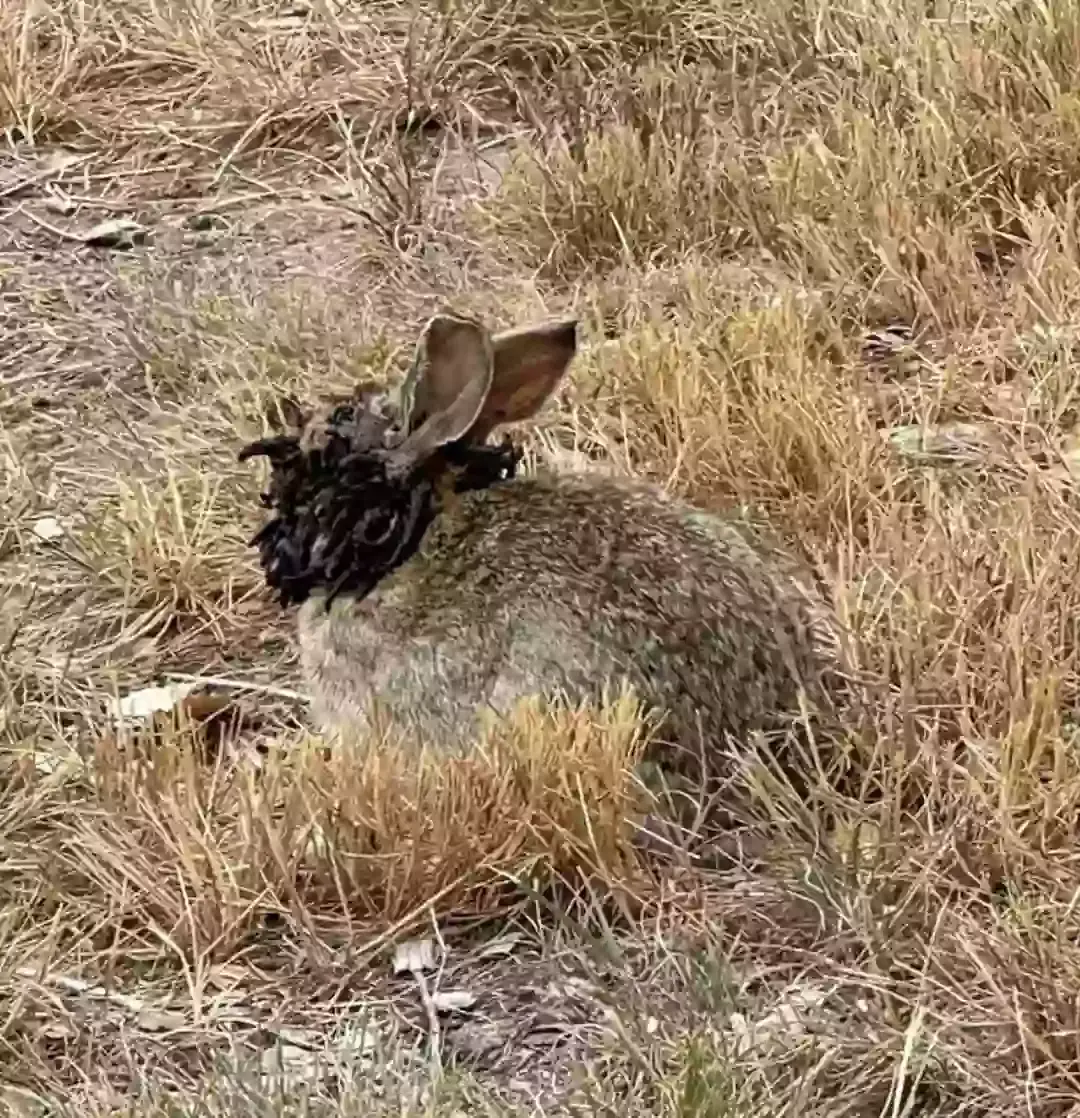
The painful-looking condition has been blamed on cottontail rabbit papilloma virus, which is also referred to as the Shope papilloma virus, and it is transmitted through mosquito and tick bites.
Previously, experts had reassured the public that the infected rabbits were of no risk to humans, and the virus was only transmitted from rabbit to rabbit. But now, one doctor has issued warnings about handling the bunnies, no matter how tempting it is to try and help them.
Dr Omer Awan, of the University of Maryland School of Medicine, told the Daily Mail about the risks involved and explained how contact could lead to contracting other infections or diseases.
"You're not going to get CRPV, and you likely won't show symptoms of it, however, you could still be indirectly exposed through ticks or mosquitoes that have fed on infected animals, which means you might contract a different disease," he said.

Ticks can carry Lyme disease, a condition that many celebrities have been diagnosed with, such as Justin Bieber and Justin Timberlake.
The bugs also carry Rocky Mountain Spotted Fever, while mosquitoes are carriers of many illnesses, such as the West Nile Virus, Zika Virus, Dengue Fever and Chikungunya.
Dr Awan said the best thing you can do is to avoid the rabbits and to keep pets away from them, too.
He said we shouldn't be surprised if cases continue to rise, adding to the outlet: "Because temperatures are becoming warmer, we're gonna start to see it become more prevalent as the years go on, and also to spread in areas where it hasn't been before."

He added: "I do believe that this will become more of an increasing problem as time goes on".
While he says it is 'extremely unlikely' that CRPV will transmit to humans, he refused to rule it out: "You can never say never with science or with viruses, because they always mutate and things can change very fast, but I don't see that happening in the near future with CRPV."
The warmer weather is to blame for the spread, says the doctor: "This is the time when mosquitoes and ticks thrive in these warmer temperatures, so because they're able to thrive, they're able to infect more rabbits, and hence, we're getting more CRPV cases."
It's not just CRPV increasing either, as he warns: "If you take a look at Lyme disease, for example, we're starting to see it in areas that we never saw it before... places like southern Canada, northern states on the East Coast, like Maine."
 Jen Thomas