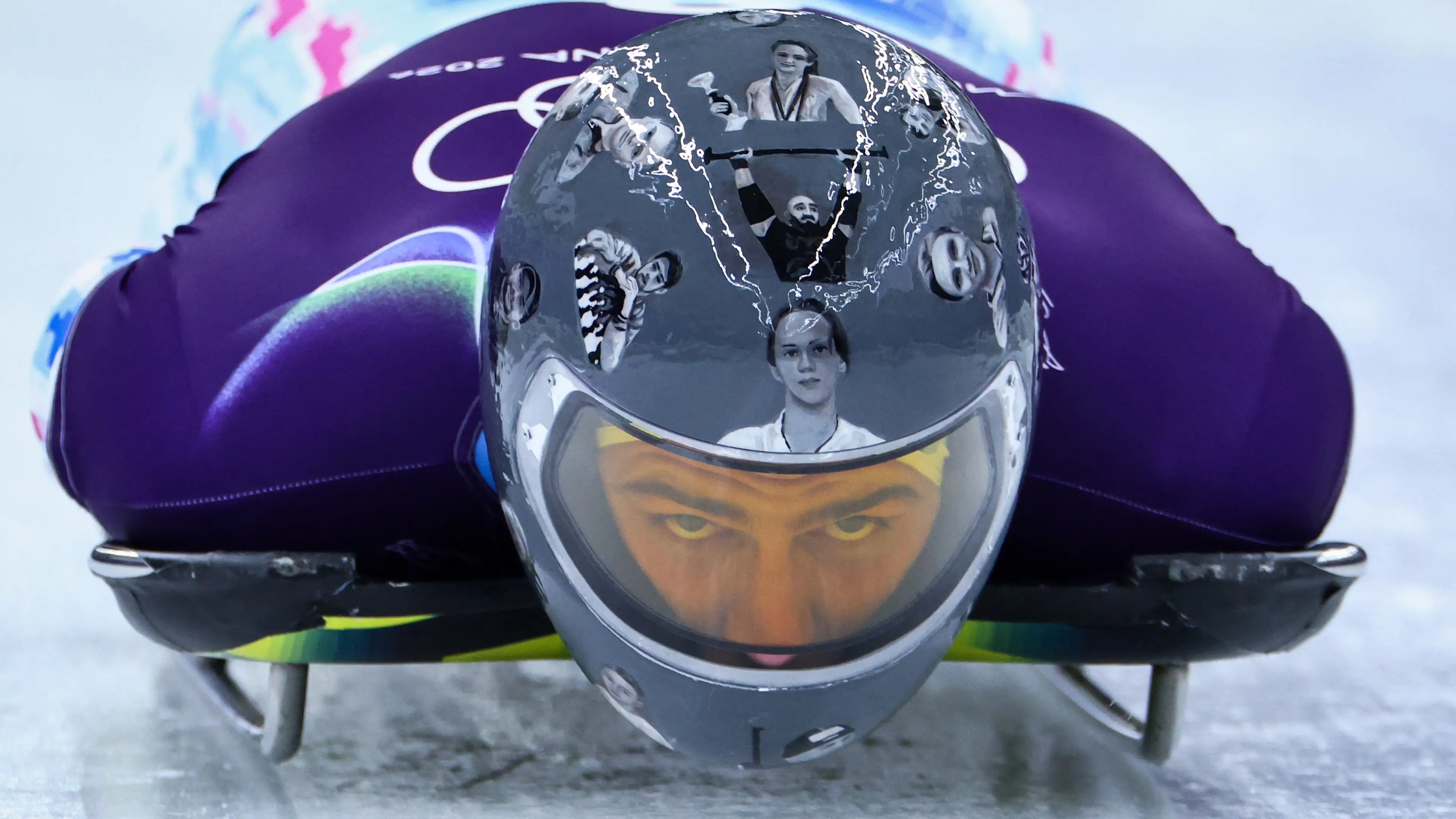
Ukrainian athlete banned from Olympics after disobeying IOC ruling over helmet

Ukrainian skeleton racer Vladyslav Heraskevych has officially been banned from competing in the Winter Olympics.
News of the 27-year-old's disqualification was shared today (12 February) after he continued to wear a helmet depicting images of athletes killed during Russia's invasion of his home country – something the International Olympic Committee (IOC) claims breaks its rules.
After submitting a formal request to wear it during races and training sessions, Heraskevych was informed by the IOC that his helmet violates the competition's rules on political statements, who cited the Olympic Charter and Athlete's Expression Guidelines.
The athlete had already worn it to a Milan Cortina training session and had plans to continue doing so in order to draw worldwide attention to the conflict between Ukraine and Russia, using the sporting event as a platform.
Advert
Angry at the IOC's decision and determined to wear the helmet, the Olympian said in a social media statement that the committee were 'betraying those athletes who were part of the Olympic movement'.
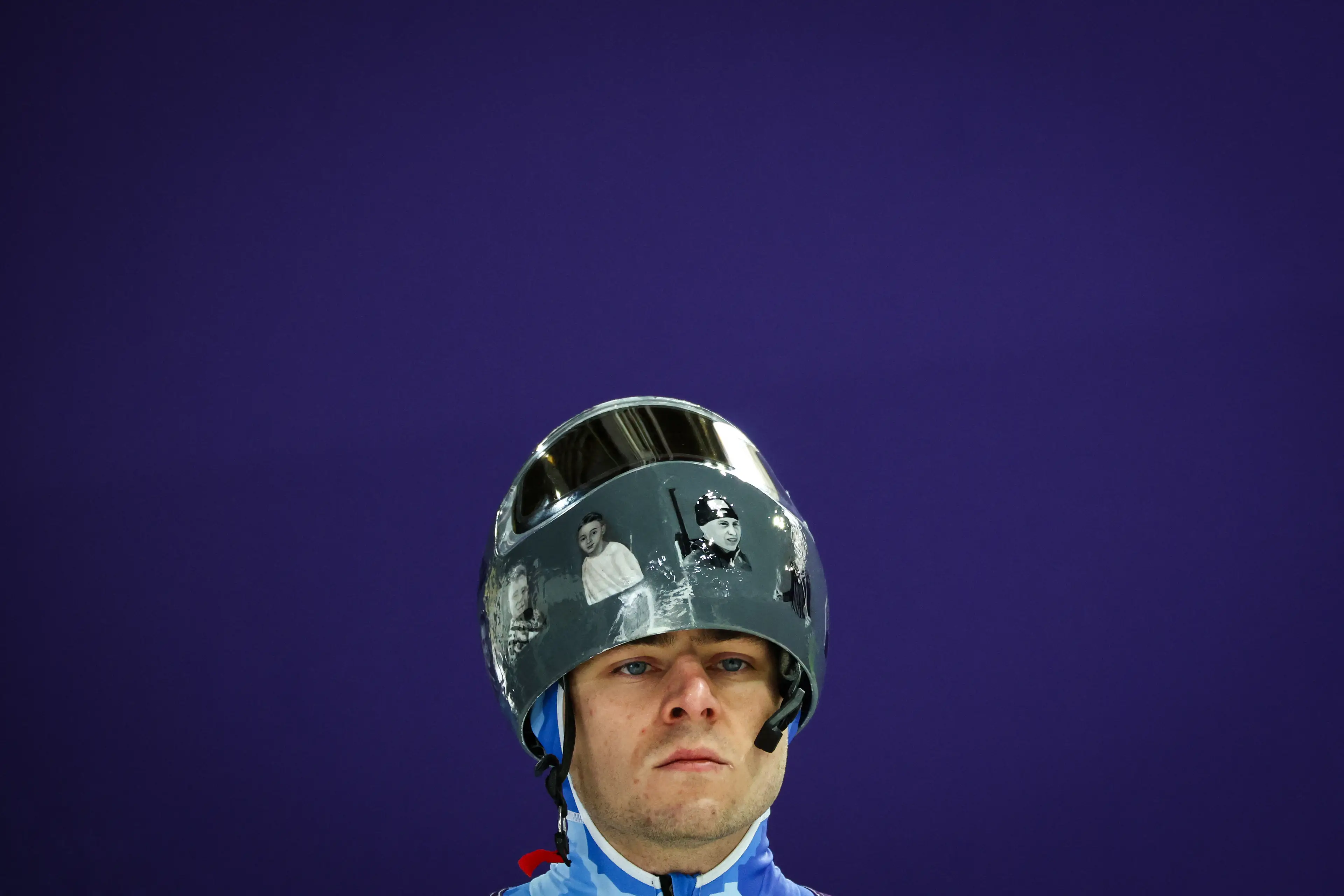
As reported by BBC Sport, the president of the IOC, Kirsty Coventry, visited Heraskevych at Cortina's sliding track at 7.30am local time this morning before the first skeleton heat in a last attempt to convince him not to wear it.
However, according to the IOC, he 'did not consider any form of compromise'.
In a statement released today, the IOC said: "Having been given one final opportunity, skeleton pilot Vladyslav Heraskevych from Ukraine will not be able to start his race at the Milano Cortina 2026 Olympic Winter Games this morning.
"The decision followed his refusal to comply with the IOC’s Guidelines on Athlete Expression. It was taken by the jury of the International Bobsleigh and Skeleton Federation (IBSF) based on the fact that the helmet he intended to wear was not compliant with the rules."
It also said the IOC was 'very keen' for him to compete, which is why they 'sat down with him to look for the most respectful way to address his desire to remember his fellow athletes who have lost their lives following Russia's invasion of Ukraine'.
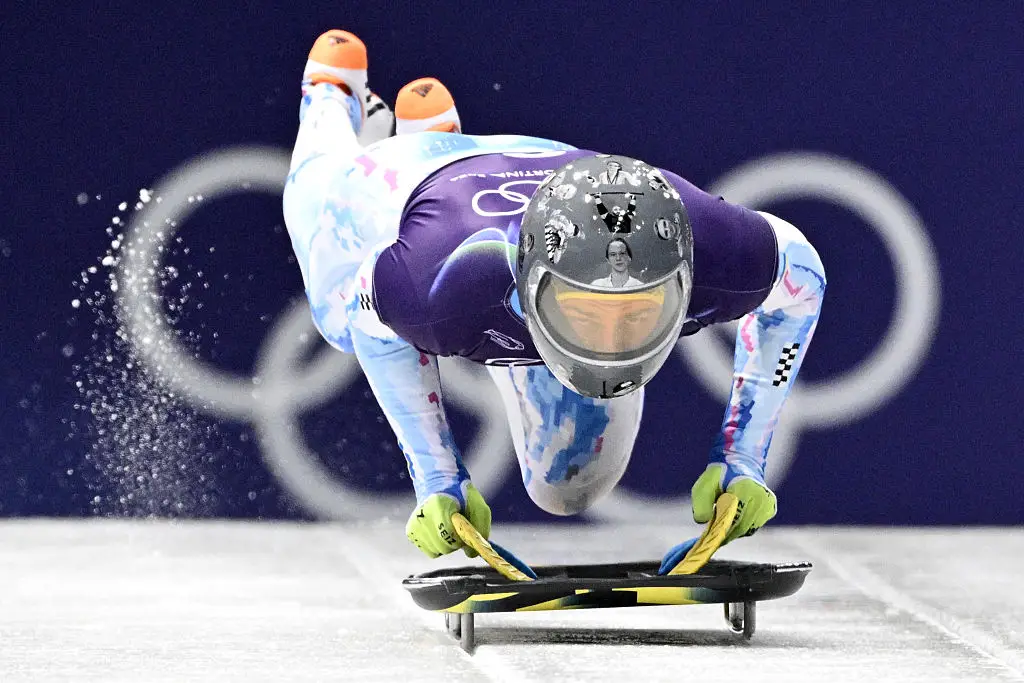
They said he could pay tribute by wearing a black armband during competition and would be allowed to show his helmet in mixed zones, news conferences and on social media.
In a statement on Instagram following the ban, Heraskevych simply penned: "This is [the] price of our dignity."
Speaking to BBC Sport, he added: "I could be among the medallists in this event, but suddenly because of some interpretation of the rules which I do not agree with, I am not able to compete while other athletes in the same situation were able to compete, and they didn't face any sanctions.
"'Expression guidelines', I believe it's a very big term. What do you consider as 'expression'? Many athletes here have helmets with different paints [colours] and I believe it's also a kind of expression.
"Some athletes have national symbols, it's also an expression but for some reason their helmets were not checked. They are allowed to compete, but I am not."
You can read the IOC's full statement here.
 Madison Burgess