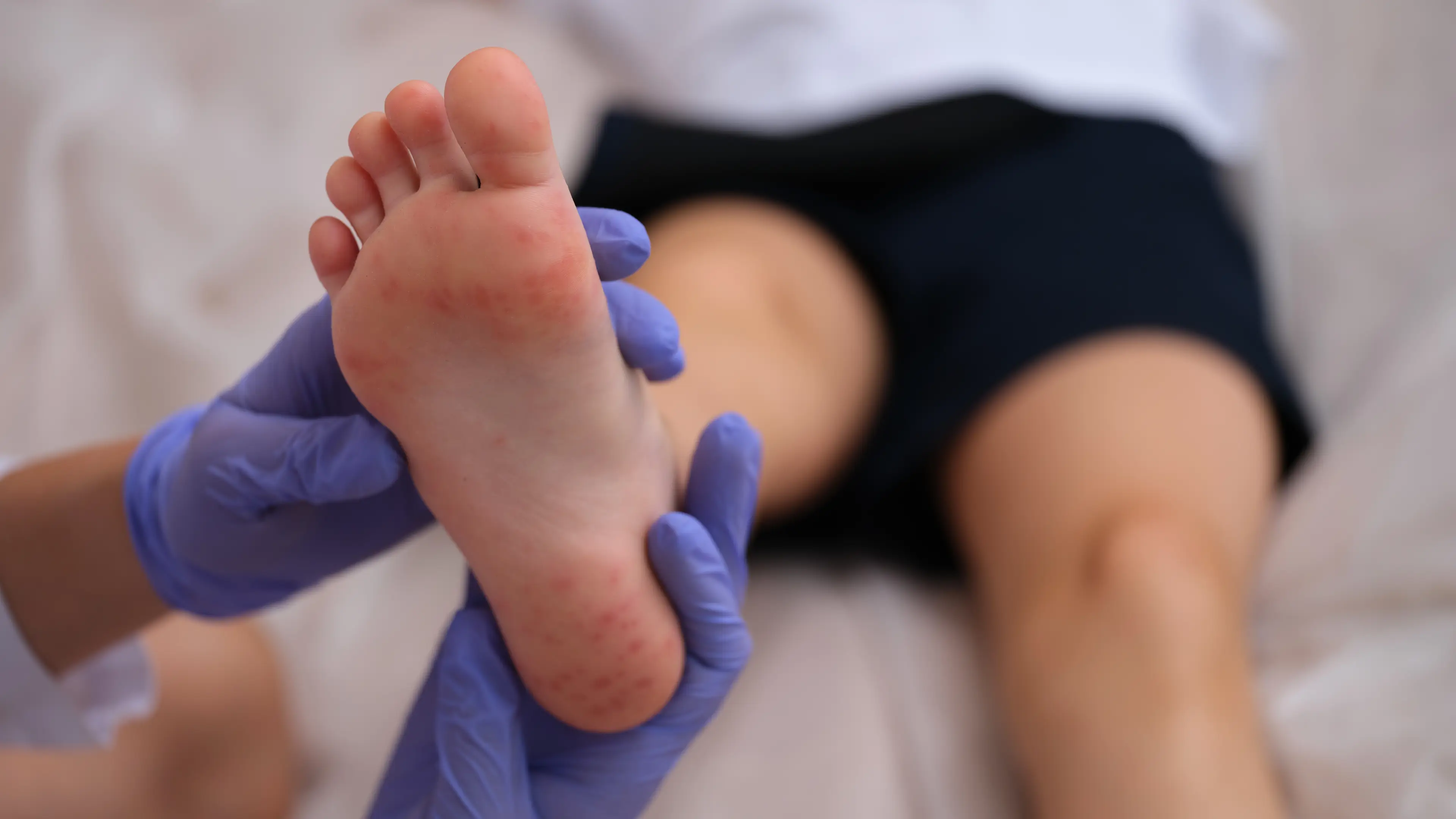
Warning issued as hand, foot and mouth disease surges

Several states across the pond are reporting a surge in cases of hand, foot and mouth disease, as experts warn over the key symptoms to look out for and how to prevent the illness.
The weekly rate of cases of the illness, also known as Coxsackieviruses, has more than tripled in America during this autumn season.
For those unfamiliar, hand, foot and mouth disease is a common childhood illness that can also affect adults.
The NHS assures that it usually gets better on its own in seven to 10 days, and you can't take antibiotics or other medicines to cure it. However, they can be used to ease pain and general discomfort in the meantime, such as paracetamol or ibuprofen.
Advert
The most common symptoms are sores in the mouth and a rash on the hands and feet, and they usually appear three to six days after infection.
Parents should look out for their little ones developing a fever and a sore throat, as well as sometimes losing their appetites and not feeling very well.

Then, a few days after the fever kicks in, you may notice painful lesions form in the front of the mouth or throat, as well as a rash on the hands and feet and sometimes on the buttocks that can also appear.
It shouldn't be itchy, but sometimes it has blisters and depending on your child's skin tone, the rash may appear red, white or grey.
'Dramatic surge'
Some US states are experiencing a 'dramatic surge' in cases of the highly contagious illness.
While the numbers are growing nationwide, the states driving the trend are Tennessee, Pennsylvania, Kansas, Ohio, Virginia, Maryland, West Virginia, and D.C.
Tennessee, in particular, has a rate which is more than double the overall national average - 487 cases per 100,000 patients, compared with 218 in other locations.
In particular, the Virginia Department of Health has outlined a notable increase in cases and local news channels have reported on a particularly widespread outbreak in Shelby County, which has made its way across 31 daycare centres, affecting more than 178 children and staff.
What symptoms should parents look out for?
- Fever (first sign of illness)
- Painful sores in or around the mouth
- Rash on hands and feet
- Sore throat
- Poor appetite
- Fatigue and lower energy levels
- Red spots on the body
- Dehydration

While there isn't loads you can do as the illness simply gets better on its own, the NHS recommends drinking cool fluids to soothe the mouth and prevent dehydration, but making sure you avoid acidic drinks, such as fruit juice.
You should also eat soft foods like yoghurt and avoid hot, salty and spicy foods.
So, what should you do to avoid hand, foot and mouth disease?
It might seem obvious, but the first thing to do is ensure you're handwashing frequently, as public health officials advise that this is the best line of defence.
You should make sure your little ones are thoroughly washing their hands for at least 20 seconds, several times a day.
Around the home, parents should also make sure surfaces are being disinfected regularly to avoid the spreading of germs. It's also worth disinfecting any toys your kids play with, too.
Finally, teaching respiratory hygiene and cough etiquette is important as the disease is transmitted through respiratory droplets.
Making sure they turn away from others when sneezing and cover their mouth and nose with a tissue or their elbow rather than their bare hands can make all the difference.
Topics: Health, US News, Parenting, News, World News
 Madison Burgess