tyla homepage
tyla homepage
  • News
    • Politics
    • Entertainment
    • Celebrity
  • Entertainment
    • Celebrity
  • Life
    • Animals
    • Food & Drink
    • Women's Health
    • Mental Health
    • Sex & Relationships
    • Travel
    • Real Life
  • TV & Film
    • True Crime
    • Tyla Recommends
  • Astrology
  • Beauty
    • Hair
    • Make-up
    • Skincare
  • Style
    • Home
  • Advertise
  • Terms
  • Privacy & Cookies
  • LADbible Group
  • LADbible
  • UNILAD
  • SPORTbible
  • GAMINGbible
  • UNILAD Tech
  • FOODbible
  • License Our Content
  • About Us & Contact
  • Jobs
  • Latest
  • Archive
  • Topics A-Z
  • Authors
Facebook
Instagram
X
Threads
TikTok
Submit Your Content
Why you might receive emergency alert warning on your phone unexpectedly
Home>News
Published 12:10 17 Jan 2025 GMT

Why you might receive emergency alert warning on your phone unexpectedly

87 million devices are set to be sent a 10-second warning at some point this year

Rhiannon Ingle

Rhiannon Ingle

google discoverFollow us on Google Discover
Featured Image Credit: Anna Barclay/Getty Images/Getty Stock Images

Topics: Life, News, UK News, iPhone, Technology, Apple

Rhiannon Ingle
Rhiannon Ingle

Rhiannon Ingle is a Senior Journalist at Tyla, specialising in TV, film, travel, and culture. A graduate of the University of Manchester with a degree in English Literature, she honed her editorial skills as the Lifestyle Editor of The Mancunian, the UK’s largest student newspaper. With a keen eye for storytelling, Rhiannon brings fresh perspectives to her writing, blending critical insight with an engaging style. Her work captures the intersection of entertainment and real-world experiences.

Advert

Advert

Advert

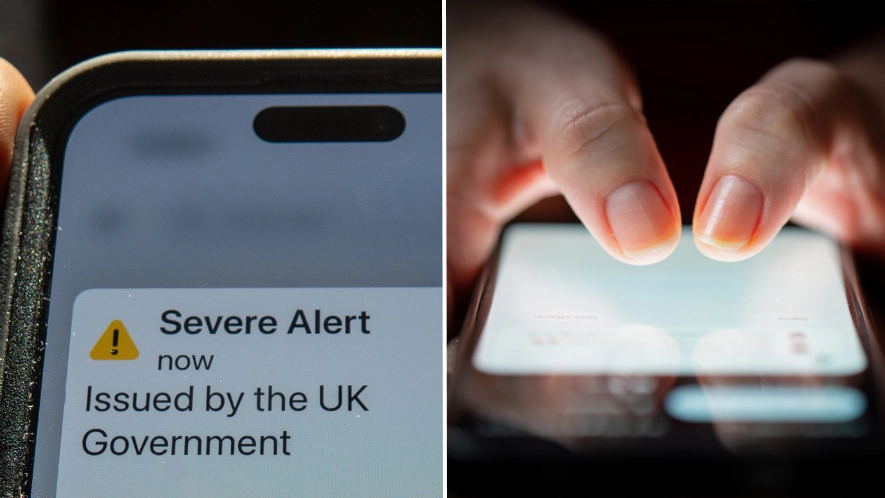
Millions of people across the UK are set to receive an emergency alert warning on their phone unexpectedly.

The Government has issued yet another test of its 'Armageddon alert' system which will see 87 million devices sent the 10-second warning.

The reason behind the Emergency Alert System (EAS) is to warn the public if there is a danger to life nearby and they will be carried out following a recommendation from the Covid inquiry with regards to crisis preparation.
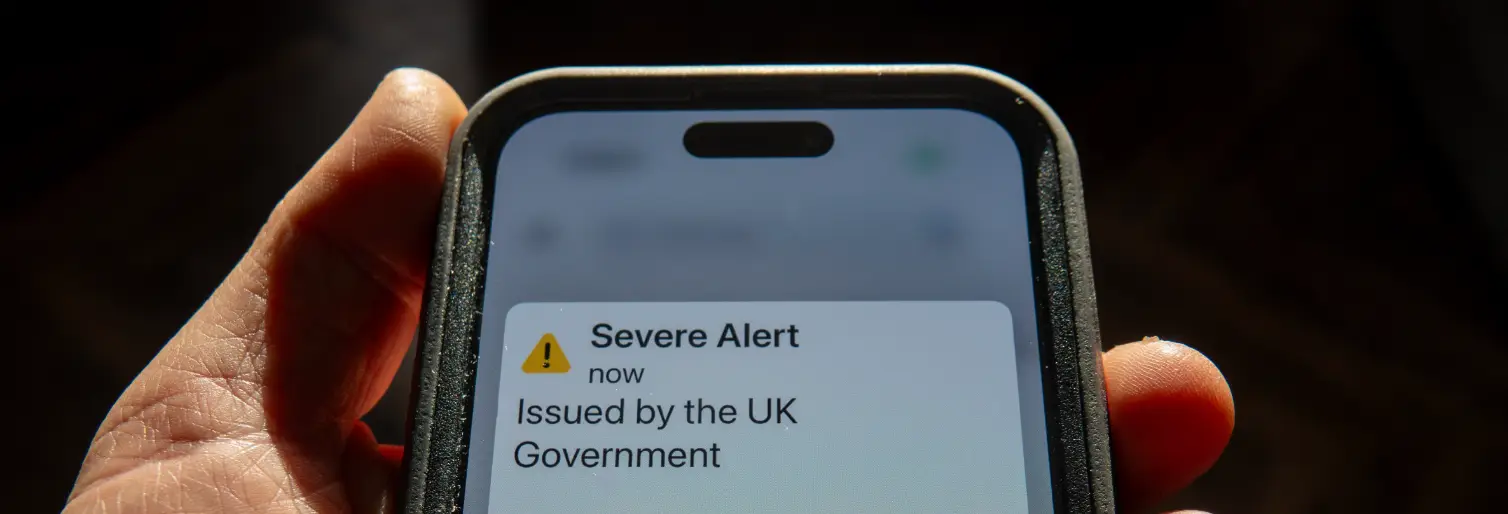
As many as 87 million devices will be sent the 10-second warning (Anna Barclay/Getty Images)

Advert

The alert in question has been rolled out four times since it was launched in 2023, with one of the most recent instances seeing it sent to Brits in relevant areas in the midst of Storm Darragh, advising them to stay indoors following the red warning from the Met Office.

When it was last tested, the message that appeared on phones reportedly read: "This is a test of Emergency Alerts, a new UK Government service that will warn you if there’s a life-threatening emergency nearby.

"In a real emergency, follow the instructions in the alert to keep yourself and others safe.

"Visit gov.uk/alerts for more information.

"This is a test. You do not need to take any action."

The alert will also display a notification which will have to be acknowledged by the phone's user before being able use other features on their device.

Similar alert systems have been used successfully in a number of other countries including the US and the Netherlands (Tim Robberts / Getty Images)

The decision was announced in the House of Commons by Cabinet Office minister, Pat McFadden, who said: "Since July, we have also sent two emergency alerts to provide advice to the public in life threatening situations during Storm Darragh, for example, because of a very rare red danger to life warning, the alert was sent to over 3 million people in affected regions.

"And more recently, we issued a very localised warning over flooding danger.

"The government will carry out a full national test of the Emergency Alert System later this year. This will ensure that the system is functioning correctly, should it need to be deployed in an emergency."

The Labour minister also noted that the full national pandemic response exercise due later this year 'will be the first of its kind in nearly a decade'.

"It will test the UK’s capabilities, our plans, protocols and procedures in the event of another major pandemic," he added.

Similar alert systems have been used successfully in a number of other countries including the likes of the US, Canada, the Netherlands and Japan, during specific incidents such as severe weather events.

Choose your content:

3 hours ago
5 hours ago
  • Lina Selg / AFP via Getty Image
    3 hours ago

    25-year-old man hospitalised after coming into contact with woman who died from hantavirus

    11 hantavirus cases have been reported among people on the MV Hondius cruise, including three deaths

    News
  • Chris Kleponis-Pool/Getty Images
    3 hours ago

    Donald Trump shares unusual diet habit he says keeps him feeling young

    US President Donald Trump claimed many of his friends who 'watch their weight' have already 'kicked the bucket'

    News
  • Kevin Dietsch/Getty Images
    5 hours ago

    Donald Trump is claiming Cuba needs his help after adding it ‘next’ on his list

    The US President, 79, has turned his attention to Cuba with an eerie Truth Social post amid the ongoing oil blockade

    News
  • Frazer Harrison/Getty Images
    5 hours ago

    California mayor resigns after admitting to being agent for China

    Eileen Wang, 58, of Chino Hills, pled guilty to being an illegal foreign agent for China - a crime with a potential 10-year prison sentence

    News
  • Your phone predicted what you were going to do three days before you did
  • Doctor issues warning over 'texting thumb' as your smartphone could give you painful condition
  • Millions to receive pay out after Siri was caught ‘snooping’ - here’s how to know if you qualify
  • Warning issued to holiday-makers as you can get your phone confiscated at airport for making one common mistake